
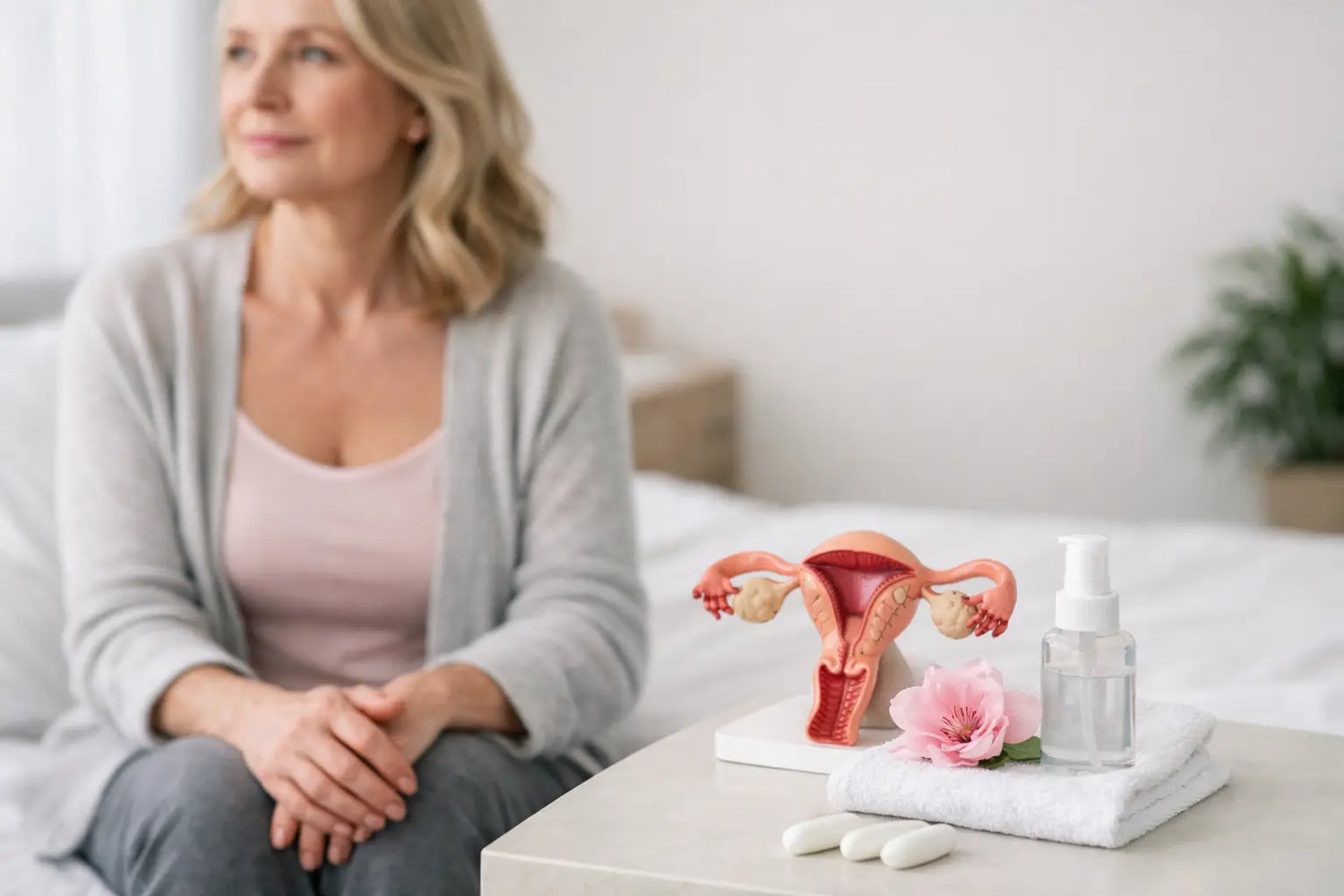
If intimacy has started to feel uncomfortable, sitting for long periods leaves you irritated, or you are noticing more dryness than usual, you are not imagining it. This guide to vaginal atrophy support is here to help you understand what is happening, what can ease symptoms, and how to feel more comfortable in your body again.
Vaginal atrophy, also called genitourinary changes linked with menopause, happens when vaginal tissues become thinner, drier and less elastic. For many women, it appears during perimenopause or menopause, but it can also happen after childbirth, during breastfeeding, after some medical treatments, or any time oestrogen levels drop. The symptoms can feel deeply personal, yet they are also very common.
What matters most is this - support is available, and it does not have to start with drastic measures. A thoughtful, natural and consistent approach can make a meaningful difference.
What vaginal atrophy can feel like
The experience is not the same for everyone. Some women notice only mild dryness at first. Others feel stinging, burning, itching, recurrent irritation or pain during sex. There may also be urinary symptoms such as urgency, more frequent trips to the loo, or discomfort that feels similar to a urinary tract issue.
This overlap can make vaginal atrophy confusing. A woman may assume she has repeated infections when the underlying issue is actually dry, fragile tissue. That is one reason proper assessment matters, especially if symptoms are new, ongoing or worsening.
There is also an emotional side that often gets overlooked. When a part of your body suddenly feels unpredictable or sore, confidence can take a hit. You may avoid intimacy, feel self-conscious, or simply feel less at ease day to day. Support should address comfort and wellbeing, not just the symptom itself.
A practical guide to vaginal atrophy support
The best support plan usually combines symptom relief with ongoing tissue care. Quick fixes can help in the moment, but the goal is to restore comfort over time.
Start with moisture. Vaginal moisturising products are designed to support hydration within the vaginal tissues rather than just reduce friction during intimacy. This makes them different from lubricants. A good moisturising routine can help reduce dryness, irritation and that tight, fragile feeling many women describe.
Lubricants also have a place, particularly during sex, because they reduce friction and can make intimacy far more comfortable. The right choice depends on personal sensitivity, ingredients and how often you need support. If a product stings, irritates or leaves you feeling worse, it is not the right fit for your body, even if it works well for someone else.
For women seeking a natural, hormone-free option, targeted vaginal suppositories may be worth considering. These can help support moisture and tissue comfort in a more direct way, particularly when dryness is persistent. This kind of support often suits women who want a local, non-hormonal approach that fits easily into a self-care routine.
Why gentle, ongoing care works better than waiting
Many women put up with symptoms for months, even years, before seeking help. Often that is because they assume dryness is just something to tolerate with age. But vaginal tissues respond better to regular care than to occasional treatment once discomfort becomes severe.
Think of it like skin that has become dry and delicate. If you only address it when it is cracked and sore, improvement can take longer. If you support it consistently, you are more likely to maintain comfort and resilience.
That does not mean every woman needs the same schedule or product. Some need only occasional support. Others benefit from a more regular routine, especially during menopause or after medical treatments that affect hormone levels. It depends on symptom severity, overall health and personal preference.
Lifestyle factors that can make a difference
A guide to vaginal atrophy support would be incomplete without looking at daily habits. Products can help, but small lifestyle adjustments often improve results.
Hydration matters, even though drinking more water alone will not fix vaginal dryness. Your tissues generally function better when your overall wellbeing is supported. Stress management can matter too. Ongoing stress may not cause vaginal atrophy, but it can affect sleep, inflammation, libido and how intensely symptoms are felt.
Gentle movement also supports circulation and general wellbeing. This does not have to mean intense exercise. Walking, stretching, yoga or other regular movement can help you feel more connected to your body during a stage of life that sometimes feels disruptive.
It is also worth reviewing what you use around the vulval area. Harsh soaps, fragranced washes, bubble baths and heavily scented pads or liners can aggravate already sensitive tissue. Simpler is often better. Choose products made for intimate comfort and avoid anything that leaves the area feeling stripped, itchy or irritated.
When hormone-free support may appeal
Hormonal treatment is helpful for some women, and for others it is not the preferred option. You may be looking for hormone-free support because of your medical history, your comfort level, or a desire to begin with a gentler approach.
That is a valid place to start. Natural and hormone-free care can offer meaningful support, particularly for women with mild to moderate dryness, tissue discomfort or irritation. The trade-off is that some women with more advanced atrophy may need broader medical care as well. It is not about choosing one side forever. It is about finding the level of support that suits your body now.
This is where high-quality intimate wellness products can be especially helpful. Options designed for vaginal dryness and tissue repair can support comfort in a practical, discreet way, while fitting into a broader wellness routine focused on restoration rather than just symptom management.
Signs it is time to speak with a health professional
Even the best self-care plan has limits. If you have bleeding, unusual discharge, ongoing pain, repeated urinary symptoms, or discomfort that is affecting daily life or relationships, it is wise to check in with a GP or women’s health practitioner.
The same applies if you are unsure whether your symptoms are caused by vaginal atrophy, infection, skin conditions or something else. These concerns can overlap, and getting clarity can save a lot of frustration.
A good practitioner should treat the issue with the seriousness and sensitivity it deserves. If you have ever felt brushed off, you are allowed to seek a second opinion. Intimate discomfort is not trivial.
Building a support routine that feels sustainable
The most effective routine is usually the one you will actually continue. That may mean keeping things simple - a vaginal moisturising product a few times a week, a lubricant when needed, and gentle intimate care products that do not trigger irritation.
For some women, adding nutritional support, stress reduction and skin-conscious body care creates a stronger sense of whole-body wellbeing. That broader approach can be empowering, especially during menopause, when changes rarely happen in isolation. Dryness, sleep shifts, skin changes, energy dips and confidence wobbles often arrive together.
This is where a wellness-focused approach can feel different. Rather than treating intimate discomfort as a problem to hide, it becomes part of caring for yourself properly. My Health Restore speaks to that mindset by combining intimate health support with broader wellbeing products that help women feel restored, balanced and more at home in themselves.
Comfort is not a luxury
Too many women minimise vaginal dryness and atrophy because the symptoms seem private, or because they believe they should simply get on with it. But comfort matters. So does feeling confident in your body, whether that is during intimacy, exercise, sleep or an ordinary day at work.
Support does not need to be complicated, but it should be consistent, gentle and suited to your needs. With the right care, many women find that dryness, irritation and sensitivity become far more manageable.
If this is something you are navigating, let it be met with care rather than silence. Small steps taken early can help restore not only physical comfort, but a steadier sense of ease in your own skin.