
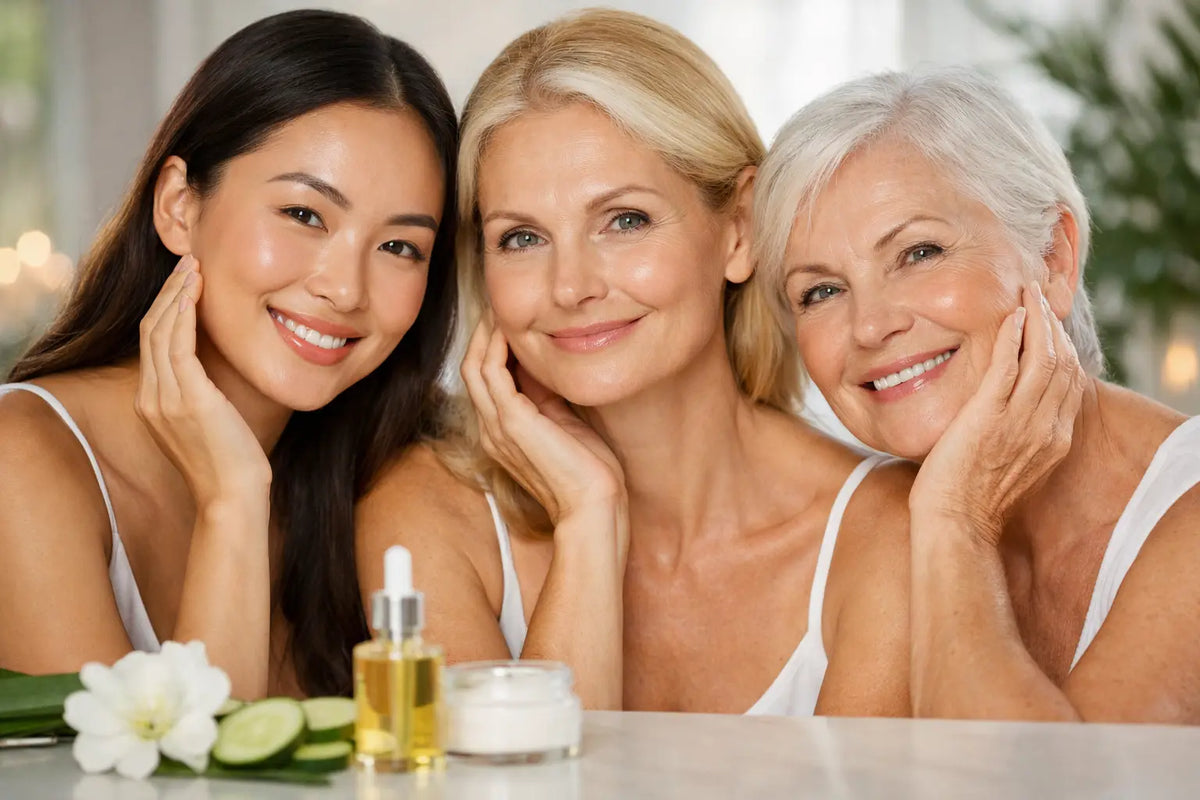
Radiance is not about looking shiny, filtered or decades younger. It is the softer, healthier-looking quality skin has when its barrier is comfortable, hydration is supported and its surface reflects light evenly. If you are wondering how to improve skin radiance naturally, begin by looking beyond one miracle cream. Your daily rhythms, skincare choices and hormonal stage all have a role.
For many women, skin can become noticeably drier, duller or less even through perimenopause and menopause. This is a normal shift, not a personal failing. Lower oestrogen can affect collagen, natural oils and hydration, which is why a routine that once worked beautifully may suddenly feel inadequate. Gentle, consistent care is usually far more helpful than chasing harsh quick fixes.
Start with a calm, well-supported skin barrier
When skin feels tight after cleansing, stings when you apply products or develops rough patches, its protective barrier may be under strain. A compromised barrier loses water more easily and can look lacklustre, even when you are using expensive active ingredients.
Choose a mild cleanser that leaves your face comfortable rather than squeaky-clean. For dry or mature skin, a cream or milk cleanser is often a kinder choice than a strong foaming wash. Cleanse in the evening to remove sunscreen, make-up and the day’s build-up; in the morning, a gentle rinse or minimal cleanse may be enough if your skin is dry.
Apply moisturiser while skin is still slightly damp. Look for formulas with humectants such as glycerin or hyaluronic acid to draw in water, alongside nourishing lipids and ceramides that help keep it there. Facial oils can bring comfort and softness too, but they work best pressed over a water-based serum or moisturiser rather than used as the only source of hydration.
The aim is not to overload skin with layers. If your complexion is reactive, introduce one product at a time and give it a couple of weeks before deciding whether it suits you. More products can sometimes mean more irritation, especially during hormonal change.
Protect the glow you are building
Sun exposure is one of the most significant contributors to uneven tone, visible dryness and premature loss of firmness. In Australia, daily sun protection is a practical act of skin care, not just something for beach days. A broad-spectrum SPF 50+ sunscreen applied each morning helps protect the results of every other step in your routine.
If you prefer a more natural-leaning routine, mineral sunscreens containing zinc oxide can be a good option, although some can leave a cast or feel richer on the skin. The best sunscreen is one you can apply generously and wear comfortably every day. Hats, sunglasses and seeking shade add another useful layer of protection, particularly during high-UV hours.
Sun protection will not create overnight luminosity, but it can help prevent the gradual dullness and uneven pigmentation that make skin appear less radiant over time.
How to improve skin radiance naturally with gentle renewal
A build-up of dry, dead skin cells can make the complexion look flat and prevent moisturising products from sitting smoothly. The temptation is to scrub harder, but abrasive grains, cleansing brushes and frequent peeling can create redness and sensitivity - neither of which reads as healthy glow.
Instead, choose gentle exfoliation suited to your skin. A mild lactic acid product can support smoother texture while also being more hydrating than some stronger acids. A low-strength retinoid may improve the appearance of fine lines, texture and uneven tone over time, but it should be introduced slowly, beginning only a few nights per week. Retinoids are not suitable during pregnancy, and sensitive skin may need a simpler approach.
Avoid using exfoliating acids and retinoids on the same evening until you know how your skin responds. If you experience persistent burning, flaking or redness, pause active products and return to cleanser, moisturiser and sunscreen. Radiance comes from resilient skin, not from pushing it past its comfort zone.
Nourish skin from the inside out
Skin needs consistent nutrition, fluids and energy to function well. Restrictive eating, skipped meals and relying heavily on highly processed foods can show up as a tired-looking complexion for some people. There is no single food that transforms skin overnight, but a varied, whole-food pattern gives it a better foundation.
Build meals around colourful vegetables and fruit, protein, healthy fats and fibre-rich carbohydrates. Vitamin C-rich foods such as citrus, kiwi fruit, capsicum and berries support normal collagen formation. Protein provides amino acids used throughout the body, while omega-3 fats from fish, walnuts, chia or flaxseed may be particularly welcome when skin feels dry.
Hydration matters, but it does not mean forcing litres of water beyond thirst. Sip water regularly, especially in warm weather, after exercise or if you drink coffee and alcohol. Herbal tea, soups, fruit and vegetables also contribute to fluid intake. If dryness is ongoing, moisturising the skin and addressing the causes of dehydration are generally more useful than water alone.
It can also be worth noticing how alcohol, smoking and high-sugar habits affect your skin personally. These are not moral failings, and perfection is not required. Small reductions may support better sleep, circulation and skin comfort over time.
Make sleep and stress care part of your skincare routine
A restless night can leave skin looking dull, puffy or drawn the next morning. Over the longer term, chronic stress and poor sleep can make it harder to maintain the routines that support wellbeing. This can feel especially familiar during perimenopause, when hot flushes, anxiety or night waking may disrupt rest.
Create a modest wind-down ritual that feels realistic: lower the lights, step away from your mobile for a little while, cleanse your face and apply a comforting moisturiser. The benefit is not only what is in the jar. A predictable evening routine can signal that your body is allowed to rest.
Movement supports circulation, mood and sleep quality, too. A daily walk, gentle strength training, yoga or swimming can all be valuable. Choose something you enjoy enough to repeat rather than treating exercise as another beauty task to complete.
Consider your hormonal stage with compassion
During menopause, lower oestrogen may contribute to thinner, drier skin and changes in elasticity. You may need richer moisturising textures, fewer exfoliating nights and more patience than you did in earlier years. This is a sensible adjustment, not a surrender.
Natural, hormone-free skin care can provide welcome surface comfort and support a healthy-looking barrier, but it cannot replace individual medical care where it is needed. Speak with your GP, dermatologist or qualified health professional about new pigmentation, persistent rashes, painful acne, rapidly changing moles or dryness that does not improve. They can also discuss menopause care options in the context of your health history.
At My Health Restore, we believe caring for skin and caring for your wider wellbeing belong together. A ritual that supports comfort, confidence and restoration is often more sustainable than trying to correct every visible change.
Give a new routine time. Skin renewal is gradual, and most people need several weeks of consistent, gentle care before they notice a clearer difference in texture and luminosity. Let the goal be skin that feels calm, nourished and like your own - that is a radiance worth keeping.