
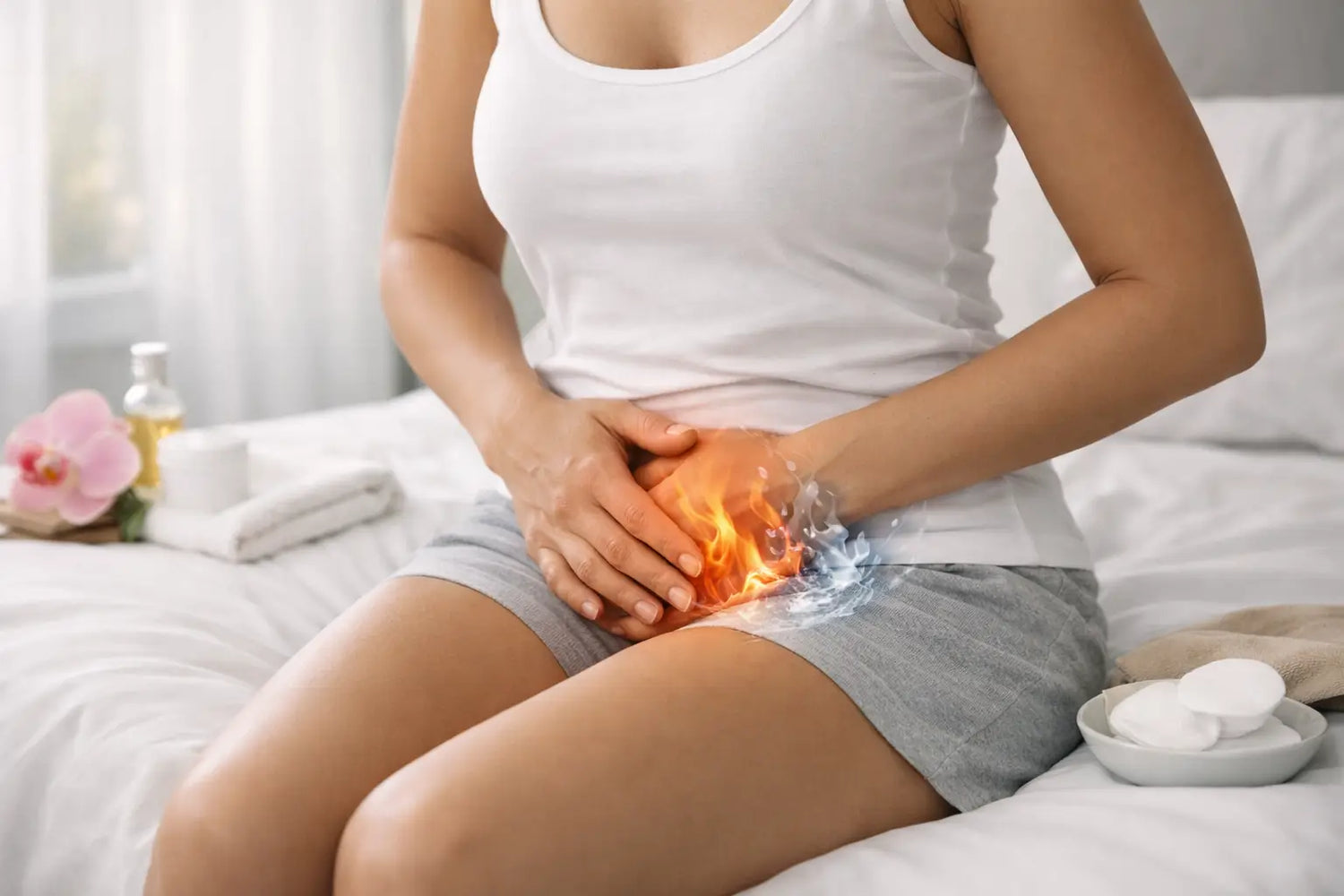
A burning, dry feeling in the vaginal area can be hard to ignore. It can show up during exercise, after sex, when washing, or even while sitting at work, and it often leaves women wondering what causes vaginal burning dryness in the first place. The short answer is that there is no single cause. Hormones, skin sensitivity, infections, everyday products, and changes in vaginal tissue can all play a part.
Because the symptom feels so personal, many women put up with it longer than they should. But vaginal burning and dryness are common, especially during hormonal shifts such as perimenopause, menopause, after birth, or while breastfeeding. Understanding what may be behind it is often the first step towards real relief.
What causes vaginal burning dryness most often?
In many cases, the most common driver is a drop in oestrogen. Oestrogen helps keep vaginal tissue supple, comfortably lubricated, and well supported. When levels fall, the tissue can become thinner, drier, and more fragile. That can lead to burning, stinging, itching, discomfort during intimacy, and a general sense that the area feels irritated more easily than it used to.
This is why symptoms often appear in midlife, but menopause is not the only time it happens. Breastfeeding, certain medications, cancer treatment, surgical menopause, and periods of significant hormonal fluctuation can also reduce natural moisture. For some women, the dryness is mild. For others, it affects comfort, intimacy, sleep, confidence, and day-to-day wellbeing.
Another common cause is irritation from products that come into contact with delicate vulvovaginal tissue. Fragranced washes, bubble baths, harsh soaps, panty liners, laundry products, lubricants with irritating ingredients, and even some toilet paper can trigger burning. The tissue in this area is sensitive, and once the skin barrier is disrupted, dryness and stinging can feed into each other.
Hormonal changes and vaginal tissue health
When vaginal dryness is linked to hormones, the issue is not only moisture. The tissue itself changes. It may become less elastic, less cushioned, and more prone to tiny tears or inflammation. This is one reason some women notice burning after sex, after wiping, or when wearing fitted clothing.
Hormonal dryness can also affect the vulva, not just the vagina internally. So if you feel external burning, tenderness, or sensitivity around the entrance of the vagina, hormones may still be part of the picture. It is not always obvious at first, especially if the symptoms come and go.
For women in perimenopause, symptoms can be inconsistent. One month may feel normal, while the next brings dryness, irritation, and discomfort. That unpredictability can make it harder to connect the dots. If you are in your forties or fifties and noticing changes in your cycle, sleep, mood, or skin as well, hormonal transition is worth considering.
Irritation from everyday products
Sometimes the answer to what causes vaginal burning dryness is not a health condition but repeated exposure to irritating products. The vaginal area does not need aggressive cleansing, and more washing does not mean better hygiene. In fact, over-cleansing often makes symptoms worse.
Common triggers include scented body wash, feminine deodorants, perfumed pads, lubricants with glycerine or artificial fragrance, latex sensitivity, and chlorine from pools or spas. Tight activewear and synthetic underwear can also increase friction and trap heat, which may leave already-dry tissue feeling more inflamed.
If symptoms started after changing products, washing more often, or using something new for intimacy, that timing matters. Removing the trigger can make a meaningful difference, although irritated tissue may take time to settle.
Infections and pH imbalance
Burning does not always mean dryness is the primary issue. Sometimes infection or an imbalance in the vaginal environment creates symptoms that feel dry, raw, or irritated. Thrush is one example. It commonly causes itching and burning, and some women describe the tissue as feeling dry or inflamed rather than having a heavy discharge.
Bacterial vaginosis can also cause irritation, although it is more often linked with odour and discharge changes. Sexually transmitted infections may cause burning too, particularly if there is inflammation around the urethra or vaginal opening.
There is also the question of pH. The vagina is naturally acidic, and that environment helps support healthy protective bacteria. Hormonal shifts, antibiotics, semen, infections, and some hygiene products can alter that balance. When pH changes, tissue can become more sensitive and symptoms may flare.
The challenge is that the same symptom can point to different causes. Burning with cottage cheese-like discharge may suggest thrush. Burning with menopause symptoms and pain during sex may point more strongly to vaginal atrophy or genitourinary syndrome of menopause. Burning after using a new wash may be irritation. Context matters.
Skin conditions and nerve sensitivity
Not all vaginal burning dryness starts inside the vagina. The vulval skin can develop dermatological conditions such as eczema, dermatitis, psoriasis, or lichen sclerosus. These can cause dryness, soreness, itching, splitting of the skin, and a persistent burning sensation.
This is one reason self-diagnosis has limits. If you treat yourself repeatedly for thrush and nothing improves, or the skin looks pale, cracked, shiny, or unusually tender, it is worth having the area assessed by a GP or women’s health practitioner.
In some cases, burning persists even when there is no obvious infection or visible skin issue. Nerve sensitivity, pelvic floor tension, or pain conditions such as vulvodynia can contribute. These situations are more nuanced and often need a broader treatment approach that goes beyond a single cream or short course of medication.
Medicines, health conditions, and lifestyle factors
Certain medicines can reduce moisture in the body more broadly, including vaginal moisture. Antihistamines, some antidepressants, acne treatments, and some hormonal therapies are common examples. If symptoms appeared after starting a new medicine, it is reasonable to ask whether dryness is a side effect.
Health conditions can also play a role. Autoimmune conditions, diabetes, and treatments such as chemotherapy or radiation may affect tissue health, healing, or lubrication. Stress can contribute too. While stress does not directly cause every case of dryness, it can alter arousal, sleep, skin sensitivity, and inflammation, which may make symptoms more noticeable.
Sex can be another factor, especially if dryness is already present. Friction during intimacy may leave the tissue feeling burnt, raw, or tender afterwards. That does not mean intimacy is the original cause, but it can definitely worsen an already sensitive area.
When to get support
Mild, short-lived irritation may settle once a trigger is removed, but ongoing symptoms deserve attention. If vaginal burning dryness keeps returning, affects intimacy, disturbs sleep, or makes daily life uncomfortable, it is worth speaking with a health professional.
You should also seek support sooner if you notice unusual discharge, bleeding, sores, a strong odour, pain with urination, or visible changes to the skin. These symptoms can overlap with infections, skin disorders, and postmenopausal tissue changes, so clear guidance matters.
Treatment depends on the cause. That might include avoiding irritants, addressing infection, supporting vaginal tissue hydration, improving lubrication during intimacy, or using hormone-free options designed to comfort and restore dry tissue. For women wanting a natural, hormone-free approach, carefully chosen intimate wellness products can be a valuable part of a broader plan, especially when dryness is linked to tissue fragility and ongoing discomfort.
Gentle steps that can help while you work out the cause
While you are figuring out what causes vaginal burning dryness for you, simpler care is usually better. Use a gentle, fragrance-free cleanser externally only if needed, avoid douching, choose breathable cotton underwear, and be cautious with scented pads or liners. If friction is part of the problem, reducing irritants and supporting moisture can help break the cycle.
It can also help to notice patterns. Do symptoms flare after sex, around your period, after swimming, after using a certain product, or alongside hot flushes and other menopause signs? Those details can make the cause clearer and help you choose the right support.
At My Health Restore, we believe women deserve practical, respectful education around intimate symptoms that are often dismissed or normalised for too long. Burning and dryness may be common, but that does not mean you have to simply live with them.
If your body is signalling that something feels off, listen to it with care rather than embarrassment. Relief often starts with understanding what has changed, and giving yourself permission to seek support that restores comfort, confidence, and ease.