
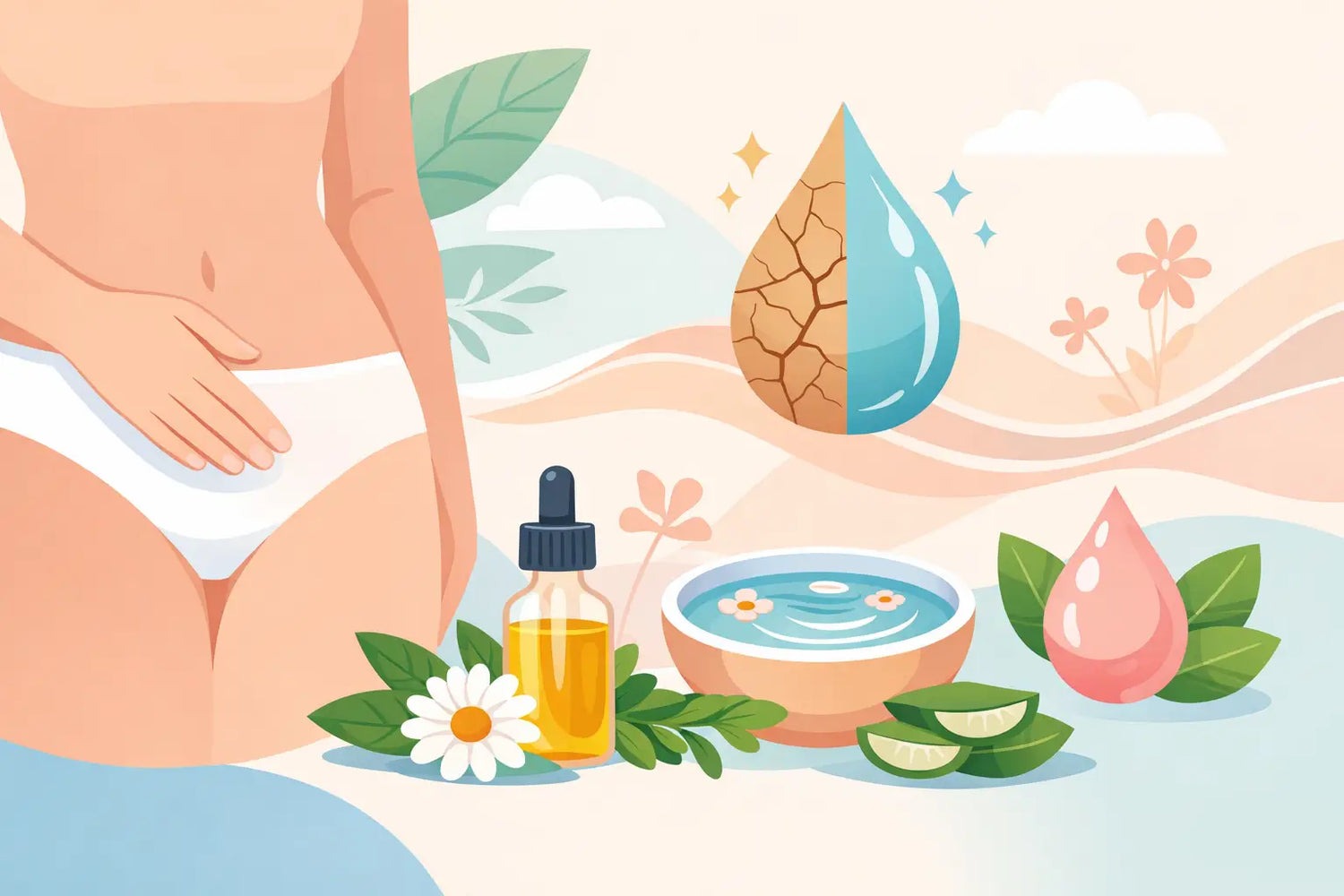
Vaginal dryness can show up quietly at first - a little discomfort during intimacy, a feeling of irritation by the end of the day, or a sense that your body does not quite feel like itself. For many women, the question is not just how to relieve vaginal dryness naturally, but how to do it in a way that feels safe, gentle and sustainable.
This symptom is common during menopause and perimenopause, but it is not limited to midlife. Breastfeeding, certain medications, stress, cancer treatment, autoimmune conditions and even some intimate care products can all play a role. The good news is that natural support can make a real difference, especially when you understand what is driving the dryness in the first place.
Why vaginal dryness happens
Healthy vaginal tissue relies on moisture, elasticity and a balanced environment. Oestrogen helps maintain all three, which is why dryness often becomes more noticeable when hormone levels shift. During perimenopause and menopause, lower oestrogen can lead to thinner, more fragile tissue and less natural lubrication.
That said, hormones are only part of the picture. Antihistamines, some antidepressants and other medicines can reduce moisture throughout the body. Stress can affect arousal and circulation. Harsh soaps, fragranced washes and some laundry products may irritate the vulval area and make dryness feel worse. If discomfort has appeared suddenly, it is worth considering whether anything in your routine has changed.
Dryness can feel different from one woman to the next. Some notice stinging, itching or burning. Others feel pain during sex, recurrent irritation, or sensitivity when walking or exercising. If symptoms persist, they deserve attention - not brushing off.
How to relieve vaginal dryness naturally at home
Natural relief is usually about supporting the tissues, reducing irritation and helping your body maintain comfort over time. It is rarely one magic fix. A combination approach tends to work best.
Start with moisture, not just lubrication
Many women reach for lubricant only during intimacy, which can help in the moment, but everyday dryness often needs more ongoing support. A gentle, hormone-free vaginal moisturising product may help restore comfort between sexual activity and support the vaginal tissues more consistently.
This is where ingredient quality matters. Products designed specifically for vaginal dryness should be free from unnecessary fragrances and common irritants. A well-formulated option can help soothe delicate tissue rather than simply coat it temporarily. For women wanting natural, hormone-free support, targeted intimate wellness products may offer a practical next step.
Be careful with soaps and intimate washes
One of the most overlooked triggers is over-cleansing. The vulva does not need strong soaps, scrubs or perfumed washes. These can disrupt the skin barrier and lead to more burning and dryness.
Warm water is often enough for daily cleansing. If you prefer to use a wash, choose one made for intimate skin that is gentle and non-irritating. Even then, less is often more. If you feel cleaner but noticeably drier afterwards, your product may be part of the problem.
Support arousal and blood flow
Dryness is not always just a tissue issue - it can also be linked to reduced arousal. When the body is tense, tired or rushing, natural lubrication may be slower to appear. Taking more time, reducing pressure and creating a sense of relaxation can help the body respond more comfortably.
This matters at every age, but particularly during hormonal transition when tissues may already be more sensitive. Slowing things down is not a small detail. It can be one of the simplest ways to reduce friction and discomfort naturally.
Lifestyle factors that can make a difference
Hydration helps, but it is not the whole answer
Staying hydrated supports general wellbeing and mucous membranes, so it is sensible to drink enough water across the day. But hydration alone will not usually resolve vaginal dryness if the underlying issue is hormonal change or tissue thinning.
It is best seen as part of the foundation rather than the full solution. If you are drinking plenty of water and still feeling dry, that does not mean you are doing anything wrong.
Nourish your body with healthy fats
A balanced diet that includes essential fatty acids may support skin and mucosal health. Foods such as oily fish, flaxseeds, chia seeds, avocado and olive oil can contribute to overall tissue wellbeing. While food is not a quick fix, nutritional support can be valuable over time, especially when dryness is part of a broader picture of hormonal change, skin dryness or inflammation.
Some women also explore supplements as part of a holistic approach. This can be worthwhile, but quality and suitability matter, particularly if you are taking medication or managing a health condition.
Reduce irritation from clothing and daily habits
Tight synthetic underwear, damp workout clothes and prolonged friction can all aggravate sensitive tissue. Breathable cotton underwear and changing out of sweaty clothes promptly can help minimise discomfort.
The same goes for menstrual and incontinence products. If you are already prone to dryness or sensitivity, heavily fragranced or rough materials can make things worse. Gentle, skin-conscious choices are often more comfortable.
Natural remedies can help, but not every trend is wise
When searching for how to relieve vaginal dryness naturally, you will come across a lot of home remedies. Some are reasonable, and some are not. This is an area where caution matters.
Using oils internally without proper guidance can upset the vaginal environment or damage condoms. DIY treatments involving essential oils, vinegar or other acidic ingredients can be irritating and are best avoided. Just because something is natural does not mean it is suitable for delicate intimate tissue.
A better approach is to choose products specifically made for vaginal use, with ingredients selected for comfort and compatibility. That keeps the focus on restoration rather than experimentation.
When dryness may be linked to vaginal atrophy
For some women, especially after menopause, vaginal dryness is part of a larger pattern known as vaginal atrophy or genitourinary syndrome of menopause. This can involve thinning tissue, reduced elasticity, burning, urinary discomfort and pain during sex.
If that sounds familiar, natural care can still play an important role, but expectations should be realistic. Mild dryness may improve with moisturising support and lifestyle changes. More advanced tissue changes may need a broader care plan, sometimes including medical treatment alongside natural symptom support.
That does not mean you have failed if home care is not enough. It simply means your body may need more tailored help.
When to speak with a health professional
It is worth seeking medical advice if dryness is persistent, painful, worsening or affecting your quality of life. You should also get checked if you notice bleeding, unusual discharge, ongoing itching, recurrent urinary symptoms or pain that feels sharp rather than superficial.
These symptoms are not always caused by simple dryness. Infections, skin conditions and other health issues can overlap, and proper assessment can bring peace of mind as well as better treatment.
If you prefer natural and hormone-free options, you can still say so clearly. A good practitioner should be able to discuss a range of approaches and help you weigh up what suits your needs, stage of life and comfort level.
Choosing gentle support that fits your life
Relief often comes from small, consistent changes rather than a dramatic overhaul. A soothing vaginal moisturising product, gentler cleansing, more awareness of irritants and better support for intimate comfort can all add up. For women looking for carefully selected intimate wellness solutions, My Health Restore focuses on hormone-free options that support comfort, tissue care and everyday confidence.
The most helpful mindset is to treat vaginal dryness as a health concern worthy of care, not something you simply have to put up with. Your comfort matters, your symptoms are valid, and gentle natural support can be a meaningful place to start.
If your body has been asking for more care, this may be the moment to listen with kindness rather than push through.