
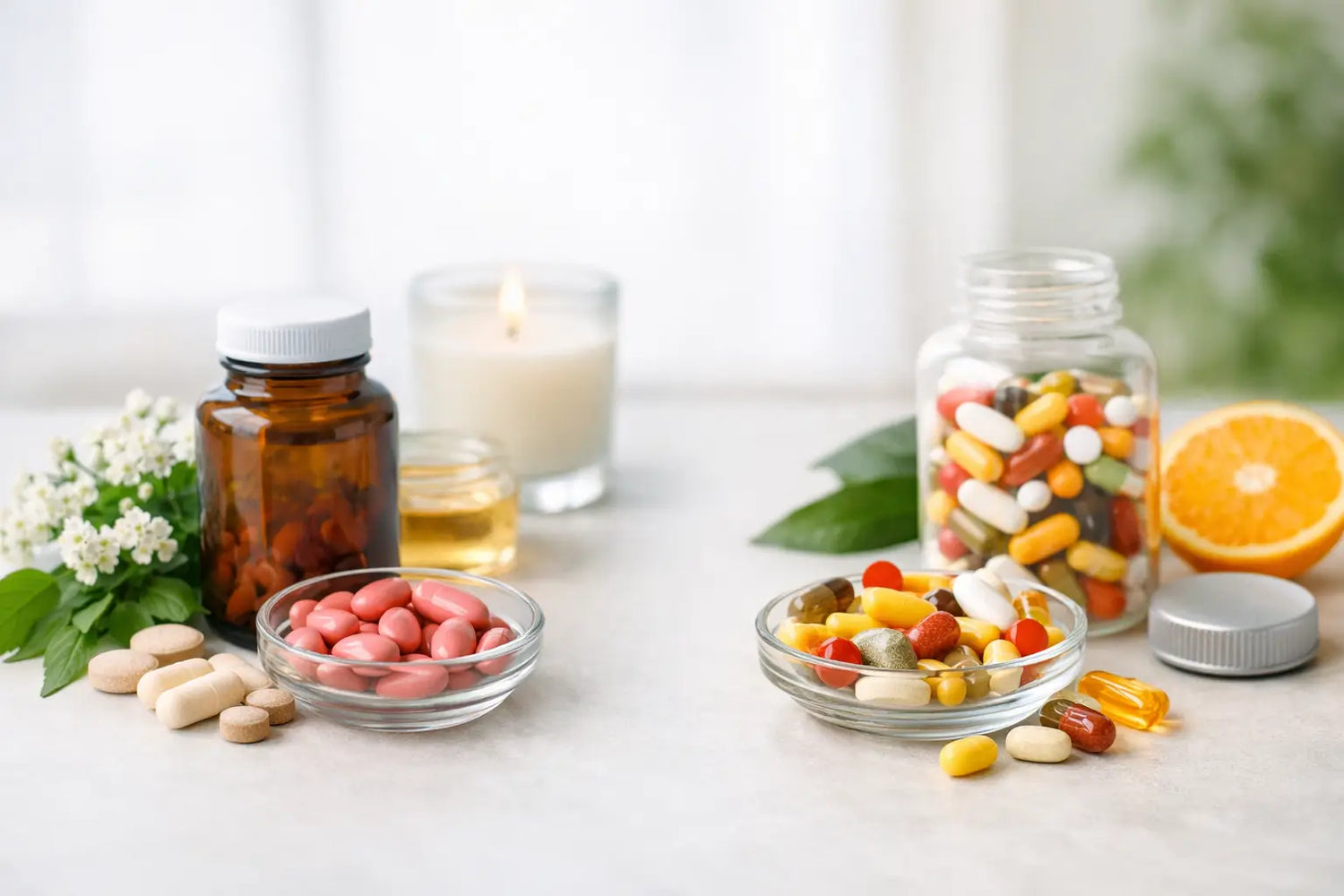
A standard multivitamin can feel like a sensible first step when energy, sleep, skin and mood all seem to shift at once. Yet menopause supplements vs multivitamins is not simply a question of which bottle has more ingredients. The useful choice is the one that reflects what your body needs now, what you already get from food, and which symptoms are asking for more focused support.
Menopause can bring changes that are both visible and deeply personal. Hot flushes may interrupt sleep, while vaginal dryness or discomfort can affect confidence, intimacy and everyday comfort. Some women also notice changes in concentration, bone health, muscle recovery or skin. A supplement may have a place in a wider wellbeing routine, but it should never make you feel that you need to simply put up with symptoms that deserve care.
Menopause supplements vs multivitamins: the key difference
A multivitamin is designed as broad nutritional backup. It usually combines modest amounts of essential vitamins and minerals, such as vitamin D, B vitamins, zinc, iodine and selenium. Its purpose is generally to help cover dietary gaps, particularly when meals are inconsistent, appetite has changed, or a restricted diet makes certain nutrients harder to obtain.
A menopause supplement is usually more targeted. Alongside vitamins and minerals, it may contain botanical extracts or nutrients selected for concerns commonly associated with the menopausal transition, such as hot flushes, sleep disruption, mood changes or bone support. These formulas vary widely. Two products labelled for menopause can have very different ingredients, doses and intended uses.
That distinction matters because a specialised formula is not automatically better, and a multivitamin is not automatically too basic. A woman eating a varied diet who primarily wants support for a specific symptom may prefer a considered menopause formula. Someone whose diet has been patchy after a busy or stressful period may benefit more from reviewing her food intake and choosing a straightforward multivitamin, if appropriate.
What a multivitamin may offer
Multivitamins are often a practical option for women looking for general nutritional support without taking several separate products. During midlife, nutrients such as vitamin D, calcium, magnesium, vitamin B12 and iron may come up in health conversations, but the right approach is individual. Needs can differ according to diet, age, medication use, digestive health and whether periods are still occurring.
For example, iron is not a nutrient every post-menopausal woman needs to supplement. Taking it when it is unnecessary may cause digestive upset and, in some cases, create other concerns. Similarly, a multivitamin with high amounts of certain nutrients is not necessarily more beneficial than one with sensible amounts.
Think of a multivitamin as a foundation rather than a targeted treatment. It may support general wellbeing where nutrient intake is inadequate, but it is unlikely to directly resolve vaginal dryness, painful sex, significant sleep disturbance or frequent hot flushes. Those symptoms deserve a more specific conversation with a GP, pharmacist or qualified health professional.
What targeted menopause formulas may offer
Menopause-focused supplements often bring together nutrients and plant-based ingredients in one formula. Depending on the product, these can include soy isoflavones, sage, black cohosh, red clover, magnesium, vitamin D or B vitamins. Evidence differs considerably between ingredients, formulations and symptoms, so it is wise to look beyond a reassuring front-label promise.
Some women find a targeted product fits their routine because it addresses the particular changes they are noticing. Others prefer to keep their supplement routine simple, especially if they are already taking vitamin D, calcium, fish oil or prescribed medicines. More ingredients can also mean more potential for duplication or interactions.
It is also worth separating systemic symptoms from local intimate discomfort. A menopause tablet may be marketed for general support, but it may not be the most relevant option for vaginal dryness or delicate vaginal tissue. Lubricants can help with comfort during intimacy, while vaginal moisturisers and non-hormonal, locally applied intimate-care options may be more directly suited to ongoing dryness. For persistent discomfort, recurrent urinary symptoms, pain, itching or changes to discharge, seek clinical advice rather than self-treating indefinitely.
Read the ingredient panel, not just the category
The word “menopause” does not tell you how a formula works, whether it suits you, or how much of each ingredient it contains. Check the active ingredients and their amounts, the suggested daily dose, allergens and any warnings. If a product contains vitamins or minerals already present in your multivitamin, calculate the combined daily amount before using both.
In Australia, many complementary medicines carry an AUST L number, indicating they are listed with the Therapeutic Goods Administration. This is useful information, but it does not mean every product is equally suitable for every symptom or person. Treat marketing claims as a prompt to investigate, not a substitute for personalised care.
Choose according to your main concern
If your goal is broad nutritional reassurance, start by looking at your diet and whether a multivitamin would genuinely fill a gap. Women following vegan or vegetarian diets, avoiding dairy, managing a low appetite or dealing with absorption issues may have particular nutrient considerations that are worth discussing with a clinician.
If hot flushes, night sweats or sleep changes are your main concern, a menopause-specific formula may be worth considering after reviewing its ingredients and safety profile. Give any suitable product enough time to assess it, but do not continue something that causes side effects or does not feel right. Keeping a short symptom diary can be more helpful than relying on memory: note sleep, flush frequency, mood, digestion and any changes in medication.
If vaginal dryness, irritation or intimacy discomfort is central to your experience, local comfort and tissue care may be more relevant than a general supplement. This is an area where women are often told very little, despite how common these changes can be. A gentle, hormone-free intimate wellness routine may provide practical support alongside hydration, arousal-aware intimacy and professional advice when needed.
If your concerns include fatigue, hair shedding, low mood or significant brain fog, avoid assuming menopause is the only explanation. Thyroid changes, iron deficiency, vitamin B12 deficiency, sleep apnoea, stress and other health conditions can overlap with menopausal symptoms. A check-up can offer clarity and prevent a supplement from masking a problem that needs treatment.
Safety matters more than a “natural” label
Natural does not always mean risk-free. Botanical ingredients can interact with medicines, and some may not be appropriate for women with liver conditions, a history of hormone-sensitive cancers, blood-clotting concerns or particular mental health conditions. Extra caution is needed if you take blood thinners, antidepressants, thyroid medication, diabetes medication or treatment for high blood pressure.
Speak with your GP or pharmacist before starting a menopause supplement if you have a chronic condition, take regular medication, are still having irregular bleeding, or are considering combining products. Seek prompt medical review for bleeding after menopause, new pelvic pain, a breast change, unexplained weight loss, severe mood symptoms or urinary symptoms that do not settle.
Build a routine that feels sustainable
The most supportive choice is rarely the most complicated one. Nourishing meals, protein, fibre, calcium-rich foods where suitable, regular movement and strength training all contribute to long-term wellbeing through midlife. Sleep routines, stress support and gentle skin and intimate-care rituals can also make a meaningful difference to how you feel day to day.
You may choose a multivitamin as simple nutritional insurance, a menopause formula for a clearly defined concern, or neither while you focus on food and professional guidance. At My Health Restore, we believe menopause care should leave you feeling informed and comfortable in your body, not overwhelmed by promises. Start with the symptom that matters most to you, choose carefully, and allow yourself the same thoughtful care you give everyone else.