
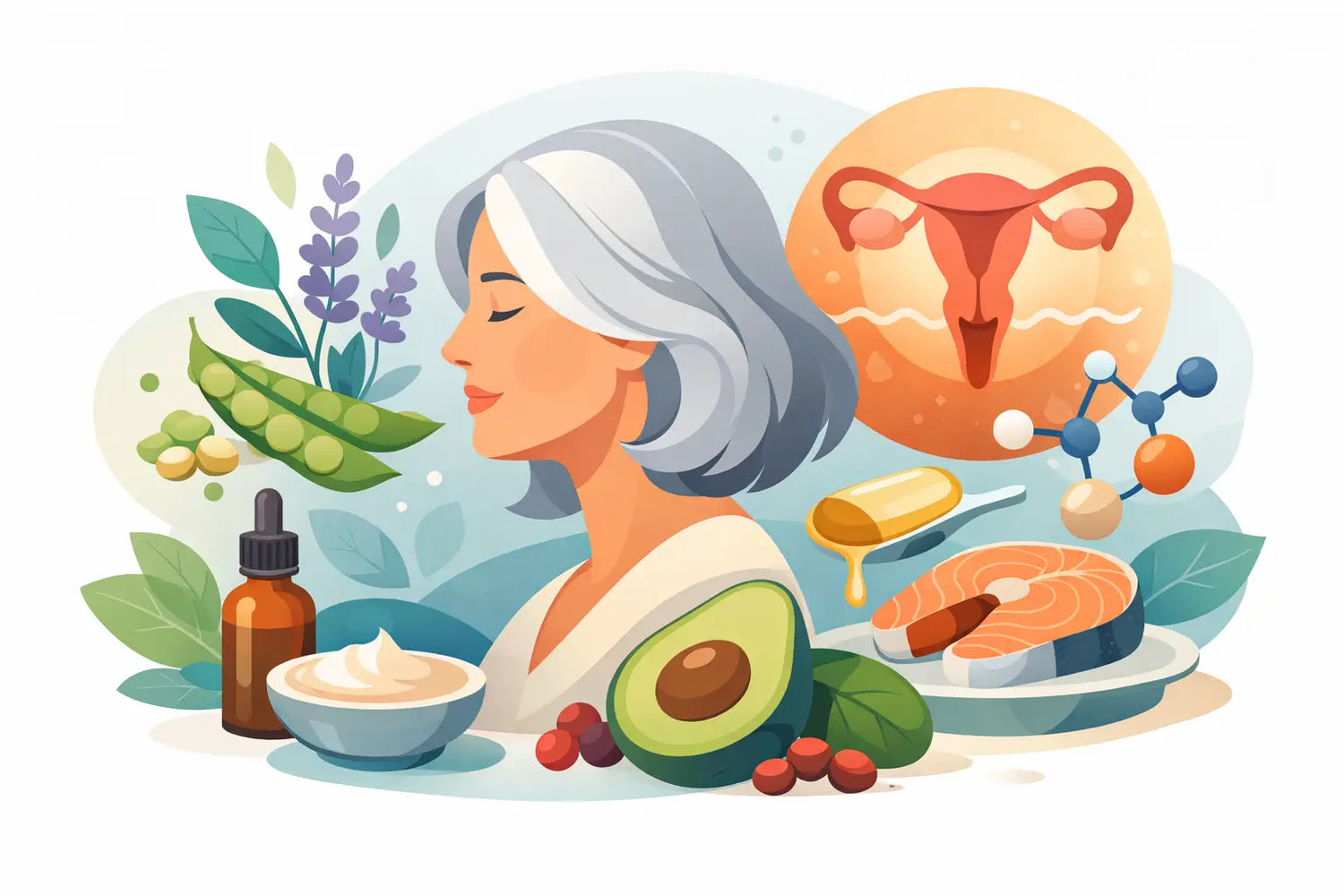
Hot flushes get most of the attention, but for many women the harder part of menopause is the slow build of everyday changes - disrupted sleep, vaginal dryness, mood shifts, skin changes, brain fog and a general sense that your body is asking for different support. That is where menopause support ingredients explained in plain language can make a real difference. When you understand what an ingredient is actually used for, it becomes much easier to choose support that feels relevant, gentle and worth your money.
Menopause support ingredients explained for real-life symptoms
Menopause support is rarely about one miracle ingredient. More often, it is about matching the right type of support to the symptom that is bothering you most. Some ingredients are used to support the nervous system and stress response. Others are chosen for vaginal moisture, skin resilience, bone support or energy production.
This is also why shopping by trend alone can be frustrating. An ingredient that helps one woman with hot flushes may do very little for another woman whose main issue is intimate dryness or poor sleep. The best starting point is always your actual symptoms, your health history and how comfortable you are with hormone-free options, topical care, supplements or a combination of all three.
Phytoestrogens and plant-based menopause support
One of the most talked-about categories in menopause care is phytoestrogens. These are plant compounds that can interact with oestrogen receptors in the body, although much more gently than the body’s own hormones. Soy isoflavones are the best-known example, and red clover is another common ingredient in menopause formulas.
For some women, these ingredients may help ease mild hot flushes and support overall menopausal comfort. The evidence is mixed rather than universal, which means results can vary. Some women notice a meaningful difference, while others feel very little. If you have a personal history of hormone-sensitive conditions, it is sensible to check with your healthcare professional before using products that rely heavily on phytoestrogens.
Black cohosh often appears in the same conversation, although it is not a phytoestrogen in the same way soy is. It has been traditionally used for menopausal symptoms, especially hot flushes and night sweats. Some women find it helpful, but it is not suitable for everyone, particularly if there are liver concerns or medication interactions to consider.
Magnesium, B vitamins and nervous system support
When menopause affects sleep, mood and stress resilience, nutritional support often shifts towards the nervous system. Magnesium is one of the most commonly used ingredients here. It is involved in muscle relaxation, energy production and nervous system function, so it is often chosen when women feel tense, tired or wired at night.
B vitamins are also widely used during the menopausal transition. Rather than acting as a quick fix, they support the body’s energy pathways and nervous system function more broadly. This can be helpful when fatigue, mental fuzziness or stress feel amplified. The trade-off is that these ingredients are usually more supportive than dramatic. They can be valuable, but they are not likely to transform severe symptoms on their own.
Adaptogenic herbs such as ashwagandha are also becoming more common in wellness products aimed at midlife women. These ingredients are generally used to support stress adaptation and may help when menopause is being made harder by poor sleep, overwhelm or feeling run down. They are not specific menopause ingredients in the strict sense, but they can still be useful when stress is part of the picture.
Ingredients for vaginal dryness and intimate comfort
For many women, the most disruptive symptom is also the least openly discussed. Vaginal dryness, irritation and tissue fragility can affect comfort, intimacy, exercise and even day-to-day confidence. This is where local support matters, because a supplement designed for hot flushes may not do much for intimate tissues.
Hyaluronic acid is one ingredient worth knowing. In topical and intimate care, it is valued for its ability to attract and retain moisture. That can help support hydration in delicate tissues and improve comfort when dryness is persistent. Vitamin E is another well-known ingredient, often included for its soothing and skin-conditioning properties.
Natural oils and botanical emollients can also play a role, especially in products designed to nourish dry, sensitive tissue. The key is choosing formulations made specifically for intimate use rather than repurposing a general skincare product. Delicate vaginal tissue needs gentle, appropriate support, and not every natural ingredient belongs in that area simply because it sounds wholesome.
This is one reason many women prefer a hormone-free intimate wellness approach. If your main concern is dryness, tissue comfort or vaginal atrophy-related discomfort, targeted local care may feel more practical than broad systemic supplementation. At My Health Restore, that kind of symptom-specific support sits at the heart of how many women approach menopause care.
Collagen, antioxidants and skin changes in menopause
Skin often changes during menopause in ways that catch women off guard. Lower oestrogen levels can affect hydration, elasticity and barrier function, which may leave skin looking thinner, drier or less resilient. That is why collagen, vitamin C and antioxidant-rich ingredients show up so often in menopause-supportive wellness and beauty routines.
Collagen supplements are popular because collagen is a structural protein that helps support skin integrity. The research is promising in some areas, especially for hydration and elasticity, but it is not a guaranteed solution for everyone. Results tend to build over time and often depend on consistency.
Vitamin C matters because it supports normal collagen formation and also acts as an antioxidant. Other antioxidants, including coenzyme Q10 and plant polyphenols, are often used to help protect against oxidative stress. These ingredients can be a thoughtful addition if skin vitality is one of your concerns, although they are best viewed as part of a broader routine rather than a standalone answer.
Bone, muscle and healthy ageing support
Menopause conversations often focus on immediate symptoms, but longer-term support matters too. Calcium and vitamin D are central when bone health is part of the goal. Vitamin D also supports muscle function and immune health, which makes it a particularly relevant nutrient during midlife and beyond.
Vitamin K2 may also appear in bone health formulas because it plays a role in calcium metabolism. Magnesium belongs in this conversation too, as it supports muscle and nerve function and contributes to bone health. These ingredients are less about symptom relief in the short term and more about building a strong foundation for healthy ageing.
That said, supplements are only one piece of the puzzle. Weight-bearing movement, protein intake, time outdoors and overall nutritional quality still matter. If a product promises to do all the heavy lifting on its own, that is usually a sign to read more carefully.
How to choose the right menopause support ingredients
If you are comparing products and feeling unsure, start by narrowing your focus. Ask yourself what is actually bothering you most right now. If it is hot flushes, ingredients like soy isoflavones, red clover or black cohosh may be the ones you see most often. If it is stress, sleep or feeling depleted, magnesium, B vitamins and adaptogenic herbs may be more relevant. If it is vaginal dryness or tissue discomfort, a targeted hormone-free intimate product may make far more sense than a general menopause capsule.
It also helps to check whether a formula is trying to do too much. A long ingredient list can look impressive, but small amounts of many actives do not always equal better support. Quality, formulation and symptom match matter more than a crowded label.
Finally, remember that natural does not automatically mean risk-free. Herbs and nutrients can still interact with medications or be unsuitable for certain health conditions. If your symptoms are severe, changing quickly or affecting bleeding patterns, it is worth seeking medical advice rather than self-managing indefinitely.
What matters most when reading a label
The most useful way to read a menopause label is to look past the marketing language and ask three questions. What symptom is this designed for? Is there a meaningful amount of the active ingredient? And is this a general wellness product or a targeted solution?
That small shift can save a lot of guesswork. Menopause is not one single experience, so the right support often looks quite personal. When you choose ingredients based on your body’s actual needs - whether that is moisture, calm, resilience, skin support or daily comfort - you are far more likely to build a routine that feels restorative rather than overwhelming.
The best menopause support is not the trendiest formula on the shelf. It is the one that helps you feel more comfortable, more informed and more at home in your body as it changes.