That familiar sting, itch or damp discomfort during your period is easy to dismiss as something you simply have to put up with. But if your skin feels reactive every month, the pads you use may be part of the problem. For many women, organic pads for sensitive skin offer a gentler option that supports comfort without adding unnecessary irritants to an already delicate time of the month.
Period care is deeply personal, and sensitive skin can make it even more so. Some women notice redness along the bikini line, others feel chafing after a few hours, and some experience a general sense of irritation that seems to build across the day. If that sounds familiar, it is worth looking beyond absorbency alone and paying attention to what your pad is actually made from.
Why sensitive skin can react to standard pads
The vulval area is naturally delicate. Skin here is thinner, more humid, and more prone to friction than many other parts of the body. During menstruation, that environment changes again. Moisture increases, the skin may stay in contact with blood and discharge for longer, and the repeated rubbing of a pad against the body can add another layer of stress.
Standard pads may contain synthetic fibres, plastics, fragrances, dyes or chemical treatments that some women find irritating. Not everyone will react to these ingredients, but if your skin is already prone to sensitivity, eczema, dermatitis or general inflammation, the risk can be higher. Even when a product is technically safe, it may not feel comfortable on your body.
There is also the issue of heat and airflow. Pads with heavy plastic backing can trap warmth and moisture, which may leave the area feeling sticky and uncomfortable. That does not automatically mean every synthetic pad is unsuitable, but for women who are sensitive, breathable materials can make a meaningful difference.
What makes organic pads for sensitive skin different
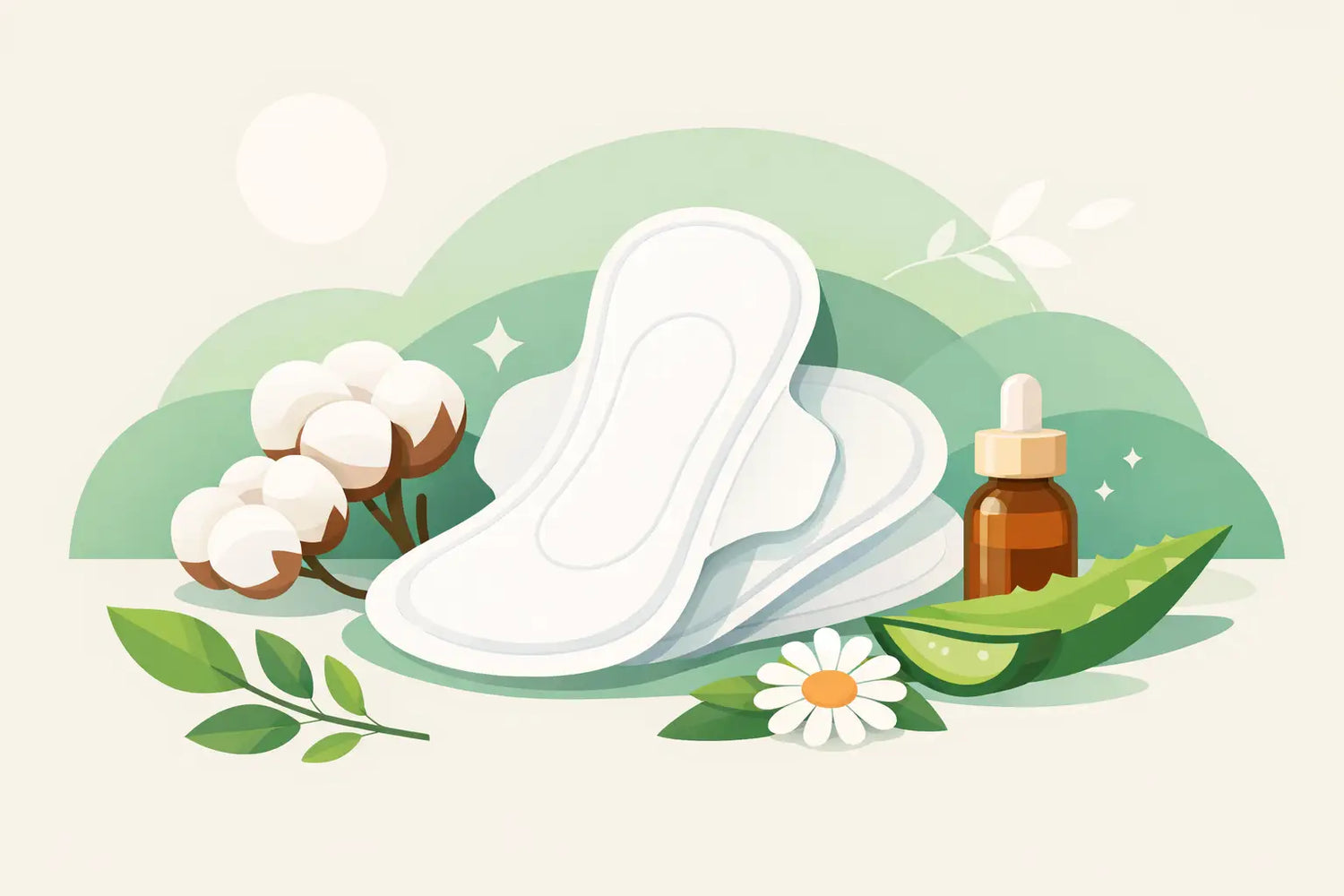
Organic pads for sensitive skin are usually designed with simplicity in mind. Instead of relying on heavily processed materials or added fragrance, they tend to use certified organic cotton in the layer that sits closest to the skin. This matters because cotton is breathable, soft and familiar to the body in a way many synthetic top sheets are not.
Organic cotton also appeals to women who want to reduce exposure to pesticide residues and unnecessary chemical processing. While the degree of benefit will vary from person to person, many women choose organic period care because it feels more aligned with a lower-tox approach to intimate wellness.
That said, organic does not always mean perfect. Some organic pads still use adhesives, leak-proof barriers and structural materials that are not fully natural. Others may prioritise eco credentials but not provide the absorbency or shape you need. The best choice is rarely about one label alone. It is about the full design of the product and how your body responds.
How to choose organic pads for sensitive skin
If your goal is to reduce irritation, start with the surface layer. A soft organic cotton top sheet is often the most important feature because it sits directly against intimate skin. From there, look at whether the pad is fragrance free and free from dyes or deodorising agents. These extras may be marketed as freshness features, but for sensitive skin they can be part of the problem rather than the solution.
Absorbency matters too. A pad that is too light may need changing constantly or leave moisture sitting against the skin. A pad that is too bulky may create more friction and heat. Your ideal fit may change across your cycle, which is why many women do better with a small range rather than one pad for every day.
Shape is another practical detail that can affect comfort more than expected. If the pad bunches, shifts or rubs at the edges, irritation can follow even if the materials are gentle. Wings can help with stability for some women, while others find them aggravating. It often comes down to body shape, underwear style and flow.
If you have very reactive skin, patch testing is not usually possible with a pad in the traditional sense, but you can still take a cautious approach. Try one new product on a lighter day first. Notice how your skin feels after a few hours, then again at the end of the day. Sometimes discomfort is immediate, and sometimes it builds slowly over repeated wear.
Signs your period care may be irritating your skin
The clues are not always dramatic. You may not see a visible rash, but your body can still be telling you something is off. Burning, itching, redness, tenderness, chafing and a feeling of constant dampness can all point to a pad that is not working well for your skin.
Timing matters here. If the irritation appears mostly during your period and improves once bleeding stops, your menstrual products are worth reviewing. If symptoms continue outside your cycle, there may be another issue involved, such as thrush, bacterial imbalance, dermatitis or skin sensitivity linked to hormonal changes.
Women in perimenopause and menopause can be particularly vulnerable. Hormonal shifts may leave vulval and vaginal tissue drier, thinner and more reactive, which means products that once felt fine can suddenly feel harsh. In that context, gentler period care can become part of a broader comfort strategy.
Beyond the pad itself: habits that help
Even the softest pad can feel uncomfortable if it is left on for too long. Changing pads regularly helps reduce moisture, friction and the warm environment that can make skin feel irritated. Breathable cotton underwear can also support comfort, especially on heavier days when you may already feel more aware of heat and pressure.
It can help to avoid layering too many scented products in the same area. If you are using fragranced washes, wipes, liners and pads all at once, your skin is dealing with repeated exposure. A simpler routine is often kinder. Mild cleansing, gentle drying and breathable period care usually work better than trying to create a perfumed sense of freshness.
If you experience ongoing dryness or tissue sensitivity around your cycle, it may be worth thinking about intimate skin comfort more broadly rather than treating pads as a standalone issue. At My Health Restore, that wider view of women’s wellness matters because comfort often depends on several small choices working together.
Are organic pads always the best option?
Not always, and that is worth saying clearly. Organic pads can be an excellent choice for many women, particularly those with irritation linked to fragrance, synthetic top layers or reduced breathability. But they are not a universal fix.
Some women are more affected by fit than by fabric. Others need very high absorbency and may find certain organic options less reliable on heavy days. Cost can also be a factor, especially if you are managing a long cycle or buying for a household. In those cases, a balanced approach may be more realistic, such as using organic pads on lighter or more sensitive days and another trusted option when flow is heavier.
The right question is not whether organic is automatically better. It is whether a specific product helps your skin feel calmer, drier and more comfortable.
When to get extra support
If your skin becomes very sore, swollen, broken or persistently itchy, it is wise to seek professional advice. Not every intimate skin reaction is caused by period products, and recurring irritation deserves proper assessment. Conditions such as contact dermatitis, thrush, lichen sclerosus or vulval eczema need different care.
This is especially important if your symptoms have changed recently, if sex has become uncomfortable, or if dryness and sensitivity are affecting daily life beyond your period. Intimate health concerns are common, but that does not mean you need to tolerate them in silence.
Choosing organic pads for sensitive skin can be a small change, yet for many women it is one of those small changes that makes each month feel more manageable. If your period care has been adding to discomfort instead of easing it, a softer, simpler and more breathable option may be exactly where relief begins.