
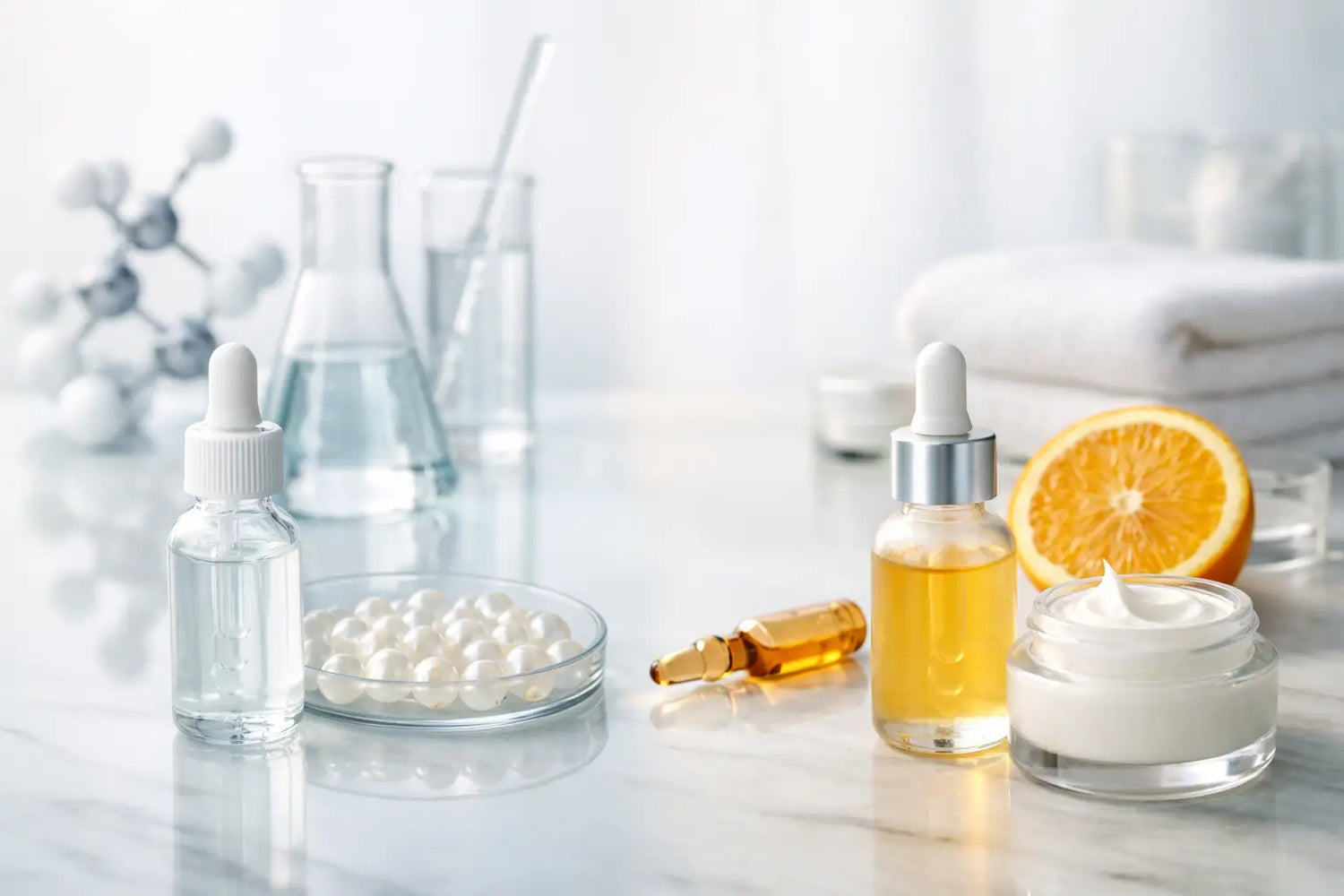
Fine lines can seem more noticeable when skin feels dry, reactive or less bouncy than it once did. That is especially common through perimenopause and menopause, when changing hormones can affect collagen, hydration and comfort. When comparing peptides versus retinol, the most helpful question is not which ingredient is universally better. It is which one supports your skin’s current needs without asking too much of its barrier.
Both ingredients have a place in a thoughtful skin routine. Retinol is known for encouraging skin renewal, while peptides are valued for their supportive, comfort-focused approach to firmer-looking skin. Understanding their differences can help you choose with more confidence, particularly if your skin has become dry, sensitive or unpredictable.
Peptides versus retinol: the core difference
Retinol is a vitamin A derivative. Once applied, it is converted by the skin into retinoic acid, which influences how skin cells behave. Over time, this can help improve the look of uneven texture, fine lines, pigmentation and congestion. It is a well-studied ingredient, but it can also be drying or irritating while skin adapts.
Peptides are short chains of amino acids, the building blocks associated with proteins such as collagen and elastin. In skincare, different peptides are formulated to send particular signals or support the skin’s appearance and barrier. They are often chosen for skin that needs nourishment and a smoother, plumper-looking finish without the same likelihood of visible peeling or sensitivity.
In simple terms, retinol is usually the more active, results-driven option for skin renewal. Peptides are generally the gentler, supportive option for maintaining a healthy-looking, resilient complexion. Neither ingredient replaces moisturiser, daily sun protection or a routine that respects your skin’s limits.
What retinol can do for mature and changing skin
Retinol has earned its reputation because consistent use can make a visible difference to the appearance of fine lines, rough texture and uneven tone. It helps encourage cell turnover and can support collagen production over time. For women noticing sun-related pigmentation, persistent breakouts or a loss of smoothness, retinol may be a valuable addition.
The trade-off is that retinol requires patience. In the first few weeks, skin may feel dry, tight or mildly flaky, particularly around the nose, mouth and eyes. Redness, stinging and a compromised skin barrier are signs that the formula, frequency or application method may be too much for your skin right now.
Hormonal transitions can make this more relevant. Menopausal skin may produce less oil and hold less moisture, so a retinol routine that once felt easy can suddenly become uncomfortable. Starting slowly is not a failure to use the product properly. It is often the most effective way to continue using it long enough to see benefits.
Use retinol at night and introduce it one or two evenings a week. Apply a small, pea-sized amount to dry skin, then follow with a nourishing moisturiser. Some women prefer the ‘sandwich’ approach: moisturiser first, then retinol, followed by another light layer of moisturiser. This can reduce irritation while the skin adjusts.
Daily broad-spectrum SPF 50+ sun protection is essential when using retinol, as skin may be more vulnerable to sun sensitivity. Retinol is also generally not recommended during pregnancy or breastfeeding unless your doctor has advised otherwise. If you have eczema, rosacea, persistently reactive skin or are using prescription skin treatments, speak with a GP, dermatologist or qualified skincare professional before introducing it.
Why peptides suit sensitive, dry or depleted skin
Peptide formulations tend to work beautifully in routines focused on comfort, hydration and restoration. They can support the appearance of firmer, smoother skin while sitting comfortably alongside barrier-supporting ingredients such as ceramides, hyaluronic acid, glycerin and nourishing oils.
For skin that feels thin, dry or easily irritated, peptides may be a more welcoming starting point than a strong active. They are also useful when you want a refined, well-supported complexion but do not want to manage the adjustment period that often comes with retinol.
This does not mean peptides deliver overnight transformation. Their effects are usually subtle and cumulative, and outcomes depend greatly on the formula, the peptide type, the rest of your routine and consistent use. Think of peptides as part of a long-term skin nourishment strategy rather than a quick fix for deep lines or significant pigmentation.
Peptides can be used morning or night, and many women find them easy to use every day. In the morning, a peptide serum or moisturiser can sit beneath sunscreen. At night, it can be paired with a replenishing moisturiser to help skin feel calm and cushioned by morning.
Is retinol or peptides better for you?
If your priority is visible renewal - such as softening the look of fine lines, addressing uneven tone or improving rough texture - retinol may offer stronger potential results. It is particularly suited to someone whose skin is reasonably resilient and who is willing to introduce an active gradually.
If your skin is dry, reactive, newly sensitive or affected by menopause-related changes, peptides may be the better first choice. They can help create a routine that feels restorative rather than challenging. This is also true if you have previously stopped using retinol because of flaking, stinging or persistent redness.
Many women do not need to choose one forever. A peptide-based moisturiser or serum can complement a carefully introduced retinol routine. Peptides can provide daily support, while retinol is used only on selected evenings. The key is to avoid adding several potent products at once, as it becomes difficult to know what your skin is responding to.
How to use peptides and retinol in one routine
A simple approach protects your skin barrier while allowing you to assess what is working. Begin with a gentle cleanser that does not leave the face tight or squeaky. Add peptides daily if they suit your skin, then use retinol on one or two nights each week after your skin has settled into the routine.
On retinol evenings, keep the rest of your routine calm. Avoid combining a new retinol product with exfoliating acids, scrubs or other potentially irritating actives until you know your tolerance. Hydration and moisturising are not optional extras here - they are what make a consistent routine more achievable.
On non-retinol nights, focus on replenishment. A peptide formulation followed by a nourishing moisturiser can help support the skin’s comfortable, hydrated feel. If your skin begins to sting when applying even simple products, take a break from retinol and return to gentle cleansing, moisturiser and sunscreen until it has recovered.
Skin changes deserve a kinder strategy
It is tempting to treat every fine line as something to correct, but skin health is broader than one active ingredient. Sleep, stress, sun exposure, hydration, nutrition and hormonal changes all influence how your complexion looks and feels. A routine that you can use consistently, without discomfort, is often more valuable than an aggressive one that stays in the bathroom cupboard.
At My Health Restore, we believe skincare can be part of a wider ritual of restoration - one that supports confidence, comfort and your changing needs. Whether peptides versus retinol leads you to a gentle daily peptide product, a carefully paced retinol routine or both, let your skin’s response guide the decision. Healthy-looking skin is not about pushing harder. It is about giving it the considered support it is asking for.