
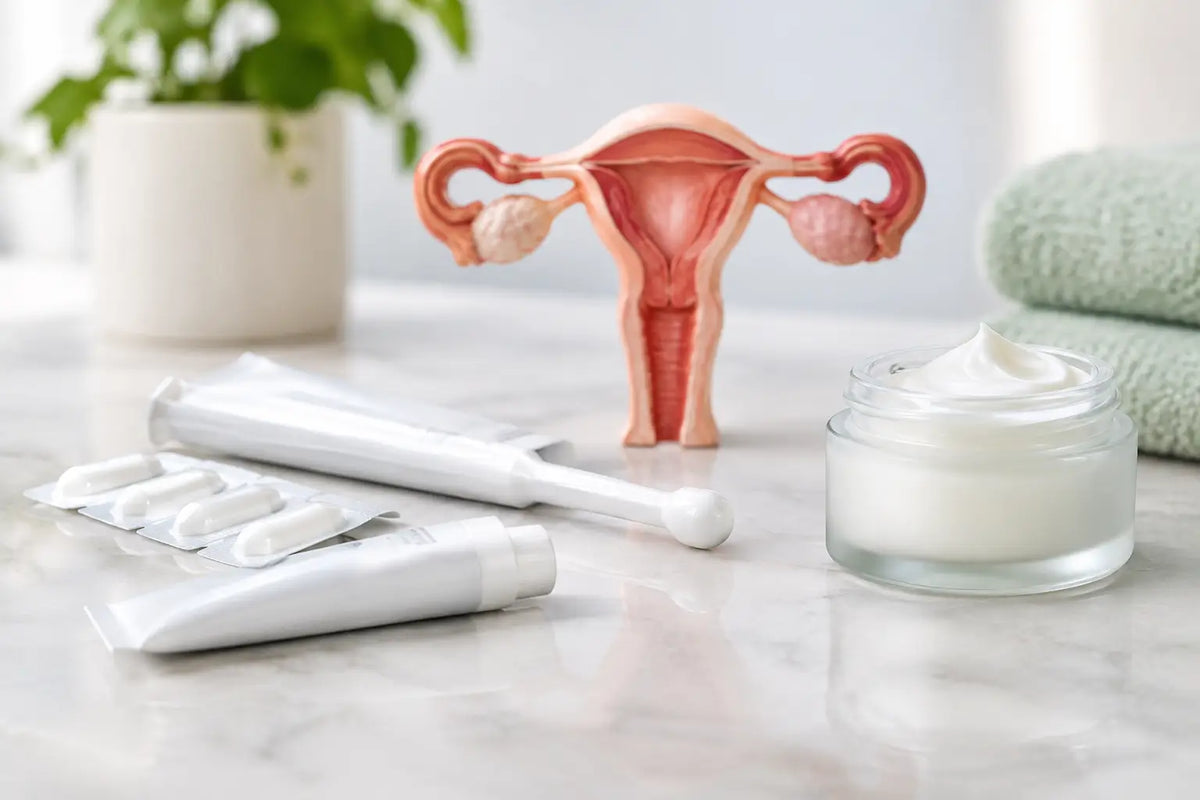
Vaginal dryness can make ordinary moments - sitting comfortably, exercising, intimacy or even sleeping - feel far less comfortable than they should. When comparing vaginal oestrogen versus moisturiser, the most useful question is not which option is universally better. It is which approach suits the cause, severity and pattern of your symptoms, as well as your personal health history.
Dryness, burning, irritation and discomfort with sex are common around perimenopause and menopause, but they are not something you simply have to put up with. Understanding the difference between hormonal treatment and hormone-free moisture support can help you make a more confident, informed choice.
Vaginal oestrogen versus moisturiser: the essential difference
Vaginal oestrogen is a low-dose prescription treatment designed to address changes caused by lower oestrogen levels. As oestrogen declines, vaginal tissues can become thinner, drier and less elastic. This is often called genitourinary syndrome of menopause, or GSM. Vaginal oestrogen may be prescribed as a cream, tablet, pessary or ring and is usually used directly in the vagina.
A vaginal moisturiser is a non-hormonal product intended to add and hold moisture in vaginal tissues. It can ease the dry, tight or irritated feeling many women experience, whether symptoms are linked to menopause, breastfeeding, certain medicines, cancer treatment or other changes in the body. Moisturisers are generally used on a regular schedule rather than only before sex.
In simple terms, vaginal oestrogen works on the hormonal driver of menopausal tissue change. A moisturiser supports day-to-day hydration and comfort without using hormones. Both can have a place in intimate care, but they do not work in exactly the same way.
When vaginal oestrogen may be considered
For women whose symptoms are clearly related to menopause, local vaginal oestrogen can be an effective treatment option. By supporting oestrogen-responsive vaginal tissue, it may help improve dryness, soreness, itching and discomfort during intercourse over time. Some women also find that urinary symptoms, such as urgency or repeated urinary tract infections, improve with clinical treatment for GSM.
Unlike menopausal hormone therapy taken as a tablet or patch, vaginal oestrogen is applied locally and is generally absorbed at much lower levels. Even so, it remains a medicine and should be discussed with a GP, women’s health practitioner or pharmacist who understands your medical history.
This conversation is especially important if you have had breast cancer, another oestrogen-sensitive cancer, unexplained vaginal bleeding, a history of blood clots, or are taking treatments that affect hormones. The right choice is individual. Your treating specialist may have particular advice if you are currently undergoing, or have previously had, cancer treatment.
Vaginal oestrogen is not usually an instant fix. Some women notice early changes within a few weeks, while fuller improvement can take longer and ongoing use may be recommended. Your prescriber can explain the appropriate product, dose and review plan.
What a vaginal moisturiser can do well
A quality vaginal moisturiser is often a practical first step for mild dryness or for women who would prefer to avoid hormones. It can be particularly helpful when discomfort is occasional, when you are waiting for a medical appointment, or when hormone-free care is the best fit for your circumstances.
Unlike a lubricant, which is designed to reduce friction during sexual activity, a moisturiser is intended to support comfort between intimate moments as well. Used consistently, it may reduce the dry, papery or tender feeling that can make everyday life uncomfortable.
For a hormone-free option, look for a product specifically formulated for vaginal use, rather than assuming a general body lotion or fragranced intimate wash will be suitable. Vaginal tissues are delicate, and unnecessary fragrance, harsh cleansers or irritating ingredients can worsen sensitivity for some women.
Products such as Hygeena vaginal suppositories may suit women seeking a hormone-free addition to their intimate wellness routine. As with any vaginal product, follow the directions carefully and stop using it if it causes burning, swelling, rash or persistent irritation.
The limits of moisturiser alone
Moisturisers can be wonderfully supportive, but it helps to have realistic expectations. They relieve dryness by improving hydration and reducing friction. They do not replace oestrogen or directly reverse all of the tissue changes associated with menopause.
If symptoms are moderate to severe, continue despite regular moisturiser use, or include recurrent urinary discomfort, pain with sex or vaginal tearing, a clinician may recommend assessing whether local oestrogen treatment is appropriate. There is no failure in needing more support. Vaginal health is part of whole-body health, and persistent symptoms deserve proper care.
A moisturiser may also be used alongside vaginal oestrogen when advised by your clinician. The treatments serve different purposes: one addresses local hormonal change, while the other supports moisture and comfort. Your routine may need a little adjustment to avoid using multiple vaginal products at the same time unless the product instructions or your practitioner say this is suitable.
How to choose the right starting point
Start by considering the pattern of your symptoms. If dryness is mild, comes and goes, and you want a hormone-free approach, regular use of a vaginal moisturiser may be a sensible place to begin. Keep track of whether your comfort improves over several weeks, not just after one application.
If dryness began around menopause and is accompanied by pain during sex, persistent burning, recurrent urinary symptoms or a marked change in vaginal comfort, book an appointment with your GP or a women’s health clinician. They can rule out other causes, such as infection, skin conditions or pelvic floor concerns, and discuss vaginal oestrogen or other treatments where appropriate.
If you are using a moisturiser, consistency matters. Apply it according to the product directions, rather than only on days when discomfort is at its worst. For intimacy, consider using a separate lubricant that is compatible with condoms or sex toys if relevant. A moisturiser supports baseline comfort; a lubricant is for reducing friction in the moment.
It can also help to simplify your external care. Wash the vulval area gently with water or a mild, fragrance-free cleanser if needed, avoid douching, and choose breathable underwear when possible. These small habits will not treat GSM on their own, but they can reduce avoidable irritation.
Symptoms that should not be self-treated
Not every intimate symptom is due to dryness. Seek medical advice promptly if you have unexpected bleeding after menopause, bleeding after sex, new or unusual discharge, a strong odour, pelvic pain, sores, fever, or symptoms that are not improving. These signs need assessment rather than repeated changes of over-the-counter products.
It is also worth checking in if dryness is affecting your relationships, sleep, confidence or ability to exercise. These concerns are valid medical and wellbeing concerns, not something too minor or embarrassing to raise. A good clinician will approach the conversation with care and without judgement.
A more comfortable way forward
The choice between vaginal oestrogen and moisturiser does not need to be all-or-nothing. A hormone-free moisturiser can offer valuable ongoing comfort, while local oestrogen may be the more targeted option for menopausal tissue changes when it is medically suitable. The best approach is the one that respects your symptoms, preferences and health history.
You deserve intimate care that feels considered, gentle and effective. Start with the support that feels right for you, stay curious about how your body responds, and seek personalised clinical guidance whenever symptoms persist or change.