
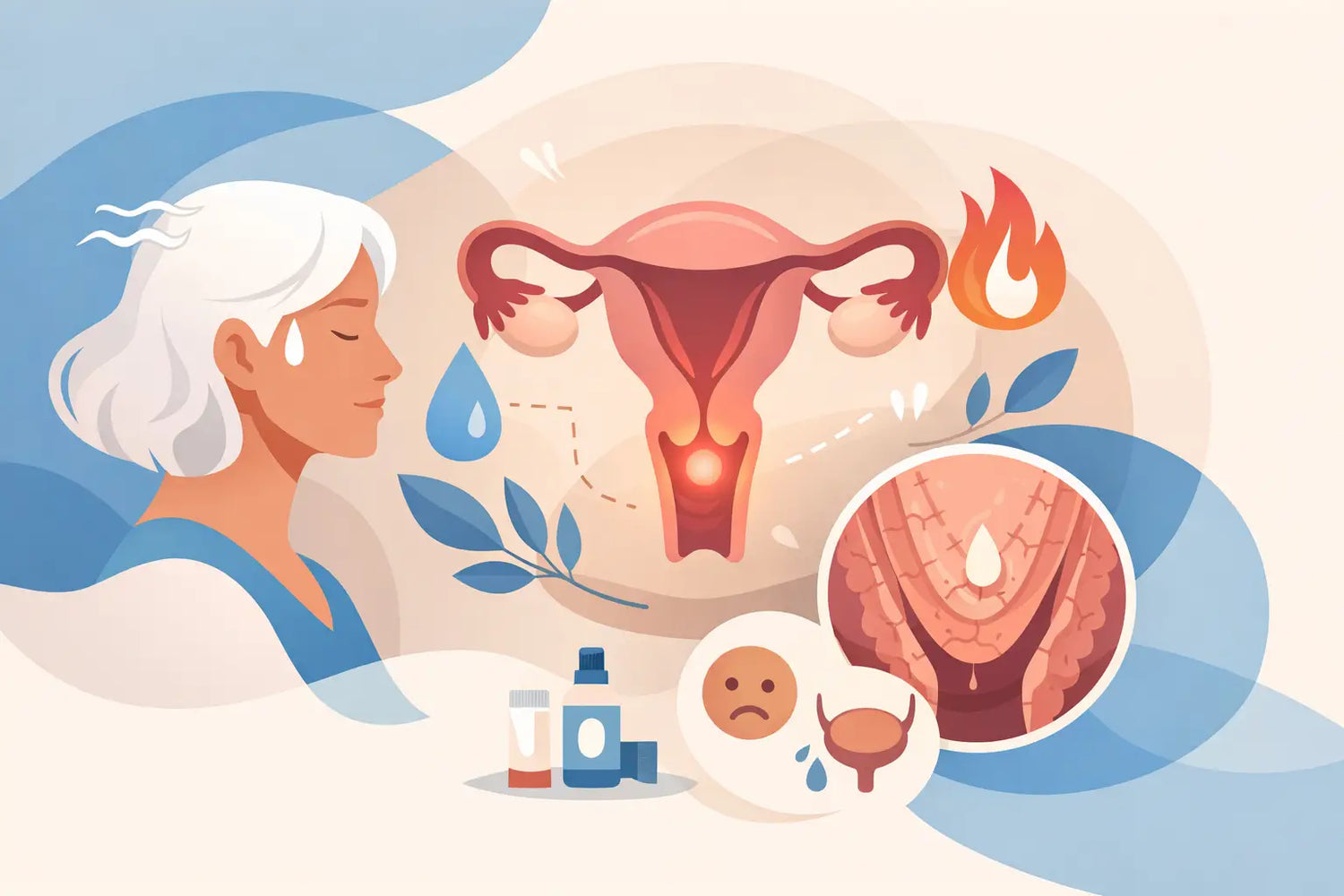
If sex has started to feel uncomfortable, you are noticing more bladder irritation, or everyday dryness is making you feel unlike yourself, it may be more than “just menopause”. Genitourinary syndrome of menopause symptoms can affect the vagina, vulva, bladder and urinary tract, and they are far more common than many women realise.
For many women, these changes creep in quietly. A little more dryness. A bit of stinging after intimacy. A stronger urge to wee, or more frequent urinary tract infections. Because the symptoms can feel personal or embarrassing, many women put up with them for months or even years. The good news is that these symptoms are recognised, understood, and very often manageable with the right support.
What is genitourinary syndrome of menopause?
Genitourinary syndrome of menopause, often shortened to GSM, is the term used to describe a group of menopause-related changes that affect the vaginal and urinary tissues. These changes are largely linked to falling oestrogen levels, which can cause the tissues of the vulva, vagina, urethra and bladder to become thinner, drier and less elastic.
Older terms like vaginal atrophy were once used more often, but GSM is broader and more accurate because it reflects that this is not only about vaginal dryness. It can also involve urinary symptoms, irritation and changes that affect daily comfort, exercise, sleep and intimacy.
Unlike hot flushes, which may ease over time, GSM often persists or gradually worsens if it is not addressed. That is one reason it deserves more attention than it often gets.
Common genitourinary syndrome of menopause symptoms
Genitourinary syndrome of menopause symptoms can vary from woman to woman. Some experience mostly vaginal discomfort, while others notice bladder symptoms first. For many, it is a mix of both.
Vaginal and vulval symptoms
Dryness is one of the best known symptoms, but it is not the only one. Many women describe burning, itching, tenderness or a feeling of tightness. The tissues may feel more fragile, and there can be discomfort when sitting for long periods, exercising, wearing fitted clothing or using certain soaps and washes.
Pain during sex is also common. This can happen because the vaginal tissues are less naturally lubricated and less stretchy than before. Some women notice light bleeding or soreness after intimacy, which can be alarming if you are not expecting it.
There may also be a reduction in natural vaginal secretions, changes in discharge, or a general sense that the vaginal area feels irritated more often than it used to.
Urinary symptoms
GSM can also affect the lower urinary tract. You may feel a frequent need to wee, a sudden urge to go, or a burning sensation that feels similar to a urinary tract infection. Some women experience recurrent UTIs, while others have bladder discomfort without a clear infection.
Leaking can also become more noticeable, especially with urgency. If you are finding yourself planning your day around toilet access, or feeling anxious about long car trips, meetings or walks, GSM may be part of the picture.
Why these symptoms happen
Oestrogen helps keep intimate tissues healthy, cushioned and well-lubricated. When levels fall during perimenopause and menopause, blood flow to these tissues can reduce. The vaginal lining may become thinner, the natural moisture balance can shift, and the tissue can lose some of its suppleness.
The bladder and urethra are affected too, which is why symptoms are not limited to dryness alone. Changes in the vaginal microbiome and pH can also make the area more vulnerable to irritation and infection.
This is not a reflection of hygiene, sexual activity or doing anything wrong. It is a physiological response to hormonal change, and it is very common.
When symptoms show up
Some women notice GSM symptoms during perimenopause, while periods are still irregular rather than fully finished. Others do not notice a clear change until after menopause. Symptoms may also become more obvious after cancer treatment, surgical menopause, breastfeeding, or at times of low oestrogen for other reasons.
The pace is different for everyone. A woman dealing with severe dryness and irritation may need more active support than someone with mild, occasional symptoms. That is why personalised care matters.
What can make symptoms worse
Certain products and habits can aggravate already sensitive tissues. Scented washes, harsh soaps, bubble baths and fragranced pads or liners can all add to irritation. Some women also find that long periods in activewear, dehydration, stress, or a lack of sexual activity make symptoms more noticeable.
It also depends on your wider health picture. Pelvic floor tension, recurrent infections, skin conditions, and some medications can overlap with GSM. If symptoms are persistent, severe, or changing quickly, it is wise to speak with a GP or women’s health professional rather than self-diagnosing.
Natural support options for comfort and tissue care
For women looking for hormone-free support, there are practical ways to improve comfort and help protect delicate intimate tissues.
Regular vaginal moisturising can make a meaningful difference. Unlike personal lubricants, which are usually used around intimacy, vaginal moisturisers are designed to help maintain hydration more consistently. This can support day-to-day comfort and reduce that dry, irritated feeling.
Lubrication during sex is also important. A well-chosen lubricant can reduce friction, help prevent micro-tears and make intimacy more comfortable. It may not solve the underlying tissue changes on its own, but it can be a very helpful part of a broader approach.
Some women also benefit from hormone-free vaginal suppositories formulated to support moisture and tissue repair. This can be especially appealing for those who prefer a natural intimate wellness routine or who are not suitable candidates for hormonal options.
At My Health Restore, this style of support sits within a broader view of women’s wellbeing - practical relief, body-friendly ingredients and consistent care rather than quick fixes.
Lifestyle support still matters
While GSM usually needs more than general wellness advice alone, daily habits can still help. Staying hydrated supports mucous membranes, and avoiding irritants is often one of the simplest changes with the biggest payoff. Choosing breathable cotton underwear and changing out of damp clothes promptly can also improve comfort.
Pelvic floor support may help too, especially if urinary symptoms or pain with sex are part of the picture. This does not always mean doing more squeezing exercises. For some women, a tight or overactive pelvic floor is part of the problem, so guided care from a pelvic health physio can be useful.
Nutrition, sleep and stress management are not cure-alls, but they do influence how resilient your body feels overall. When your nervous system is overloaded, symptoms often feel harder to cope with.
When to seek medical advice
If you have ongoing burning, bleeding, pelvic pain, recurrent UTIs, pain during sex, or urinary leakage that is affecting your life, it is worth getting assessed. These symptoms can overlap with other conditions, including infections, pelvic floor dysfunction and some skin disorders.
A healthcare professional can help confirm whether GSM is involved and discuss treatment options. Depending on your health history, this may include non-hormonal products, prescription therapies, or a combination approach. There is no single right path for everyone.
Some women are comfortable starting with natural, hormone-free support. Others need medical treatment as well. What matters most is that you do not have to simply put up with discomfort because it arrived alongside menopause.
The emotional side of GSM
One of the hardest parts of genitourinary syndrome of menopause symptoms is how quietly they can affect confidence. When your body feels sore, dry or unpredictable, it can change how you feel about intimacy, exercise and even getting through a normal day.
Many women blame themselves or assume they are somehow ageing badly. That is not the reality. GSM is a common health issue, not a personal failing. Naming it can be a relief, because once you understand what is happening, you can choose support that is appropriate and effective.
If this sounds familiar, give yourself permission to take it seriously. Intimate comfort is not a luxury. It is part of feeling well in your body, and it deserves thoughtful care.