
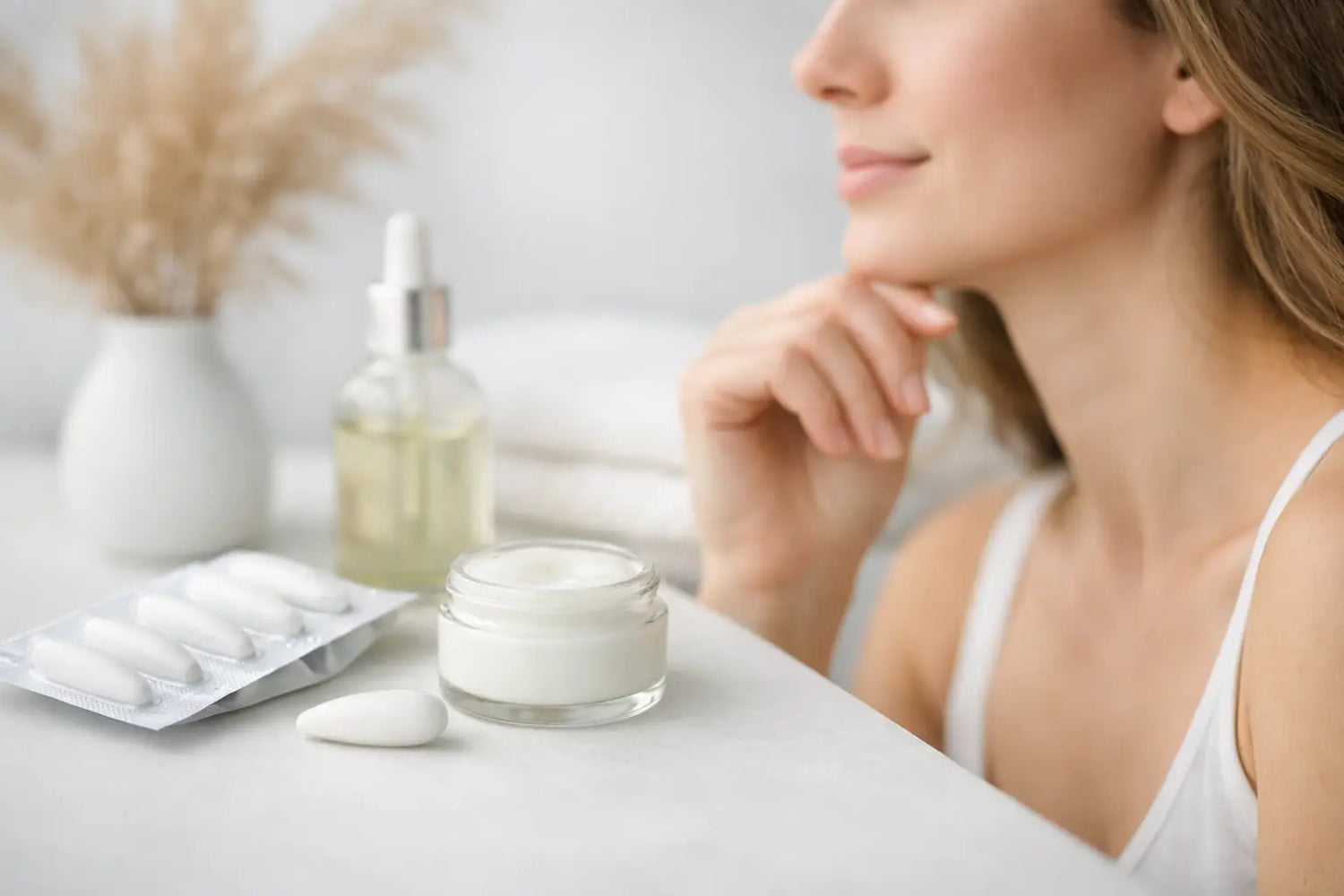
Vaginal discomfort is easy to dismiss as something you simply have to put up with, especially through perimenopause and menopause. But dryness, irritation and pain with intimacy are not a personal failing or an inevitable price of ageing. When should women use suppositories? A vaginal suppository may be a helpful, local option when dryness or delicate vaginal tissue is affecting comfort, provided the symptoms are suitable for self-care and the product matches your needs.
What vaginal suppositories are designed to do
A vaginal suppository is a small, solid preparation inserted into the vagina, where it melts or dissolves. Depending on its ingredients and purpose, it may deliver moisture, support the vaginal environment or provide a medicine for a specific condition.
This matters because not all suppositories are interchangeable. A moisturising, hormone-free suppository intended for vaginal dryness is very different from an antifungal pessary used to treat thrush. The right choice begins with identifying the likely cause of your symptoms, rather than treating every form of discomfort in the same way.
For women looking for non-hormonal support, vaginal moisturising suppositories can be particularly useful for replenishing comfort locally. They are often considered by women in hormonal transition, those who cannot or prefer not to use hormonal treatments, and anyone dealing with occasional dryness from changes in lifestyle, stress, medications or natural ageing.
When should women use suppositories for dryness?
Vaginal suppositories for moisture and comfort may suit you when symptoms feel consistent with vaginal dryness. You may notice a dry, tight or irritated feeling, discomfort with intercourse, mild burning that is not linked to infection, or sensitivity when wearing fitted clothing. Some women also feel more uncomfortable after exercise, swimming or using fragranced intimate products.
Declining oestrogen around perimenopause and menopause is a common reason for these changes. Lower oestrogen can make vaginal tissues thinner, less elastic and less naturally lubricated. This is often described as vaginal atrophy, although clinicians may use the broader term genitourinary syndrome of menopause. The experience can be gradual, so it is common to notice a change in comfort before connecting it to hormonal transition.
A moisturising suppository is usually used as part of a regular care routine rather than only immediately before intimacy. Unlike a personal lubricant, which is designed to reduce friction during sex, a vaginal moisturiser aims to support day-to-day vaginal comfort. Some women use both, with each serving a different purpose.
Products such as Hygeena vaginal suppositories are designed for women seeking local, hormone-free moisture and support for dry, fragile-feeling vaginal tissue. Follow the directions on the individual product carefully, as frequency, timing and suitability vary with the formulation.
Times when local support may be worthwhile
You may wish to consider a suitable vaginal moisturising suppository if dryness is recurring, intimacy has become uncomfortable, or the vaginal area feels less comfortable than it once did without obvious signs of infection. It can also be a thoughtful addition to self-care after discussing menopausal symptoms with your GP, particularly if you are exploring non-hormonal options.
The goal is not to mask persistent pain. It is to give dry tissue gentle, appropriate support while paying attention to what your body is telling you. If symptoms improve and remain settled, that is useful information. If they return quickly, worsen or feel unlike ordinary dryness, it is time to seek tailored advice.
When a suppository may not be the right answer
Itching, discharge and odour can happen for several reasons, including thrush, bacterial vaginosis, irritation from a product, sexually transmitted infections and skin conditions. A moisturising suppository will not treat all of these, and using the wrong product may delay an accurate diagnosis.
Thrush often causes intense itch, soreness and a thick white discharge, although symptoms can vary. Antifungal vaginal pessaries are available for some cases, but recurring or first-time symptoms are worth discussing with a pharmacist or GP rather than assuming they are thrush. Repeated self-treatment can become frustrating when the underlying issue is something else.
Do not use a vaginal product solely to manage unexplained bleeding, a new lump, pelvic pain or significant pain during sex. These symptoms deserve clinical assessment. Similarly, if you have had gynaecological cancer, are pregnant, have recently given birth, are breastfeeding, or have a health condition affecting your immune system, ask a doctor, midwife or pharmacist before starting a new vaginal treatment.
Seek medical care promptly if you have red flags
Arrange a GP appointment or sexual health consultation promptly if you experience unusual vaginal bleeding, fever, lower abdominal or pelvic pain, sores or blisters, a strong unpleasant odour, green or yellow discharge, or pain when passing urine. It is also wise to get checked if symptoms have not improved after using a product as directed, or keep returning.
For Australian women, a GP, women's health clinic or pharmacist can help distinguish between dryness, infection and other conditions without judgement. You do not need to wait until symptoms become severe to ask.
How to use vaginal suppositories comfortably
Using a suppository should feel straightforward, although the first time can feel unfamiliar. Read the product leaflet before use and wash your hands. Many women find insertion easiest before bed, as lying down gives the suppository time to dissolve and can reduce leakage during the day.
Get into a comfortable position, such as lying on your back with knees bent or standing with one foot raised. Gently insert the suppository as far as is comfortable, without forcing it. A panty liner can be helpful overnight or the following day, as some residue or discharge is normal with dissolving products.
Avoid douching, fragranced washes and deodorising sprays while managing dryness or irritation. The vagina is self-cleaning, and harsh products can disrupt its natural balance or aggravate sensitive tissue. Washing the external vulval area with water or a gentle, fragrance-free cleanser is generally enough.
If a suppository causes stinging, swelling, rash or increased irritation, stop using it and speak with a pharmacist or GP. Natural or hormone-free does not automatically mean every ingredient will suit every person, especially if you have sensitive skin or known allergies.
Build comfort into your wider wellbeing routine
Vaginal dryness can be local, but it is often influenced by the bigger picture. Drinking enough water, choosing breathable cotton underwear, avoiding perfumed pads where possible and allowing time for arousal during intimacy can all support comfort. If sex is painful, slowing down and using a compatible lubricant may help, but ongoing pain should not be pushed through.
Menopause care is also individual. Some women find regular non-hormonal vaginal moisturisers are enough, while others benefit from prescribed local oestrogen or another treatment plan. Local oestrogen is not the same as systemic menopausal hormone therapy, but it still needs an informed conversation with your clinician to determine whether it is suitable for you.
There is no need to be embarrassed by a change in vaginal comfort. Choosing a well-suited suppository can be a gentle act of care, and asking for help when symptoms do not feel right is an equally confident one.