
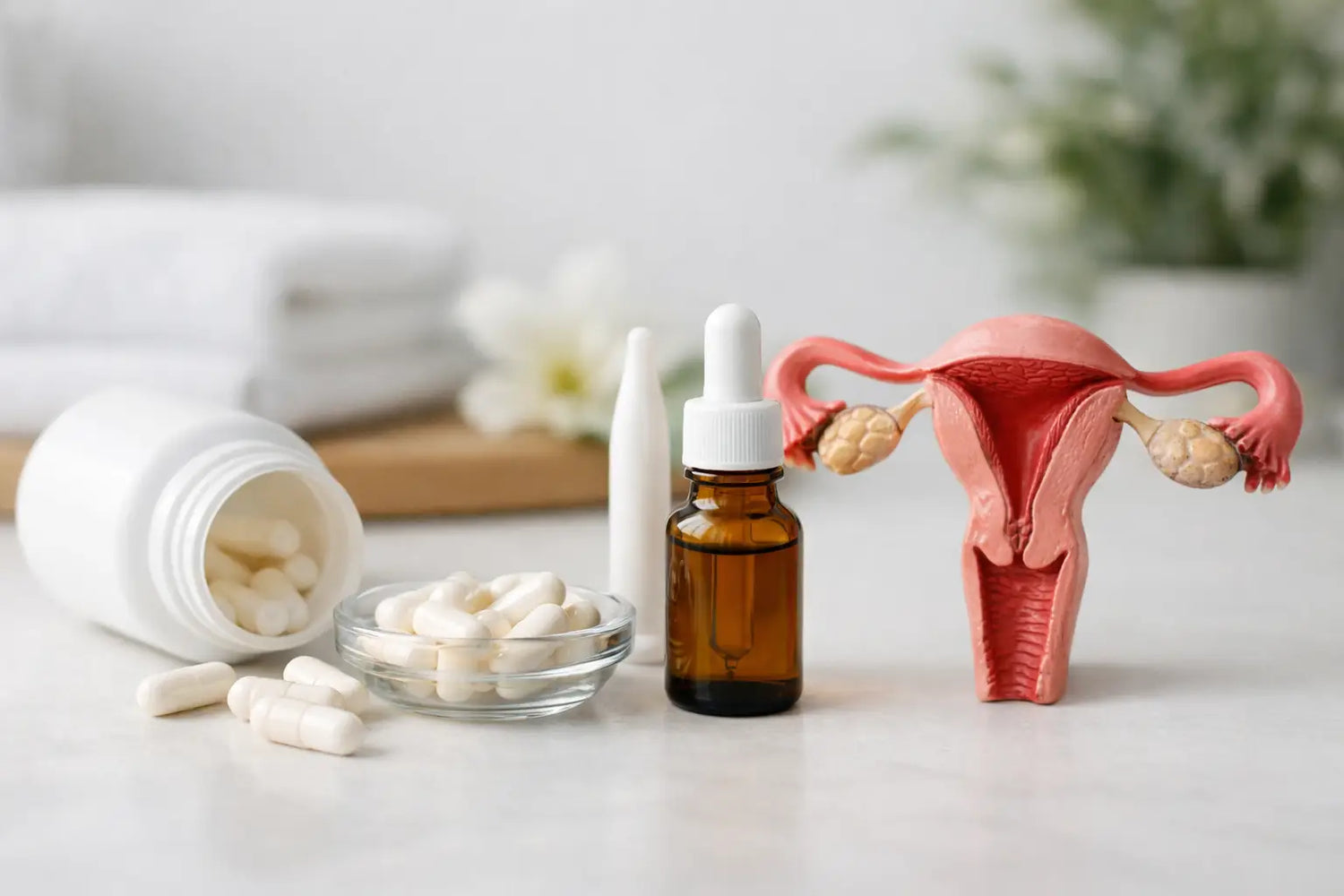
A course of antibiotics, a change in hormones or recurring irritation can leave you looking for a gentle way to feel like yourself again. But are vaginal probiotics effective? The honest answer is that they can be helpful in some situations, particularly as support for restoring healthy vaginal bacteria, but they are not a universal fix for every intimate symptom.
The vagina has its own finely balanced ecosystem. Understanding what probiotics can realistically do, and what they cannot, helps you choose care that is both reassuring and appropriate for your body.
What vaginal probiotics are designed to do
Vaginal probiotics contain beneficial bacteria, most often strains of Lactobacillus. In a healthy reproductive-age vagina, Lactobacillus bacteria are usually dominant. They produce lactic acid, which helps maintain an acidic vaginal environment. This acidity makes it harder for some unwanted bacteria to multiply.
Probiotic products are generally taken orally or inserted vaginally, depending on the formulation. The intended goal is similar: to support the return or maintenance of Lactobacillus bacteria after that balance has been disrupted.
That disruption can happen for many ordinary reasons. Antibiotic use, sex, menstruation, a new hormonal contraceptive, stress and the hormonal changes of perimenopause and menopause may all influence the vaginal environment. A shift in bacteria does not always cause symptoms, but for some women it can be linked with odour, unusual discharge, irritation or repeat infections.
Are vaginal probiotics effective for bacterial vaginosis?
The strongest interest in vaginal probiotics is around bacterial vaginosis, often called BV. BV occurs when the usual Lactobacillus-dominant balance changes and other bacteria become more abundant. Common signs include a noticeable fishy odour, thin greyish or white discharge, and sometimes mild burning or irritation. Some women have no symptoms at all.
Research suggests certain Lactobacillus probiotics may improve the likelihood of restoring a healthier vaginal microbiome, especially when used alongside standard prescribed treatment for BV. They may also have a role in reducing recurrence for some women. However, results vary widely between studies because probiotic strains, doses, delivery methods and treatment schedules are different.
This distinction matters. A probiotic is not a reliable replacement for assessment and treatment when you have symptoms of BV. Untreated BV can be associated with complications in some circumstances, including pregnancy and certain gynaecological procedures. If you have a new or persistent change in odour or discharge, a GP or sexual health clinic can identify the cause rather than leaving you to guess.
For women who experience recurring BV, a clinician may recommend a treatment plan that includes prescribed medicine and, in selected cases, a probiotic product. The probiotic is best viewed as a possible supportive tool, not a stand-alone cure.
The strain matters more than the marketing
Not every product labelled ‘probiotic’ has evidence for vaginal health. Benefits are strain-specific, meaning the exact bacterial strain is more meaningful than a long list of species on a label. Products studied for vaginal health commonly include particular Lactobacillus strains, but a high number of colony-forming units alone does not guarantee that a product will work.
It is also worth being wary of broad promises to ‘cleanse’, ‘detox’ or permanently rebalance the vagina. The vagina is self-cleaning. Good intimate care is usually less about doing more and more about avoiding unnecessary disruption.
Probiotics are not a treatment for every cause of irritation
Vaginal symptoms can overlap, even when the underlying causes are quite different. Thrush, BV, sexually transmitted infections, skin conditions, allergic reactions and hormonal vaginal dryness can all cause discomfort. Treating the wrong issue with a probiotic can delay the care you actually need.
For thrush, probiotics have not been shown to consistently treat an active yeast infection. If you have thick white discharge, intense itch or swelling, antifungal treatment may be needed. Repeated self-treatment is not ideal either, as symptoms that seem like thrush may have another cause.
For sexually transmitted infections, probiotics are not treatment. Testing is particularly important after a new sexual partner, unprotected sex, pelvic pain, bleeding after sex, sores, or a significant change in discharge.
If symptoms are severe, recurrent or unfamiliar, consider a medical appointment before adding supplements. Seek prompt care for fever, pelvic or lower abdominal pain, vaginal bleeding that is not your period, sores, or symptoms during pregnancy.
Menopause changes the question
During perimenopause and menopause, falling oestrogen changes vaginal tissue as well as the microbiome. The vaginal walls can become thinner, drier and less elastic, and the pH tends to become less acidic. This can contribute to dryness, burning, discomfort during sex, urinary urgency and a greater tendency towards irritation or infection.
A probiotic may support microbial balance, but it cannot directly replace the moisture, elasticity or tissue support affected by lower oestrogen. This is why vaginal probiotics may feel disappointing if dryness or pain is the main concern.
For menopause-related vaginal dryness, practical comfort measures may include a gentle, fragrance-free moisturiser formulated for vaginal use, lubricant during sex and avoiding perfumed washes or douches. Some women discuss vaginal oestrogen or other prescribed options with their doctor. For those seeking a hormone-free approach to comfort, specialised vaginal suppositories designed to support moisture and delicate tissue can be a separate consideration from probiotics. At My Health Restore, this distinction is central to choosing care that matches the symptom rather than simply following a trend.
How to use probiotics thoughtfully
If you decide to try a probiotic, give it a fair but defined trial rather than taking it indefinitely without a plan. Choose a product intended for vaginal health, follow the manufacturer’s directions, and note whether it is designed for oral or vaginal use. Do not insert an oral capsule unless the product specifically says it is suitable for vaginal use.
Keep your routine simple while you assess results. Avoid vaginal douches, deodorising sprays and harsh soaps, as these can irritate sensitive tissue and affect the natural balance you are trying to support. Washing the vulva gently with water or a mild, fragrance-free cleanser is usually enough. The vulva is the external skin; the vagina does not need internal washing.
Pay attention to patterns, not just single days. It can be useful to note symptoms in relation to your cycle, sex, antibiotics, new products and menopause changes. This information can make a clinical conversation more productive, particularly if symptoms keep returning.
Probiotics are usually well tolerated by healthy adults, although mild digestive changes can occur with oral products. If you are pregnant, immunocompromised, have a complex health condition or are using prescribed treatment, check with your GP, pharmacist or treating specialist first.
A more useful way to think about vaginal balance
Vaginal probiotics can be a worthwhile addition for some women, particularly after treatment for BV or when recurrence is a concern. Their effectiveness depends on the specific strain, the symptom being addressed and whether there is a diagnosed condition requiring medical care.
Your intimate health does not need to be managed through discomfort, embarrassment or endless trial and error. When you match support to what your body is actually signalling, whether that is microbial imbalance, menopause-related dryness or another concern, you create a calmer path back to everyday comfort and confidence.