
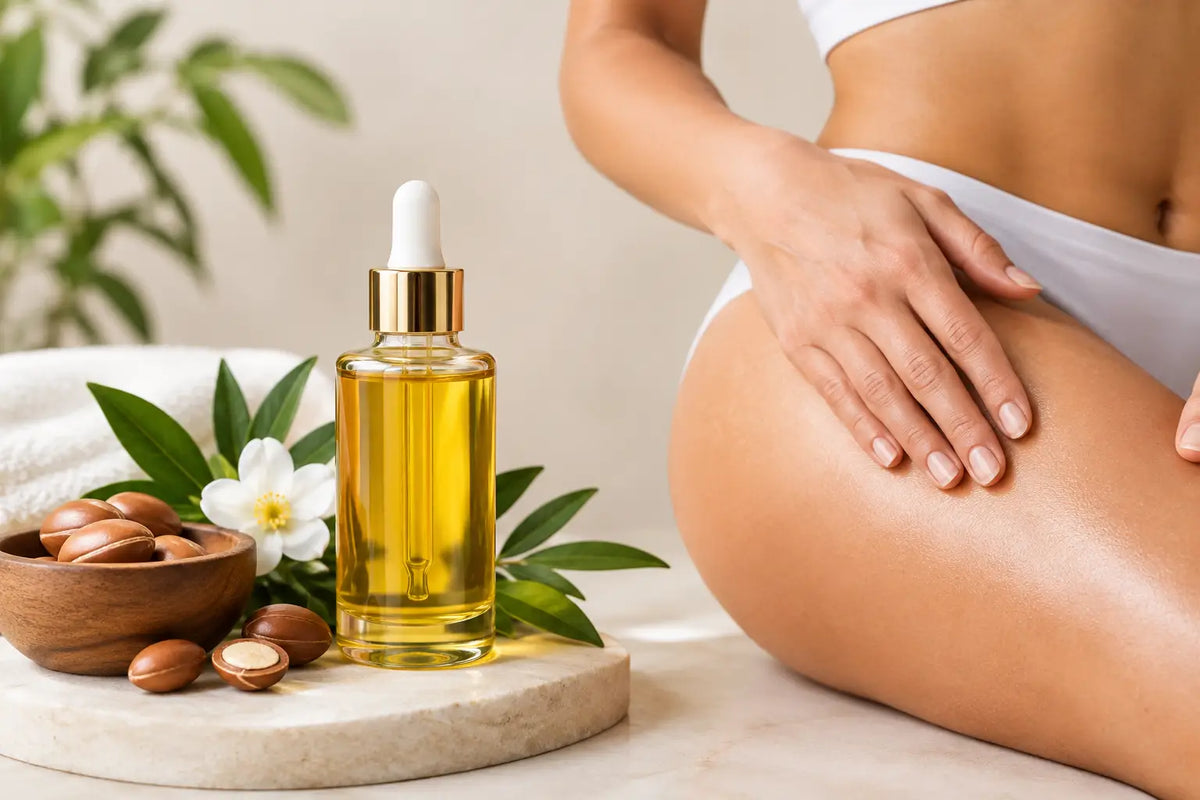
Skin can feel different almost quietly. A little less springy along the arms, a crepey texture above the knees, or dryness that makes the whole body look less luminous. The best firming body oils can be a beautiful part of caring for these changes, particularly through perimenopause, menopause, weight fluctuation or seasons when skin feels depleted.
A body oil cannot tighten loose skin or change the deeper structure of collagen and elastin. What it can do is replenish lipids, reduce the look of dryness, soften rough texture and give skin a smoother, more supple appearance. Used with consistent massage, it also creates a small daily ritual that supports body confidence rather than asking you to fight every natural change.
What a firming body oil can realistically do
The word “firming” is often used broadly in body care. In practical terms, a good firming oil helps skin look and feel more cushioned, hydrated and toned. When the skin barrier is well supported, light reflects more evenly from its surface, and fine dry lines can look less noticeable.
This matters during hormonal transition. Oestrogen plays a role in skin thickness, hydration and collagen maintenance, so lower levels can contribute to dryness and a loss of elasticity. Ageing skin also tends to produce less natural oil. A nourishing body oil does not replace hormones or treat medical concerns, but it can make dry, mature skin feel far more comfortable.
Massage adds another worthwhile element. Taking a few minutes to apply oil with steady upward strokes can temporarily boost circulation at the skin’s surface and encourage you to notice what your body needs. The result is not an overnight lift, but a cared-for, more polished feel that builds with regular use.
How to choose the best firming body oils
Look beyond glamorous packaging and focus on the oil blend itself. The best choice depends on whether your skin is dry, sensitive, prone to body breakouts or simply craving a richer finish.
Plant oils that replenish the skin barrier
Oils rich in fatty acids are especially helpful for dry or mature skin. Jojoba oil is technically a wax ester with a composition similar to the skin’s own sebum, making it a comfortable option for many skin types. Sweet almond oil is a classic choice for softness and slip, while sunflower seed oil is rich in linoleic acid and suits a compromised or dry-feeling barrier.
Rosehip oil is valued for essential fatty acids and naturally occurring vitamin A compounds. It is often included in blends designed to improve the look of uneven tone and texture. Argan oil offers a richer feel and antioxidant support, while squalane is lightweight, silky and useful for those who dislike a heavy or greasy residue.
For very dry areas such as shins, elbows and décolletage, look for a blend that combines lighter oils with more substantial emollients. A formula that feels elegant enough to use daily is generally more useful than an ultra-rich oil that stays untouched in the bathroom cupboard.
Antioxidants for skin exposed to daily stress
Vitamin E is commonly added to body oils because it supports the formula’s stability and provides antioxidant benefits for the skin. Botanical extracts, including sea buckthorn and pomegranate, can also complement an oil blend, particularly if your concern is dullness as well as dryness.
Antioxidants are not a substitute for sun protection. If your chest, arms and legs are exposed during the Australian summer, use broad-spectrum SPF on exposed skin. A luminous oil can enhance the appearance of skin, but it should not be mistaken for sun care.
A fragrance level your skin can tolerate
A beautifully scented body oil can make self-care feel special, but fragrance is not essential for firm-looking skin. If your skin is reactive, itchy, eczema-prone or newly sensitive during menopause, choose a fragrance-free formula or one with a very simple ingredient list.
Essential oils can be pleasant but are not automatically gentler because they are natural. Citrus oils, in particular, may increase photosensitivity depending on the ingredient and formulation. Patch test a new product on a small area first, and stop using it if stinging, redness or a rash develops.
Texture matters more than you may think
The right texture often determines whether you will use an oil consistently. A fast-absorbing dry oil is ideal in the morning, when you need to dress soon after applying it. A richer, slower-absorbing oil can be lovely at night, especially for a longer massage after a shower or bath.
If you are prone to folliculitis or body breakouts, avoid assuming that the richest oil is the best. Try a lighter, non-comedogenic-feeling formula and apply a small amount first. It may also help to keep application focused on areas that feel dry rather than layering oil heavily over the back or chest.
For women with sensitive intimate skin, body oils belong on the external body only unless a product is specifically formulated and directed for vulval use. Do not apply standard fragranced body oils internally or use them as a treatment for vaginal dryness. Vaginal dryness, irritation and discomfort deserve products designed for vaginal tissue, as well as guidance from a qualified health professional when symptoms persist.
How to apply body oil for the best finish
The simplest technique is also the most effective: apply oil to skin that is still slightly damp after bathing. Pat yourself dry rather than rubbing vigorously, then warm a small amount of oil between your palms. The remaining water on the skin helps hold hydration in, while the oil softens and seals the surface.
Start at the ankles and work upwards with long, comfortable strokes. Around the thighs, hips and upper arms, use gentle circular movements if that feels good. There is no need to press hard or massage until the skin becomes red. Consistency and care matter more than intensity.
Use a little more on areas that tend to look dry or textured, such as knees, elbows, shins and the upper chest. Give the oil a few minutes to absorb before getting dressed, and choose breathable fabrics if you are using a richer formula overnight.
Two to five applications a week is enough for most people, though very dry skin may enjoy daily use. You may notice immediate softness after the first application, while the more refined look of consistently moisturised skin usually becomes clearer over several weeks.
Pair body oil with habits that support skin
Body oil works best as one part of a broader approach to skin health. Protein provides amino acids used throughout the body, including in skin structures, while colourful fruit and vegetables offer antioxidant nutrients. Drinking enough water supports general wellbeing, although it will not replace moisturising dry skin from the outside.
Resistance training can be especially meaningful as we age. Building or maintaining muscle beneath the skin can improve the body’s overall shape and strength, which no topical oil can replicate. Sleep, stress management and sun protection also influence how skin looks and feels over time.
If you experience sudden skin thinning, unexplained bruising, a persistent rash or significant itching, seek personalised advice from your GP or dermatologist. These symptoms may need more than a cosmetic product.
A more caring definition of firm
The best body oil is not necessarily the one with the boldest promise. It is the one that suits your skin, feels nourishing to apply and becomes an easy act of care you can return to. Whether you choose a light botanical blend for daytime or a richer oil for your evening ritual, let the goal be skin that feels comfortable, soft and well supported in the body that carries you through every season.