
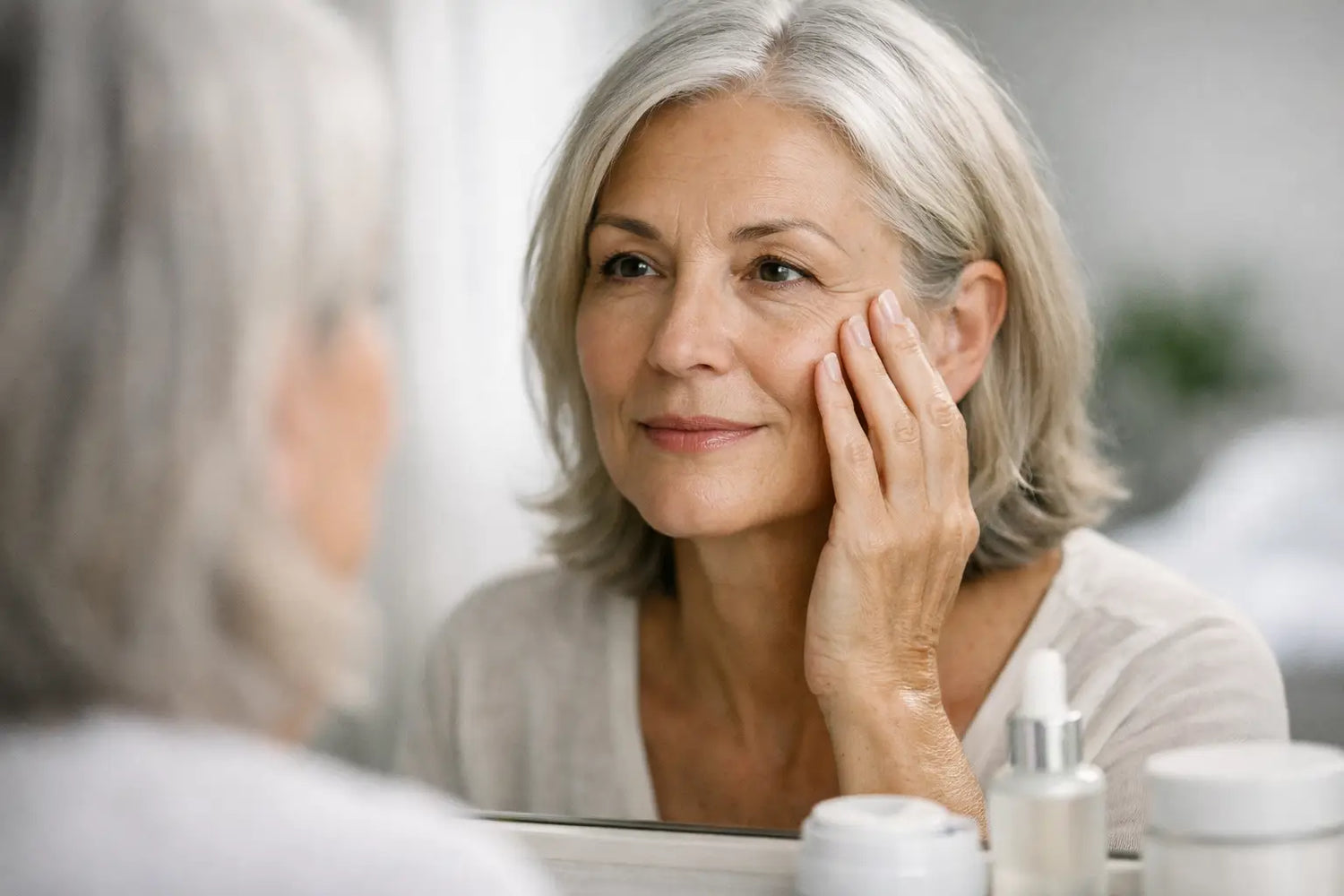
A face wash that once felt refreshing can suddenly leave your cheeks tight. Foundation may settle into fine lines by lunchtime, while skin on the body becomes itchy, papery or unexpectedly reactive. This guide to menopause skin changes explains why these shifts happen and how to care for your skin with more comfort, patience and confidence.
Menopause does not look the same for everyone. Some women notice only a little extra dryness, while others experience significant sensitivity, breakouts, pigmentation changes or a rapid loss of firmness. None of these changes mean you have neglected your skin. They reflect a genuine hormonal transition, and a gentle, consistent approach can make a meaningful difference.
A guide to menopause skin changes: what is happening
Oestrogen supports far more than reproductive health. In the skin, it helps maintain collagen, natural oils, hydration and wound repair. During perimenopause and after menopause, fluctuating and declining oestrogen can affect all of these processes. Skin may produce less sebum, hold less water and become slower to recover after irritation.
Collagen also declines with age, and the hormonal shift can accelerate the visible effects. You may notice thinner skin, reduced elasticity, more pronounced lines around the mouth and eyes, or a less plump appearance through the cheeks. This is normal biology, not a personal failing or something that can be corrected overnight by a single cream.
Australian sun exposure can add another layer. Years of ultraviolet exposure contribute to uneven tone, dark spots, fine lines and fragility, even if you have always been careful. Menopause may simply make existing sun damage more noticeable.
Dryness, itching and sensitivity
Dryness is one of the most common concerns. It can show up on the face, shins, arms, hands and scalp, sometimes alongside itchiness or a rough texture. A weakened skin barrier is often part of the picture: when the barrier is less able to hold moisture in and keep irritants out, products you previously tolerated may start to sting.
Sensitivity does not always mean an allergy. It may be a sign that your routine is too active for your skin right now, particularly if it includes exfoliating acids, scrubs, fragranced products or multiple treatment serums. Rosacea, eczema and contact dermatitis can also emerge or flare during midlife, so persistent redness, burning or scaling deserves professional advice rather than more trial and error.
Breakouts, pigmentation and texture changes
It can feel particularly unfair to have both dry skin and acne. Yet hormonal fluctuations can still influence oil production and inflammation, often causing breakouts around the chin and jawline. Heavy, occlusive products may help very dry skin but can feel too rich for acne-prone areas. In this case, lighter barrier-supporting layers may be a better fit than abandoning moisturiser altogether.
Pigmentation may deepen with sun exposure and hormonal change. Texture can become less even as cell turnover slows, while pores can appear more visible when the skin loses firmness. The goal is not to chase perfectly poreless skin. It is to support healthy function, protect what you have and choose treatments your skin can tolerate consistently.
Build a menopause skin routine around the barrier
When skin is changing, simpler is often wiser. Start by removing anything that causes repeated tightness, burning or peeling, then rebuild with gentle basics. Give each change several weeks before deciding whether it is helping, unless you develop a clear reaction.
Cleanse once in the evening with a mild, non-stripping cream, milk or gel cleanser. In the morning, a rinse with lukewarm water may be enough for many people. Hot water, foaming cleansers and vigorous rubbing can worsen dryness, especially through winter.
After cleansing, apply a moisturiser while skin is still slightly damp. Look for ingredients that draw in and hold water, such as glycerin and hyaluronic acid, alongside barrier-supporting ingredients such as ceramides, squalane and fatty acids. Urea can be especially useful for rough, dry body skin, although it may sting if the skin is cracked or very inflamed.
Finish the morning with broad-spectrum SPF 50+ sunscreen. This is one of the most useful daily steps for protecting against further pigmentation, collagen breakdown and uneven texture in Australia. Choose a formula you enjoy wearing, because regular use matters more than an elaborate routine that stays in the bathroom cupboard.
If you want to address fine lines, pigmentation or acne, introduce one active product at a time. Retinoids, vitamin C, azelaic acid and gentle exfoliating acids can be helpful for some women, but they can also trigger irritation when the barrier is compromised. Begin slowly, use a small amount, and alternate treatment nights with moisturiser-only nights. If your skin becomes sore, pause and return to the basics.
Care beyond the face
Menopause skin changes are not confined to your complexion. Hands may become dry and crepey, bruises can appear more easily, and the legs or back may itch. Apply a nourishing body cream straight after a shower and keep hand cream near the sink, in your handbag or beside the bed. Soft, breathable clothing and fragrance-free laundry products can also reduce irritation for sensitive skin.
The vulva and vaginal tissues can change too, but they need different care from facial or body skin. Declining oestrogen may contribute to vulvovaginal dryness, itching, discomfort during intimacy or recurrent irritation. Avoid using perfumed washes, deodorants, body scrubs or standard moisturisers in this area. The vagina is self-cleaning, while the vulva generally needs only gentle external cleansing with water or a suitable mild product.
For women seeking hormone-free support for intimate dryness, products designed specifically for vaginal tissue may be worth discussing with a trusted health professional. My Health Restore offers specialist intimate wellness options alongside skin and wellbeing essentials, with a focus on gentle, restorative care.
Lifestyle support that shows on the skin
Skincare is valuable, but skin health also reflects the basics happening beneath the surface. Aim for regular meals with adequate protein, colourful vegetables and healthy fats, particularly omega-3-rich foods where they suit your diet. Protein supports tissue repair, while a varied diet provides nutrients involved in collagen formation and antioxidant protection.
Hydration helps overall wellbeing, but drinking excessive water will not replace a good moisturiser or repair a damaged barrier. Sleep, stress and movement matter too. Poor sleep and hot flushes can leave skin looking dull and feeling more reactive, while regular resistance exercise supports muscle and bone health through menopause. These are not quick fixes, but they are worthwhile forms of long-term care.
Be cautious with supplements that promise dramatic collagen renewal or hormone balancing. Some may be appropriate for individual needs, but quality, dose, medicines and medical history all matter. A pharmacist, GP or accredited practising dietitian can help you decide what is suitable.
When to see a doctor or dermatologist
Do not assume every skin change is menopause. Arrange medical advice if you have a changing mole, a sore that does not heal, unexplained bruising, a rapidly spreading rash, intense itch that disrupts sleep, or a new lesion that bleeds or crusts. In Australia, regular skin checks are particularly sensible if you have had substantial sun exposure or a personal or family history of skin cancer.
It is also reasonable to seek help when acne, rosacea, eczema, pigmentation or intimate dryness is affecting your confidence or daily comfort. Treatments may include prescription skincare, assessment for another underlying condition, or discussion of local and systemic menopause therapies. Hormone-free care can be a preferred choice for many women, but it does not need to mean managing significant symptoms alone.
Your skin may ask for a different kind of care during menopause: less punishment, more protection and a little more consistency. Let comfort be part of your definition of radiance, and give yourself permission to seek support when something does not feel right.