
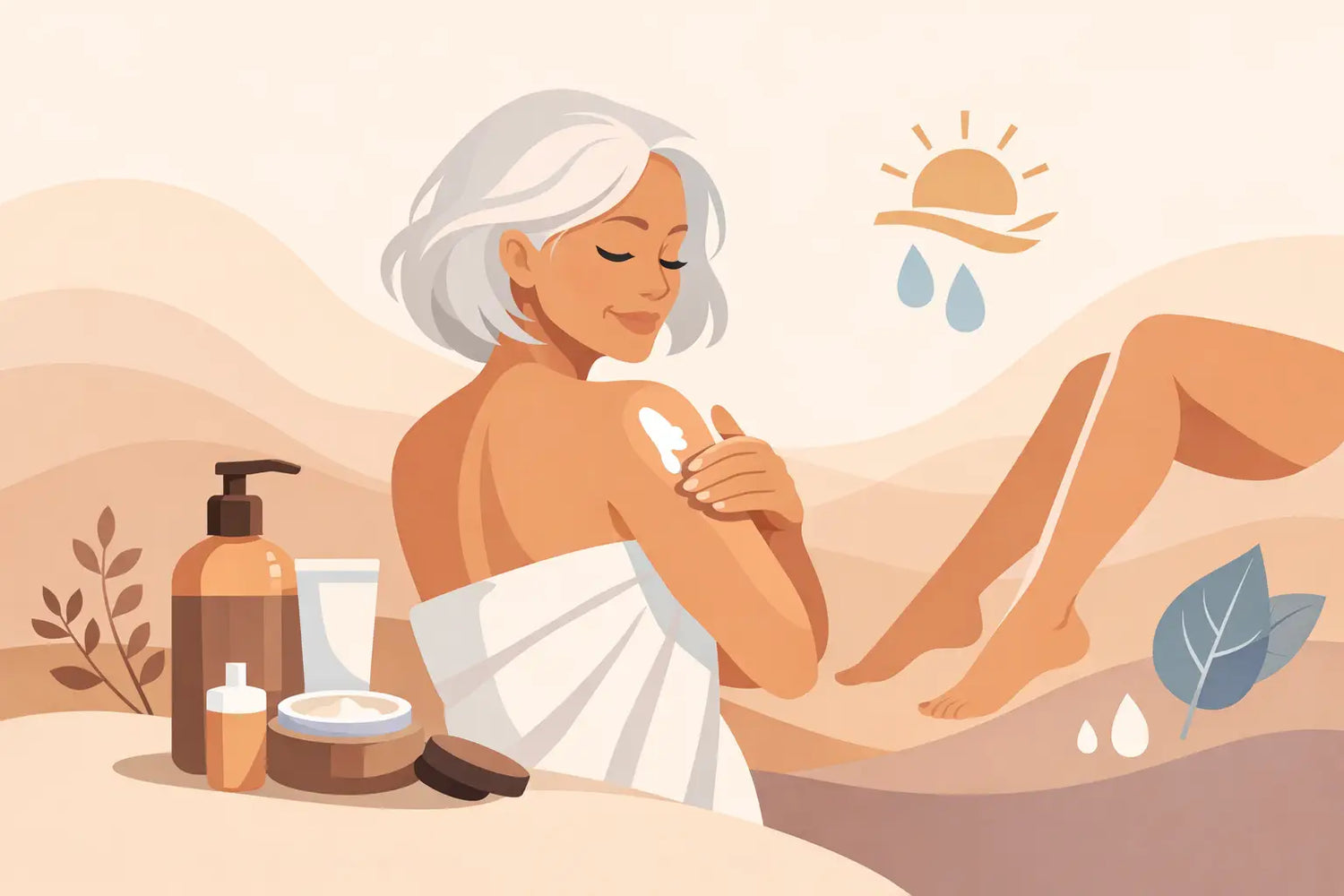
Dryness often shows up first on the body in ways that feel easy to dismiss - tight shins after showering, rough elbows, crepey skin on the arms, or that persistent itch that seems worse at night. Good body care for dry mature skin is not about chasing perfection. It is about restoring comfort, supporting the skin barrier, and helping your skin hold on to moisture more effectively as it changes with age.
For many women, these changes become more noticeable through perimenopause and menopause, when skin can feel thinner, less supple and more reactive than it used to. What worked at 35 may suddenly feel underwhelming at 55. That does not mean your skin is difficult. It usually means it needs a more supportive routine.
Why dry mature skin needs a different body care approach
Mature skin naturally produces less oil, and the skin barrier can become less efficient over time. Hormonal changes, especially lower oestrogen levels, may reduce skin lipids, affect collagen, and increase water loss from the skin. The result is often dryness that feels deeper than a surface problem.
This is why body care for dry mature skin needs to do more than simply sit on top of the skin. A good routine should help reduce moisture loss, soften rough patches, and calm irritation without overwhelming skin that may also be more sensitive than before.
There is also a practical side to this. Body skin is exposed to long hot showers, winter air, heating, sun, friction from clothing, and harsh cleansers. Even beautifully formulated products can struggle if daily habits are working against them.
Start with cleansing that does not strip the skin
One of the most common reasons body dryness lingers is over-cleansing. If your skin feels squeaky after washing, that is usually not a good sign. It often means the cleanser has removed too much of the skin’s natural protective layer.
Choose a gentle body wash or cleansing cream that is designed for dry or sensitive skin. Look for formulas that cleanse without a heavy fragrance load and without leaving the skin tight afterwards. A lower-foam product can feel unfamiliar if you are used to lots of lather, but it is often the better choice for mature skin.
Water temperature matters more than many people realise. A very hot shower can feel soothing in the moment, especially in colder months, but it tends to worsen dryness. Lukewarm water is less disruptive to the skin barrier and helps moisturisers work better afterwards.
If some areas are especially dry, you may not need to cleanse the entire body with product every single day. On days when skin feels fragile, a lighter approach can help preserve comfort.
The best time to moisturise is earlier than you think
Applying body cream long after your shower is one of the main reasons moisturising feels ineffective. Damp skin holds onto hydration more easily, so the ideal time is within a few minutes of patting yourself dry.
This simple shift can make a noticeable difference. Rather than waiting until skin feels parched, you are helping to seal in the water already sitting in the upper layers of the skin.
Rich creams and balms are often more helpful than lightweight lotions for mature dry skin, especially on the legs, arms, chest and hands. Texture does matter, though. Some women prefer a heavier cream at night and a more comfortable, fast-absorbing product during the day. The best formula is the one you will use consistently.
Ingredients worth looking for
Humectants such as glycerin and hyaluronic acid help draw water into the skin. Emollients such as squalane, shea butter and nourishing plant oils help soften and smooth. Occlusive ingredients help slow water loss by creating a protective seal over the skin.
Ceramides are especially valuable because they support the skin barrier, which is often compromised in dry mature skin. Urea can also be helpful, particularly for very rough areas, although stronger formulas may sting if skin is cracked or irritated. Lactic acid in lower concentrations can soften flaky skin, but if your skin is sensitive, it is wise to introduce active ingredients gradually.
How to handle crepey, itchy or flaky areas
Not all dryness looks the same. Crepey skin, persistent flaking and itchiness may need slightly different care.
Crepey skin often benefits from regular moisturising plus ingredients that support skin texture and elasticity. This is usually a gradual process rather than a quick fix. Consistency matters more than switching products every few weeks.
Itchy skin can be a sign that the barrier is impaired. In that case, the priority is calming and protecting rather than exfoliating. Fragrance-free, barrier-supportive creams are often the safest place to start.
Flaky skin can tempt you to scrub, but aggressive exfoliation usually makes things worse. A soft washcloth used gently, or a mild chemical exfoliant used sparingly, is generally more suitable than a harsh body scrub. If skin stings, feels inflamed, or looks shiny and irritated, pause exfoliation and focus on repair.
Body care for dry mature skin in winter and menopause
Dryness is rarely caused by one factor alone. In Australian winters, cool air, indoor heating and lower humidity can leave the skin feeling depleted quickly. During menopause, that same skin may also be dealing with hormonal shifts that affect resilience and repair.
This is where a seasonal mindset helps. In warmer months, a nourishing lotion might be enough for some women. In winter or during times of hormonal change, you may need a thicker cream, more frequent application, and more care around cleansing and exfoliation.
Body skin does not exist in isolation from the rest of your wellbeing either. Hydration, nutrition, sleep, stress levels and overall skin sensitivity all play a role. If dryness is appearing alongside other menopause-related changes, it can help to think in terms of broader support rather than a single miracle product.
For women who are already investing in natural, hormone-free wellness support, this joined-up approach often feels more realistic and more sustainable. That is part of the reason many women turn to brands such as My Health Restore - not just for a single product, but for guidance that respects how skin, hormones and comfort are connected.
What a simple routine can look like
A routine for dry mature body skin does not need ten steps. In most cases, gentle cleansing once daily, prompt moisturising, and targeted treatment for particularly dry areas is enough.
In the morning, that might mean a quick lukewarm shower followed by a nourishing body cream while skin is still slightly damp. During the day, hands, décolletage and lower legs may need an extra layer if they are exposed to weather or frequent washing. At night, a richer cream or balm can work well on areas that dry out fastest.
If you want to include exfoliation, once or twice a week is usually plenty. More is not necessarily better, especially when skin is already vulnerable.
Common mistakes that keep skin dry
The biggest one is using products that smell lovely but are not especially supportive for a fragile barrier. Fragrance is not automatically a problem for everyone, but if your skin has become reactive, heavily scented products may add to irritation.
Another common issue is inconsistency. Applying body cream only when skin is visibly flaky means you are always trying to catch up. Dry mature skin usually responds best to regular care.
Finally, there is the habit of treating the face carefully while neglecting the body. The neck, chest, arms and hands often show dryness and age-related changes clearly, yet many routines stop at the jawline.
When dryness needs more than a body cream
Sometimes dry skin is not just dry skin. If you have redness, cracking, burning, a rash, or itch that does not improve with gentle care, it is worth checking in with a GP, pharmacist or dermatologist. Skin conditions such as eczema, dermatitis or psoriasis can become more noticeable with age, and they need a more specific plan.
The same goes for sudden changes. If your skin becomes dramatically drier in a short period, or if you are dealing with broader menopause symptoms that are affecting comfort and confidence, personalised support can make a real difference.
Body care for dry mature skin works best when it is consistent, gentle and realistic for daily life. You do not need a complicated shelf or harsh treatments to feel more comfortable in your skin. Often, the most effective routine is the one that protects what your skin still does well, and gives it the steady support it needs now.