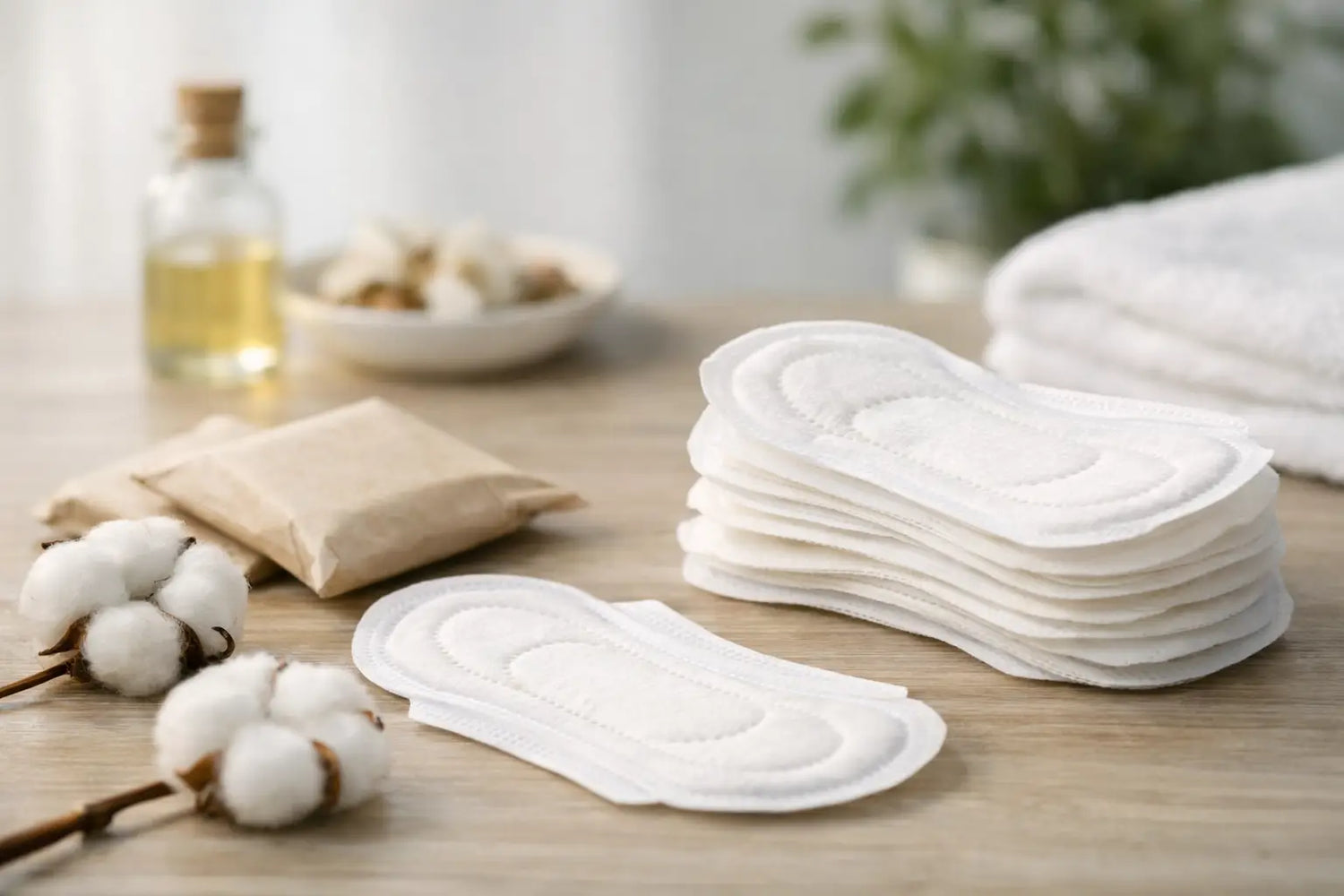
A pad should feel like quiet support, not something you notice with every step, sit-down or trip to the bathroom. Learning how to choose hormone-free pads starts with looking beyond the wording on the front of the packet and focusing on what will genuinely suit your body, flow and skin.
For many women, this question becomes more pressing during perimenopause, menopause, after childbirth or at any time intimate skin feels more delicate. The good news is that choosing thoughtfully does not need to be complicated. A few clear checks can help you find a pad that feels comfortable, practical and aligned with your preference for gentler personal care.
What does hormone-free mean for pads?
In practical terms, pads are not designed to deliver hormones to the body. A hormone-free claim usually means the product has no added hormones, which is reassuring for women seeking to avoid unnecessary hormonal ingredients in intimate-care products.
It is still worth reading the full label. Some people use “hormone-free” as shorthand for pads made without ingredients they are personally cautious about, such as added fragrance, dyes, lotions, chlorine bleaching or certain plastics. These are separate claims, and one does not automatically guarantee another.
A product can be hormone-free and still contain fragrance, for example. Equally, an organic cotton top layer does not necessarily tell you what is in the absorbent core or backing. The most helpful approach is to decide which features matter to you, then check whether the packaging explains them clearly.
Start with your reason for switching
There is no single best pad for every woman. Your needs may change from one cycle to the next, or shift with age, health and lifestyle.
If you have sensitive skin, recurrent irritation or dryness, your priority may be a soft, breathable surface with minimal added ingredients. If your flow is heavy, reliable absorbency and leak protection will matter most. For light bladder leakage, choose a product designed for that purpose rather than assuming a menstrual pad will always provide the right level of dryness and odour control.
During menopause, lower oestrogen can make vulval and vaginal tissues feel drier, thinner or more sensitive. In this stage, a pad that once felt perfectly fine may suddenly feel scratchy, warm or irritating. That does not mean you have done anything wrong. It simply means your body may benefit from a more considered choice and more frequent changes.
Read the ingredient and materials information
The front of a packet is designed to catch your eye. The details that help you choose are often on the back, side panel or brand website. Look for plain descriptions of the materials used in the top sheet, absorbent core, adhesive and backing.
Cotton, especially organic cotton, is a popular choice for the layer against the skin because it can feel soft and breathable. However, the word “cotton” may refer only to the top sheet, not the entire pad. That is not necessarily a problem, but transparency matters. A brand should make it reasonably easy to understand what you are buying.
If you are prone to sensitivity, consider pads labelled fragrance-free and dye-free. Added scents can mask menstrual odour, but they are not necessary for a clean feeling and may be unwelcome on delicate skin. A period has a natural scent. Strong, fishy or unpleasant odour accompanied by discharge, itching or pain is different and worth discussing with your GP.
You may also see terms such as chlorine-free, unbleached, plant-based or biodegradable. These can be useful preferences, but they do not all mean the same thing. “Chlorine-free” may refer to a bleaching process, while “biodegradable” may apply only to certain components. Read these claims with curiosity rather than assuming a single label covers every material in the pad.
Choose absorbency for your actual flow
Over-absorbing pads can feel bulky and warm, while under-absorbing pads may leave you worried about leaks. It helps to match the product to the part of your period you are in rather than relying on one style for every day.
A light or regular pad may be enough at the beginning or end of your period. On heavier days, a longer pad, wings or a higher absorbency level can provide more confidence, particularly overnight or when you will be away from home. Overnight pads are usually longer at the back, which can make a meaningful difference if you move in your sleep.
If your flow has changed noticeably, pause before simply buying a more absorbent packet. Heavier bleeding, bleeding between periods, bleeding after sex or any bleeding after menopause should be assessed by a GP. Pads can support daily comfort, but they should not be used to quietly manage a symptom that deserves medical attention.
Wings, shape and thickness all affect comfort
Wings can help hold a pad in place and reduce side leaks, though some women find the edges irritating against the inner thigh. A slim pad may feel more discreet under clothing, while a thicker style can feel more secure for a heavy flow. Neither is inherently better.
Pay attention to the shape as well. A pad that bunches, shifts or rubs can cause discomfort even if its ingredient list looks ideal. It may take two or three cycles to find the right combination of length, width and flexibility for your body.
Avoid irritation by changing pads regularly
Even a thoughtfully chosen pad can become uncomfortable if it is worn for too long. Change it according to your flow and the product instructions, and sooner if it feels damp, warm or irritating. This supports comfort and helps reduce prolonged contact between sensitive skin and moisture.
Gentle hygiene matters too. Wash the external vulval area with lukewarm water or a mild, fragrance-free cleanser if you use one, then pat dry rather than rubbing. Avoid putting deodorants, perfumed sprays or harsh soaps on or inside the vagina. The vagina cleans itself, and strong products can upset its natural balance.
If you experience ongoing itch, burning, rash, swelling or broken skin, stop using the product that may be contributing and seek advice from a pharmacist or GP. Symptoms can come from contact irritation, thrush, skin conditions or other causes, so it is better not to self-diagnose based on a packet label alone.
Be cautious with broad wellness claims
The phrase “chemical-free” is common in marketing but not especially useful. Everything is made of chemicals, including water and cotton. A more meaningful claim tells you exactly what is absent or what material is used, such as no added fragrance or an organic cotton top layer.
Similarly, hormone-free pads are not a treatment for hormonal symptoms. They can be a considered part of intimate self-care, especially if you prefer products with fewer added ingredients, but they will not resolve persistent vaginal dryness, pain, urinary changes or menopausal bleeding. Those concerns deserve personalised support.
At My Health Restore, we believe intimate care is most helpful when it respects both comfort and body literacy. The right pad should make you feel cared for without asking you to ignore what your body may be telling you.
A simple way to compare products
When you are deciding how to choose hormone-free pads, compare like with like. Look at absorbency first, then check whether each option is fragrance-free, what the skin-contact layer is made from, whether it has wings, and how clearly the brand explains its materials.
Price may also be part of the decision. Premium materials and certifications can cost more, and that may be worthwhile if a particular product noticeably improves your comfort. But expensive does not automatically mean better for your skin. The best choice is the one that suits your flow, stays comfortable throughout the day and has claims you can understand.
Give yourself permission to keep a small range at home: lighter pads for the beginning and end of a period, a more absorbent option for heavier days, and an overnight style if you need it. Comfort is not a luxury in intimate care. It is a practical part of feeling steady, confident and at ease in your body.