
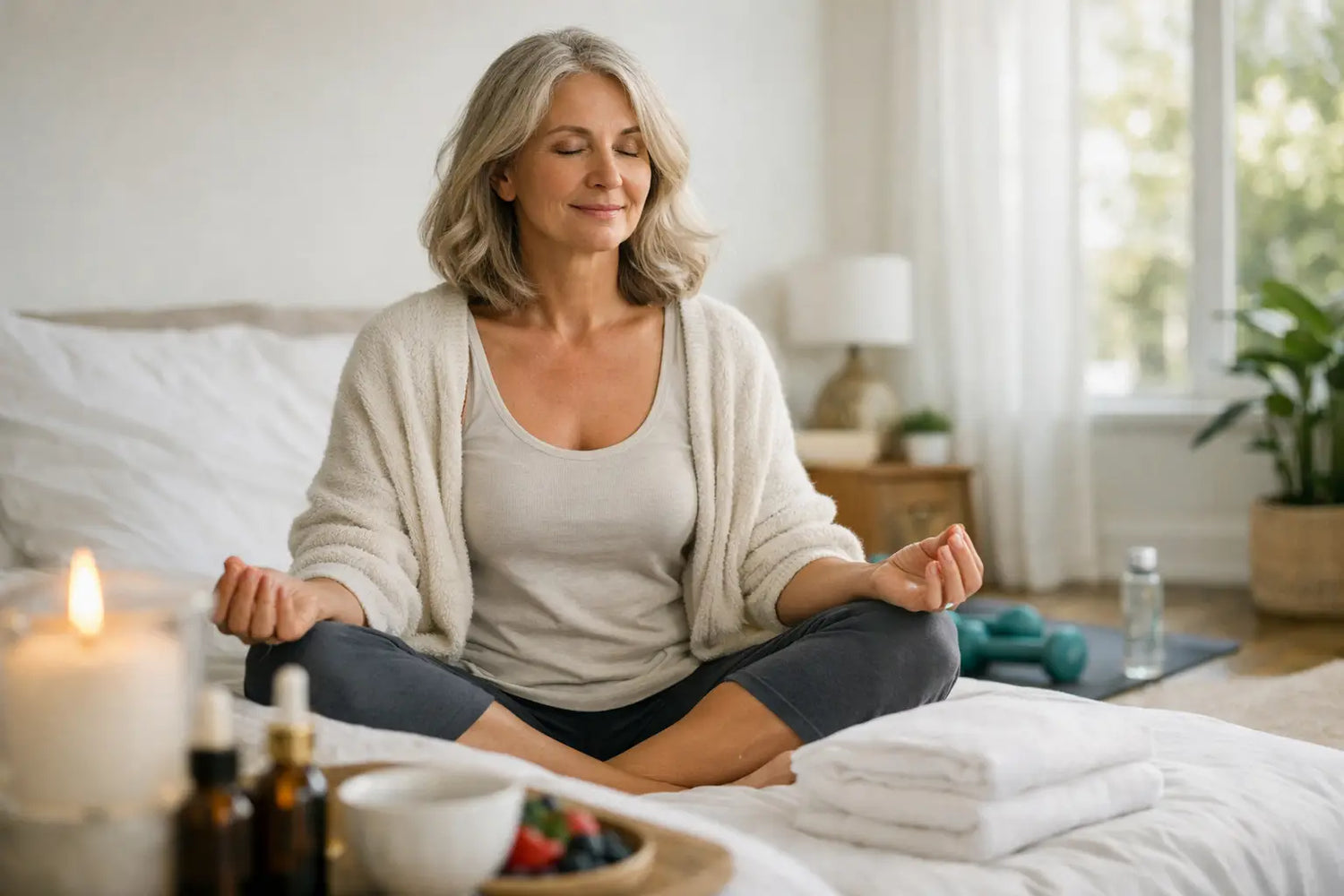
A night sweat can leave you changing the sheets at 3 am. Vaginal dryness can make intimacy feel worrying rather than enjoyable. A sudden shift in sleep, skin or mood can leave you wondering whether you still recognise your own body. The most helpful self care ideas for menopause start here: these changes are real, common and deserving of care, not something you need to simply put up with.
Menopause is not one experience, and there is no perfect wellness routine. Some women have mostly physical symptoms, while others notice changes in energy, concentration, confidence or sexual comfort. Thoughtful self-care can ease day-to-day discomfort and help you feel more steady through the transition. It works best when it is flexible, gentle and paired with medical support where needed.
Self care ideas for menopause that support your body
1. Build a sleep routine around comfort
Poor sleep can make hot flushes, irritability and fatigue feel more intense the following day. Keep the bedroom cool, choose breathable cotton sleepwear and bedding, and consider a bedside layer you can easily remove. A consistent wind-down routine also matters: dim lights, a warm shower, a book or a few quiet stretches can signal to your body that rest is coming.
Alcohol, spicy meals and caffeine can trigger night sweats for some women, but not for everyone. Rather than restricting everything at once, notice patterns for two or three weeks. This gives you useful information without turning evening meals into another source of stress.
2. Eat for steady energy, not perfection
Hormonal changes can affect appetite, digestion and how stable your energy feels. Regular meals containing protein, fibre-rich carbohydrates, healthy fats and colourful vegetables can help you stay satisfied and supported throughout the day. Think yoghurt with fruit and nuts, eggs on wholegrain toast, or a nourishing salad with fish, tofu or legumes.
Calcium, vitamin D and protein deserve particular attention as bone and muscle health become more important in midlife. A GP or accredited practising dietitian can help if you are unsure about your needs, especially if you have dietary restrictions or are considering supplements.
3. Choose movement that you can return to
Exercise does not need to be punishing to be valuable. Brisk walking, swimming, Pilates, dancing or cycling can support cardiovascular health, mood and sleep. Strength training is particularly worthwhile because it helps maintain muscle and supports bone health as oestrogen levels change.
The right movement depends on your joints, fitness, time and enjoyment. If a high-intensity class leaves you exhausted for days, it may not be the most restorative choice right now. Consistency usually matters more than intensity.
4. Make space for stress to come down
Menopause can coincide with demanding years of work, caring responsibilities and changing family life. Stress does not cause menopause, but it can make symptoms feel harder to manage. A daily decompression practice can be remarkably protective, even when it is brief.
Try ten minutes of slow breathing, a gentle walk outdoors, journalling or a mobile-free cup of tea before the household wakes. The aim is not to eliminate stress. It is to create a regular moment where your nervous system is not being asked to do more.
Caring for intimate comfort and confidence
5. Treat vaginal dryness as a health concern
Vaginal dryness, burning, itching and discomfort during sex are common menopausal symptoms, often linked to lower oestrogen and changes in vaginal tissue. They are not a personal failure, and you do not need to accept pain as part of ageing.
A quality vaginal moisturiser used regularly can support comfort, while a lubricant can reduce friction during intimacy. Choose gentle, fragrance-free options designed for intimate use. Avoid fragranced washes, deodorising sprays and harsh soaps, which can irritate already sensitive tissue.
6. Let intimacy change shape
Desire and arousal can fluctuate during menopause. For some women, physical discomfort is the main barrier; for others, tiredness, body image or stress plays a bigger role. Open, unhurried communication with a partner can reduce pressure and make room for touch that feels safe and enjoyable.
Comfort should guide the experience. More time for arousal, a suitable lubricant, a moisturising routine and permission to pause can all help. If sex remains painful, speak with your GP or a pelvic health physiotherapist. Persistent pain deserves assessment and support.
7. Consider non-hormonal support thoughtfully
Some women prefer hormone-free options for intimate wellbeing, while others may use local vaginal oestrogen or menopausal hormone therapy under medical guidance. The appropriate approach depends on your symptoms, health history and personal preferences.
Natural, hormone-free products may be a helpful part of an intimate care routine. At My Health Restore, Hygeena vaginal suppositories are designed to support vaginal moisture and tissue comfort. They are not a replacement for medical assessment, particularly if symptoms are new, severe or ongoing.
Restore skin, strength and everyday ease
8. Simplify your skin routine
Skin can become drier, more reactive or less resilient during menopause. Instead of constantly adding new products, return to the essentials: a gentle cleanser, a nourishing moisturiser and daily broad-spectrum sunscreen. Richer textures and barrier-supporting ingredients may feel more comfortable than products that are overly exfoliating or drying.
If your skin is suddenly itchy, inflamed or developing a persistent rash, seek advice from a pharmacist, GP or dermatologist. Not every skin change is hormonal, and a targeted treatment may be needed.
9. Look after your pelvic floor without overdoing it
Pelvic floor changes may show up as leakage when coughing, a sense of heaviness, urgency or reduced confidence in exercise. Gentle pelvic floor exercises can help, but technique matters. Constantly gripping or doing exercises incorrectly may not solve the issue.
A pelvic health physiotherapist can assess your specific needs and teach a programme that suits your body. This can be especially useful if you have pelvic pain, prolapse symptoms, difficulty emptying your bladder or bowel changes.
10. Protect your energy with clearer boundaries
Fatigue is not always fixed by an early night. Sometimes self-care means declining an extra commitment, sharing the mental load at home or planning recovery time after a busy week. These choices are practical health supports, not indulgences.
Try asking, “What would make this week easier on my body?” The answer may be preparing simple meals, booking a walk with a friend instead of another lunch meeting, or giving yourself permission to rest without earning it first.
Create support that lasts beyond a difficult day
11. Keep a symptom record for your appointments
A simple record of flushes, sleep, mood, bleeding, headaches, vaginal symptoms and possible triggers can help you spot change over time. It can also make conversations with your GP more specific. Note what you have tried, what helped and what did not.
Menopause care is individual. Your GP may discuss lifestyle changes, non-hormonal options, local treatments, menopausal hormone therapy or referral to a specialist. You are allowed to ask questions and take time to consider what feels right for you.
12. Know when to seek medical advice promptly
Self-care is valuable, but it has limits. See your GP for heavy bleeding, bleeding after sex, bleeding that returns after menopause, new pelvic pain, recurrent urinary symptoms, unusual discharge, a breast change or symptoms that are affecting your quality of life. These concerns need assessment rather than guesswork.
Seek support sooner if anxiety, low mood or insomnia is becoming hard to manage. Mental health changes can occur during menopause, and effective care may include counselling, lifestyle support, medical treatment or a combination of approaches.
Your body is not asking you to become a different person. It may be asking for a more attentive kind of care: cooler sheets, stronger muscles, gentler skincare, honest conversations and the confidence to seek help when discomfort is getting in the way of your life.