
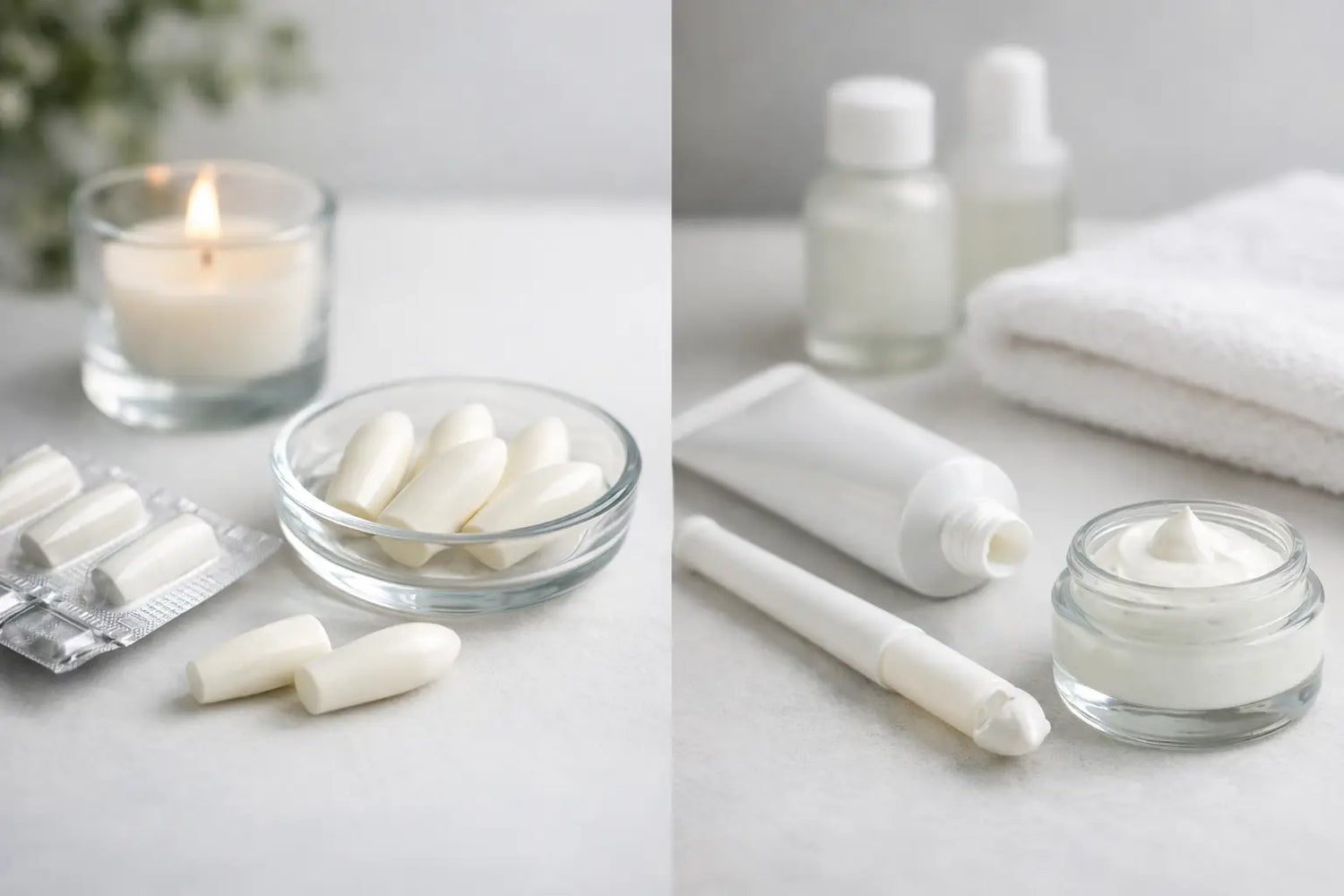
Vaginal dryness can make everyday moments feel unexpectedly uncomfortable - from sitting through a long lunch to exercising, sleeping or intimacy. When comparing suppositories vs vaginal creams, the right option is rarely about one being universally better. It comes down to your symptoms, the cause of your dryness, your comfort preferences and the type of support you need.
Both formats can play a valuable role in intimate wellbeing. Understanding how they work can make the decision feel less daunting and help you choose a routine that supports comfort with confidence.
Suppositories vs vaginal creams: the key difference
A vaginal suppository is a small, solid or semi-solid product inserted into the vagina, where it melts or dissolves at body temperature. Depending on the formulation, it may provide moisture, lubrication or targeted active ingredients directly to vaginal tissue.
A vaginal cream is a soft topical formulation. Some creams are applied around the vulva, while others are inserted into the vagina with an applicator. They may be designed for dryness, irritation, infection or prescription hormonal treatment, so the ingredients matter far more than the word “cream” on the label.
In simple terms, suppositories are usually chosen for a concentrated internal application and creams can offer more flexibility for both internal and external discomfort. Neither format should be assumed to treat every vaginal concern.
When suppositories may feel like the better fit
Suppositories are often appealing for women experiencing internal vaginal dryness, particularly during perimenopause, menopause or after other hormonal changes. Because the product is placed inside the vagina, it can sit close to the tissue that needs moisture and support.
Many women also appreciate the convenience of a pre-measured dose. There is no need to judge how much product to use, and bedtime application can be practical because the suppository has time to dissolve while you rest. A panty liner may be useful the next morning, as some product leakage is normal.
Non-hormonal vaginal suppositories can be a thoughtful option for women who prefer to avoid hormone-based products or are looking for ongoing moisture support. Hygeena vaginal suppositories, for example, are formulated as a hormone-free option for women seeking support for vaginal dryness and the comfort of delicate vaginal tissue.
That said, suppositories can feel less suitable if you are experiencing soreness or sensitivity around the vaginal opening or vulva. In that case, an internal product alone may not address the area causing the most discomfort.
Practical considerations for suppositories
Suppositories are generally easiest to use before bed. Wash your hands, insert the product as directed on the packaging and allow time for it to dissolve. If you have reduced hand mobility, pelvic pain or are uncomfortable with insertion, a cream or another format may feel more manageable.
Always follow the product directions, including how often it is intended to be used. More product is not necessarily more helpful, particularly when sensitive tissue is involved.
When vaginal creams may be more suitable
Vaginal creams can be especially helpful when dryness or irritation affects the vulva as well as the vagina. The vulva includes the external genital skin around the vaginal opening, and it can become dry, tender or itchy during menopause, after using irritating products or when the skin barrier is compromised.
A suitable moisturising cream may be applied externally for gentle comfort, while some products are designed for internal use with an applicator. This makes creams a flexible option for women whose symptoms are not limited to internal dryness.
Creams can also make it easier to adjust the amount used. For some women, that flexibility feels reassuring at first, particularly if they are trying a new product and want to see how their body responds. On the other hand, measuring a dose can be less convenient than using a single suppository, and applicators may feel fiddly or create more waste.
The texture matters too. Some women prefer the cushioning feel of a cream, while others find creams messy or dislike the sensation of product at the vaginal opening. Personal comfort is a legitimate part of choosing intimate care.
The formulation matters more than the format
This is the most useful distinction to keep in mind. Vaginal moisturisers, lubricants, antifungal treatments, antibiotics and prescription vaginal oestrogen can all come in cream or suppository-style formats. They are not interchangeable simply because they are used vaginally.
A vaginal moisturiser is usually intended to support tissue hydration over time. A lubricant is generally used around intimacy to reduce friction in the moment. Antifungal products are for diagnosed or strongly suspected thrush, while prescription treatments may be recommended for genitourinary symptoms of menopause or other medical needs.
If you have been told you have vaginal atrophy, now commonly referred to as genitourinary syndrome of menopause, a GP can help you understand whether a non-hormonal moisturiser, prescribed local oestrogen or a combination approach is appropriate. Your health history, including breast cancer history, unexplained vaginal bleeding or current medicines, should always be part of that discussion.
Choosing based on your symptoms
For internal dryness without significant external irritation, a non-hormonal suppository may be a straightforward, low-fuss choice. It can be particularly useful for women who want regular internal moisture support and prefer a pre-measured product.
For dryness, sensitivity or chafing around the vaginal opening and vulva, an appropriate cream may offer more direct external comfort. Some women use an internal moisturising product alongside a gentle external cream, but this should only be done in line with product instructions and with professional guidance where needed.
If discomfort is mainly connected with sex, a compatible lubricant may be more relevant than either a cream or suppository. A moisturiser or suppository can support day-to-day dryness, but it is not always a replacement for lubrication during intimacy.
Symptoms such as unusual discharge, strong odour, burning when urinating, pelvic pain, sores, bleeding after sex or persistent itching need medical assessment rather than trial-and-error treatment. Thrush, bacterial vaginosis, urinary tract infections, skin conditions and sexually transmitted infections can overlap in their symptoms. Using the wrong product may delay relief and sometimes worsen irritation.
How to use intimate products more comfortably
Whichever format you choose, treat vaginal tissue gently. Avoid fragranced washes, douches, deodorant sprays and harsh soaps around the vulva, as these can disrupt the area’s natural balance and aggravate dryness. Warm water or a mild, fragrance-free cleanser used externally is usually sufficient for everyday care.
Give a new product time to show whether it suits you, but stop using it if you notice stinging, swelling, rash or worsening discomfort. Natural ingredients can still cause sensitivity in some people, so “natural” should never mean ignoring your body’s response.
It can also help to keep a simple note of when dryness occurs, what seems to trigger it and which products you have tried. This gives you clearer information to discuss with a GP, women’s health physiotherapist or pharmacist if symptoms continue.
A choice that supports your everyday comfort
The conversation around suppositories vs vaginal creams does not need to be complicated or embarrassing. A suppository may suit women seeking simple internal moisture support, while a cream can be useful when external comfort and flexible application are priorities. The best choice is the one that matches the product’s purpose, feels comfortable to use and respects what your body is telling you.
Vaginal dryness deserves the same calm attention as any other wellbeing concern. With the right support and timely medical advice when symptoms change, comfort can become part of your daily routine again.