
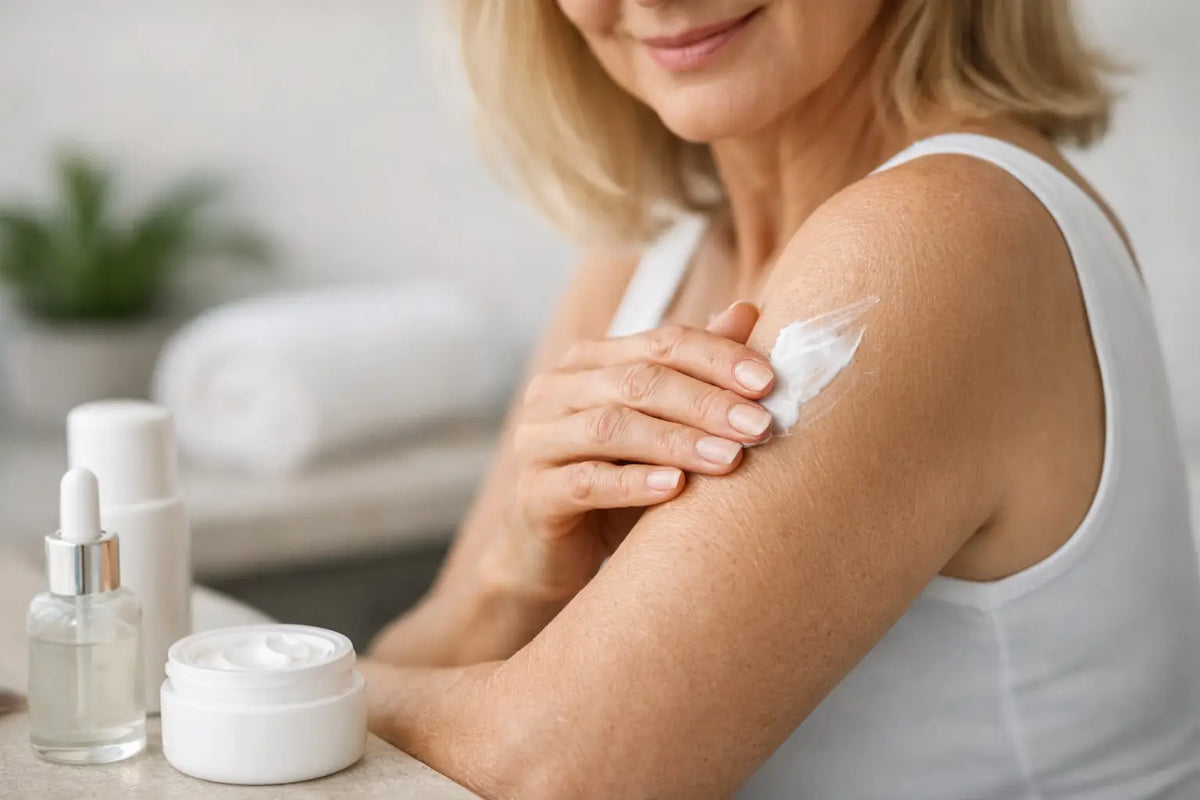
The skin on your upper arms can seem to change almost overnight. You may notice a finely crinkled texture when you lift your arm, skin that feels drier than it once did, or a softness that does not match how well you care for the rest of your body. Finding the best skincare for crepey arms is less about one miracle cream and more about restoring moisture, supporting the skin barrier and protecting the area from further sun damage.
Crepey skin is common through perimenopause and menopause, when declining oestrogen can affect collagen, elasticity and hydration. It can also become more noticeable after weight changes, repeated sun exposure or simply with time. It is not a personal failing, and it deserves the same thoughtful care you might give the skin on your face.
Why arms become crepey
Healthy skin relies on a supportive structure of collagen and elastin, along with natural oils and water held within the outer layers. As we age, collagen production slows and the skin becomes thinner. The upper arms are particularly prone because they are often exposed to UV light but may be overlooked in a daily sunscreen routine.
Hormonal change can add another layer. Oestrogen plays a role in skin thickness, moisture and wound healing. During midlife, lower levels may contribute to dry, fragile-feeling skin across the body. This is why a lotion that once felt perfectly adequate may no longer give your arms the comfort or suppleness you want.
Genetics, smoking, frequent tanning and harsh cleansing can also play a part. While skincare cannot replace lost collagen completely or tighten substantial loose skin, a consistent routine can make crepey texture look smoother, feel better hydrated and become less noticeable over time.
Best skincare for crepey arms starts with moisture
The most useful body products combine humectants, emollients and occlusives. These terms sound technical, but together they describe how a good moisturiser helps thirsty skin.
Humectants, such as glycerin and hyaluronic acid, draw water into the upper skin layers. Emollients, including nourishing plant oils, fatty acids and ceramides, soften roughness and help fill the spaces between surface skin cells. Occlusive ingredients form a light seal that slows water loss. A formula does not need to be heavy or greasy to do this well, but very dry skin generally benefits from a richer cream or balm rather than a thin body lotion.
Apply your moisturiser after showering, while your arms are still slightly damp, then give it a minute to settle before dressing. This small timing change can make a meaningful difference because it helps hold water in the skin instead of allowing it to evaporate.
If your arms are sensitive, choose fragrance-free or lightly fragranced products and introduce active ingredients gradually. Natural does not automatically mean non-irritating. Essential oils and heavily perfumed formulas can be beautiful to use, but they may not suit reactive or very dry skin.
Look for barrier-supporting ingredients
For daily use, seek out ingredients such as glycerin, ceramides, squalane, shea butter, jojoba oil, niacinamide and hyaluronic acid. You do not need every ingredient in one product. What matters most is finding a texture you enjoy enough to use consistently.
A premium body treatment from My Health Restore can fit beautifully into a restorative self-care routine when it offers nourishing, skin-comforting ingredients and feels pleasurable to apply. Use it as part of regular care, not as a once-a-week rescue step.
Add gentle exfoliation for smoother texture
When dead skin cells build up, arms can look duller and feel rough, which may emphasise crepiness. Gentle chemical exfoliation can improve the feel of the surface and help moisturising ingredients perform more effectively.
Lactic acid is often a good option for mature, dry skin because it exfoliates while also acting as a humectant. Urea can soften rough, dry skin and support hydration, particularly in body creams. Salicylic acid may be helpful if you also experience small, rough bumps associated with keratosis pilaris, although it can be too drying for some people.
Start with an exfoliating body product once or twice a week, preferably at night. Avoid using it on freshly shaved, irritated or broken skin. If you feel stinging, persistent redness or flaking, pause the product and return to simple moisturising until your skin is comfortable again.
Physical scrubs need a gentle hand. Rough mitts, grainy scrubs and vigorous rubbing can create irritation that makes dry skin look worse. Your goal is a soft, polished feel, not a scrubbed-clean sensation.
Consider retinol, but use it patiently
Retinoids are vitamin A derivatives that can support skin renewal and encourage collagen-related processes over time. A body product containing retinol may be worth considering for arms if crepiness is a key concern, particularly when paired with daily sun protection.
There is a trade-off: retinol can cause dryness, sensitivity and irritation, especially when your skin barrier is already compromised. Begin with two evenings a week, use only a thin layer, and follow with a nourishing moisturiser. Do not use it on the same evening as an exfoliating acid until you know your skin tolerates both.
Retinoids are not suitable during pregnancy or breastfeeding unless a qualified health professional has advised otherwise. If you have eczema, very sensitive skin or a history of skin reactions, a pharmacist, GP or dermatologist can help you decide whether it is appropriate.
Sunscreen is the step that protects your progress
No cream can outwork ongoing UV exposure. UV radiation breaks down collagen and elastin, contributing to thinner, more crepey-looking skin over the years. Applying broad-spectrum SPF 50+ sunscreen to exposed arms is one of the most worthwhile habits you can build.
Use it whenever your arms will be outdoors, including on a walk, while driving, gardening or sitting at a café. Reapply according to the product directions, especially after swimming, sweating or towel drying. Lightweight long sleeves can provide additional protection when the Australian sun is intense.
Sunscreen will not reverse existing changes overnight, but it helps preserve the gains you make through hydration and active skincare.
A simple routine you can keep up with
Consistency matters more than an elaborate shelf of products. In the morning, smooth a moisturiser over your arms and apply SPF 50+ if they will be exposed. At night, use a richer cream. On one or two nights each week, substitute in a gentle exfoliating treatment. If you choose retinol, use it on alternate nights from exfoliation and increase frequency only when your skin remains calm.
Take photos in the same light every four to six weeks if you find it hard to notice gradual changes. Softer texture and improved comfort may appear before a visible improvement in the skin's overall look. Give a new routine at least eight to 12 weeks before deciding whether it is serving you.
When skincare is not the whole answer
If loose skin is the main issue after significant weight loss, topical skincare can improve hydration and surface texture but cannot remove excess skin. In-clinic treatments such as radiofrequency, microneedling or laser-based options may be discussed with a qualified dermatologist or cosmetic medical practitioner, although results, cost, downtime and suitability vary.
Arrange a skin check with your GP or dermatologist if you notice a changing mole, a sore that does not heal, unexplained bruising, a new rash or sudden, marked thinning of the skin. And if menopause symptoms are affecting your comfort, sleep or confidence more broadly, you deserve care that looks at the full picture rather than asking you to simply put up with it.
Your arms carry you through ordinary and meaningful moments every day. A few quiet minutes of moisturising, sun protection and gentle care can be a reassuring way to support skin that is changing - and to meet that change with kindness rather than criticism.