
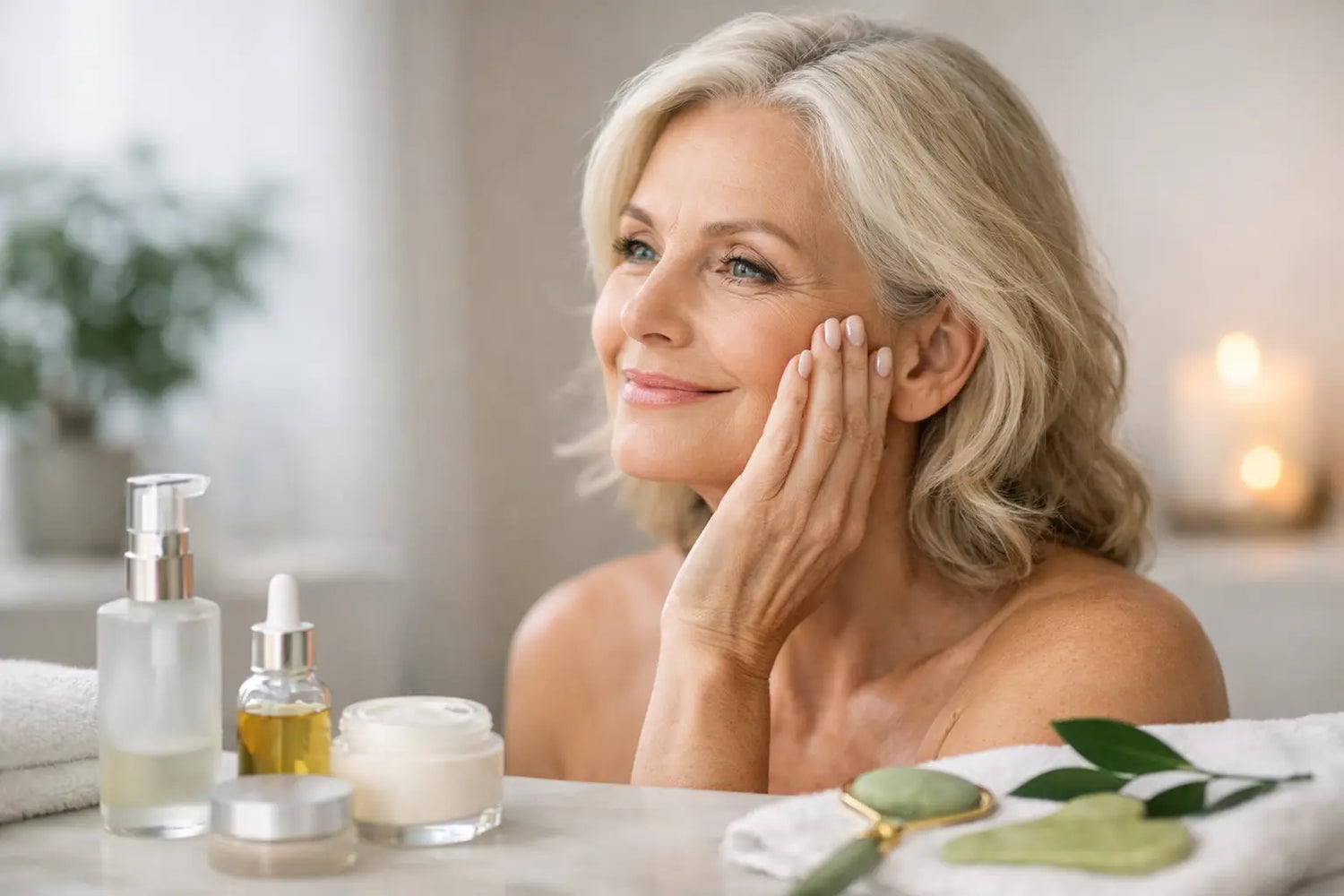
Skin can begin to feel different well before it looks dramatically different. A cleanser that once felt fresh may now leave your face tight, foundation may settle into fine lines, and a healthy glow can seem harder to hold onto. The best skincare for mature glow is not about chasing younger-looking skin. It is about supporting skin that feels comfortable, hydrated and cared for through every stage of life.
For many women, these changes become more noticeable during perimenopause and menopause. Declining oestrogen can affect collagen, oil production and the skin’s ability to retain moisture. The result may be dryness, sensitivity, uneven tone or a loss of the soft bounce that once came naturally. A thoughtful routine can help restore the conditions that allow your complexion to look luminous.
What mature skin needs to glow
A mature glow is rarely created by one hero product. It comes from a calm, well-supported skin barrier, consistent hydration and sensible protection from the daily stresses that contribute to visible ageing. The skin barrier is the outermost layer that helps keep water in and irritants out. When it is compromised, skin may look dull, feel rough or react to products it previously tolerated.
Start by shifting the goal from exfoliating or correcting everything at once to nurturing the skin’s natural functions. Ingredients that attract and hold water, support the barrier and provide antioxidant care often make the greatest visible difference over time. This approach is especially valuable when hormonal changes have made skin more delicate or unpredictable.
It also helps to separate healthy glow from shine. Glow tends to look even, cushioned and well moisturised. Shine can be a sign that skin is dehydrated underneath, over-cleansed or layered with products that do not suit it. Your routine should leave your face feeling comfortable, not coated, tingly or tight.
Best skincare for mature glow starts with a gentle cleanse
Cleansing should remove sunscreen, make-up and the day without stripping away the lipids your skin needs. If your face feels squeaky-clean after washing, the cleanser may be too harsh for your current skin needs. A creamy, milky or low-foam cleanser is often a more comfortable choice, particularly in cooler weather or when dryness is persistent.
Use lukewarm rather than hot water, and avoid scrubbing with a face cloth every day. Physical friction can aggravate fragile or sensitised skin. In the evening, take enough time to remove sunscreen and make-up thoroughly. In the morning, some women with very dry skin may prefer a quick rinse or a light cleanse rather than a full double cleanse.
This is one area where less can genuinely be more. Clean skin does not need to feel bare to be clean.
Add hydration while skin is still slightly damp
After cleansing, apply a hydrating serum or essence while your skin is still lightly damp. Look for humectants such as glycerin or hyaluronic acid, which draw water into the upper layers of the skin. Hydration can help soften the appearance of fine lines caused by dryness and create a smoother surface for moisturiser and make-up.
Humectants work best when followed by a moisturiser. Used alone in a very dry environment, they may not provide enough comfort. A nourishing cream helps seal in the hydration and reinforces the skin barrier with ingredients such as ceramides, squalane, fatty acids or plant oils that your skin tolerates well.
There is no need to assume that richer always means better. Very dry skin may appreciate a fuller cream, while combination skin may prefer a lighter lotion during the day and a more replenishing formula at night. The right texture is the one you will use consistently and that leaves your complexion supple rather than congested.
Choose active ingredients with patience
Well-chosen active ingredients can support firmer-looking, brighter skin, but mature skin often responds best to a measured introduction. Using several strong products at once can lead to redness, flaking and irritation, which works against the glow you are trying to achieve.
Vitamin C is a popular morning option because it provides antioxidant support and can help improve the appearance of uneven tone over time. If a high-strength formula stings, a gentler derivative or a lower concentration may be a better starting point. Antioxidant care is particularly useful alongside daily sunscreen, as both help address the effects of sun exposure on visible ageing.
Retinoids, including retinol, can support smoother texture and the appearance of fine lines by encouraging skin renewal. However, they can be drying at first. Begin with a low-strength product one or two nights a week, apply it over or between layers of moisturiser if needed, and increase only when your skin feels settled. If you experience ongoing burning, scaling or sensitivity, pause and seek advice from a dermatologist or qualified healthcare professional.
Gentle exfoliation can also bring clarity to a dull complexion, but it should not be an everyday ritual. An exfoliating acid used occasionally may help lift surface build-up and improve softness. On the other hand, if your skin is dry, reactive or already using a retinoid, you may need less exfoliation than you think. Do not use a strong exfoliant and retinoid on the same evening unless a skin professional has advised otherwise.
Sunscreen is the daily glow protector
No rejuvenating routine is complete without broad-spectrum SPF 50+ sunscreen. In Australia, strong UV exposure is a year-round concern, even on overcast days or when you are mostly indoors near windows. Sun protection helps limit the visible effects of UV on pigmentation, texture and collagen, while protecting the progress made by your other skincare.
Apply sunscreen generously each morning as the final step in your skincare routine, before make-up. Reapply when you are outdoors for extended periods, exercising, swimming or towelling your face. If sunscreen usually feels heavy, trial a few textures until you find one that sits comfortably. A sunscreen you enjoy wearing is far more useful than an ideal formula left in the bathroom cabinet.
Care for the whole picture, not only your face
Skin reflects more than the products applied to it. Sleep disruption, stress, dehydration, alcohol, smoking, nutritional changes and hormonal transition can all influence how the skin looks and feels. This does not mean a perfect lifestyle is required for good skin. It simply means gentle daily foundations matter.
Aim for regular meals with enough protein, colourful fruit and vegetables, healthy fats and fluids. Protein provides amino acids used throughout the body, while nourishing foods support overall wellbeing. If menopause symptoms, tiredness or dietary changes are affecting your confidence, a conversation with your GP, pharmacist or a qualified practitioner can provide personalised guidance.
Body care deserves attention too. Mature skin on the neck, chest, arms and legs may become dry or crepey, particularly after showers. Applying a fragrance-free body moisturiser to damp skin can make a real difference to comfort and softness. The same gentle, barrier-focused principles apply beyond the face.
At My Health Restore, this wider view of wellbeing matters. Skin renewal, intimate comfort and everyday vitality can all be part of feeling more at home in your body during hormonal change.
A simple morning and evening rhythm
Your morning routine can be as simple as a gentle cleanse or rinse, hydrating serum, moisturiser if needed, and SPF 50+ sunscreen. In the evening, cleanse, use one targeted active ingredient only when your skin is ready for it, then finish with a nourishing moisturiser.
Consistency matters more than a crowded shelf. Give a new product several weeks before deciding whether it suits you, unless it causes irritation. Introduce one new formula at a time so you can understand how your skin responds, and patch test where practical, especially if you have sensitivity or a history of reactions.
If dryness is sudden, severe or accompanied by a rash, itch, pain or changes that concern you, seek professional advice rather than trying to treat it with increasingly strong skincare. Your skin deserves care that feels reassuring, not like another problem to solve.
A mature glow is not a fixed standard or a finish sold in a jar. It is the quiet confidence that comes from skin feeling nourished, protected and comfortable enough for you to face the day with ease.