
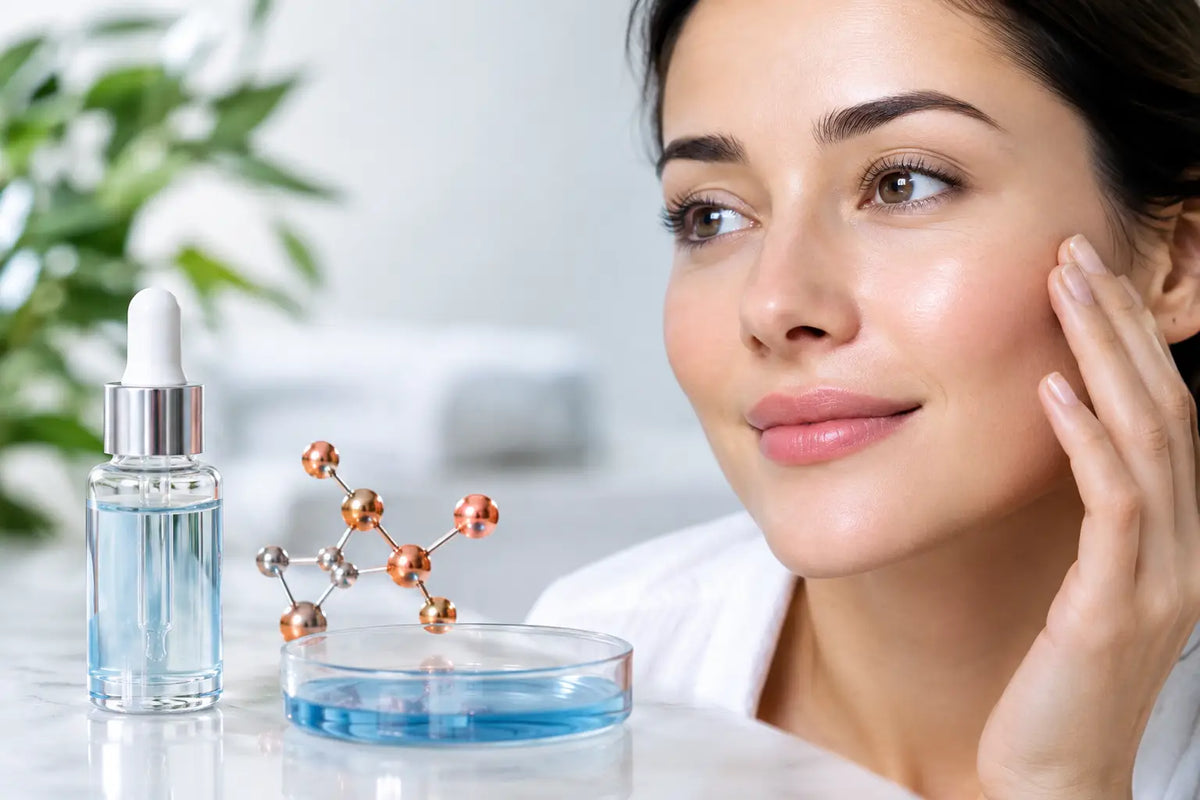
A serum that promises firmer, calmer-looking skin can sound particularly appealing when your complexion feels thinner, drier or less resilient than it once did. Copper peptide is one ingredient often mentioned in conversations about skin renewal, but it deserves a measured look rather than miracle-status.
For women navigating peri-menopause, menopause or simply changing skin needs, the goal is not to chase every new active. It is to choose care that supports comfort, strength and a healthy-looking glow without overwhelming an already sensitive skin barrier.
What is a copper peptide?
Copper peptides are small chains of amino acids bound to copper, a trace mineral the body naturally uses in many biological processes. In skincare, the best-known form is GHK-Cu, short for glycyl-L-histidyl-L-lysine copper.
Peptides act as signalling molecules. The theory behind topical copper peptides is that they may help communicate with skin cells involved in repair and renewal. Copper itself is involved in enzyme activity, including processes connected with collagen and elastin, the proteins that help give skin its supportive structure.
This is why copper peptide products are commonly positioned for concerns such as fine lines, loss of firmness, uneven texture and the slower recovery that can follow irritation. They may also appear in scalp products designed to support a healthy environment for hair. However, a beautifully formulated serum is not the same thing as a guaranteed biological result. The formula, concentration, consistency of use and your individual skin all matter.
Why mature and changing skin may be interested
Oestrogen has a meaningful relationship with the skin. As hormone levels shift, many women notice dryness, reduced elasticity, a more fragile feel, slower healing and greater sensitivity. These changes are real, and they can make a formerly simple skincare routine feel unexpectedly complicated.
Copper peptides may be appealing because they are generally used to support the skin’s own renewal processes rather than aggressively exfoliating the surface. For someone whose skin no longer tolerates frequent acids or strong retinoids, a peptide-based product can feel like a gentler category to explore.
That does not mean it will replace every other evidence-based option. Daily sun protection remains one of the most effective ways to protect collagen. A well-formulated moisturiser helps reduce water loss and supports the barrier. Retinoids have stronger clinical backing for visible signs of photoageing, although they can be irritating and are not suitable for everyone. Copper peptides may sit alongside these basics as a supportive addition, particularly when restoration and comfort are the priority.
What the evidence can, and cannot, tell us
There is scientific interest in GHK-Cu and related copper peptide complexes. Laboratory and early clinical research suggests they may influence pathways involved in collagen production, inflammation and wound repair. This is promising, but it is not the same as having large, long-term trials showing that every over-the-counter copper peptide serum produces dramatic lifting or wrinkle reduction.
The gap matters because marketing can make ingredient-level research sound more certain than it is. A study of a specific peptide at a specific concentration does not automatically apply to every product that lists a copper complex near the end of its ingredient list.
A realistic expectation is gradual improvement in the overall look and feel of skin: perhaps a more cushioned appearance, smoother texture or better sense of resilience over several weeks to months. Some people see little change. If your concern is pronounced redness, pigmentation, persistent acne, eczema, rosacea or suddenly fragile skin, a GP or dermatologist can help identify what is driving it instead of relying on a cosmetic product alone.
How to introduce copper peptide into your routine
The best routine is usually the one your skin can tolerate consistently. Start simply, especially if you are already using active ingredients or your skin is dry from hormonal changes.
Begin with a patch test
Apply a small amount of the product to the inner arm or along the jawline as directed, then observe the area for 24 to 48 hours. Mild tingling can occur with many skincare products, but burning, itching, swelling or an ongoing rash are signs to rinse it away and stop using it.
Use it on clean, dry skin
Most copper peptide serums are designed to be applied after cleansing and before moisturiser. Follow the product instructions, as texture and formulation vary. If your skin is sensitive, begin two or three nights a week instead of applying it morning and night from day one.
Give the product time. Skin renewal is not an overnight event, and changing several products at once makes it difficult to know what is helping or irritating your complexion. Take a simple photo in consistent lighting before you begin, then reassess after eight to twelve weeks.
Keep the rest of the routine calm
Copper peptides do not need to be paired with an elaborate routine to be worthwhile. A gentle cleanser, an appropriately nourishing moisturiser and broad-spectrum SPF each morning create a strong foundation.
You may see advice saying copper peptides must never be used with vitamin C, exfoliating acids or retinoids. The reality is more nuanced. There is no universal rule that these ingredients cannot exist in the same overall routine, but combining multiple actives can increase irritation, particularly for dry or reactive skin. It can also make it harder to tell which product is causing a problem.
If you use a potent vitamin C, retinoid or exfoliating acid, consider alternating nights rather than layering everything together. For example, a copper peptide serum may suit your recovery nights, while your retinoid remains limited to separate evenings. Your skin’s comfort is a better guide than a complicated schedule.
Choosing a product with care
Ingredient lists can be useful, but they do not reveal everything. Look for a product from a transparent brand with clear directions for use and packaging that helps keep the formula stable. Airless pumps or opaque bottles can be sensible for formulas containing delicate ingredients.
It is also worth looking beyond the headline ingredient. A copper peptide serum with humectants such as glycerin or hyaluronic acid, plus soothing and barrier-supportive ingredients, may better suit dehydrated skin than a formula heavy in fragrance or drying alcohol. Natural does not automatically mean non-irritating, especially when essential oils are involved.
Price is not a perfect measure of quality. Some premium formulas offer an elegant texture and thoughtful supporting ingredients, while a costly product may still be unsuitable for your skin. Choose according to your concerns, your routine and your willingness to use it consistently.
When to pause and seek personalised advice
Cosmetic skincare can support the surface of the skin, but it should not be asked to manage every health concern. Pause a new copper peptide product if you develop persistent stinging, hives, facial swelling, worsening redness or flaking that does not settle.
If you are pregnant, breastfeeding, managing a skin condition or using prescription skincare, check with your treating health professional before adding a new active leave-on product. This is particularly helpful when your skin is already reactive or you are using medicines that affect the barrier.
Skin changes can also be a valuable prompt to look at the bigger picture. Sleep, stress, hydration, sun exposure, nutrition and hormonal transition all influence how skin looks and feels. Caring for your complexion can be a gentle daily ritual, but you do not need to solve every sign of ageing or change.
A copper peptide may earn a place in your routine if it feels comfortable, fits your skin goals and complements the essentials you already use. Start slowly, stay curious about your skin’s response, and let steady care - rather than urgency - guide your next step.