
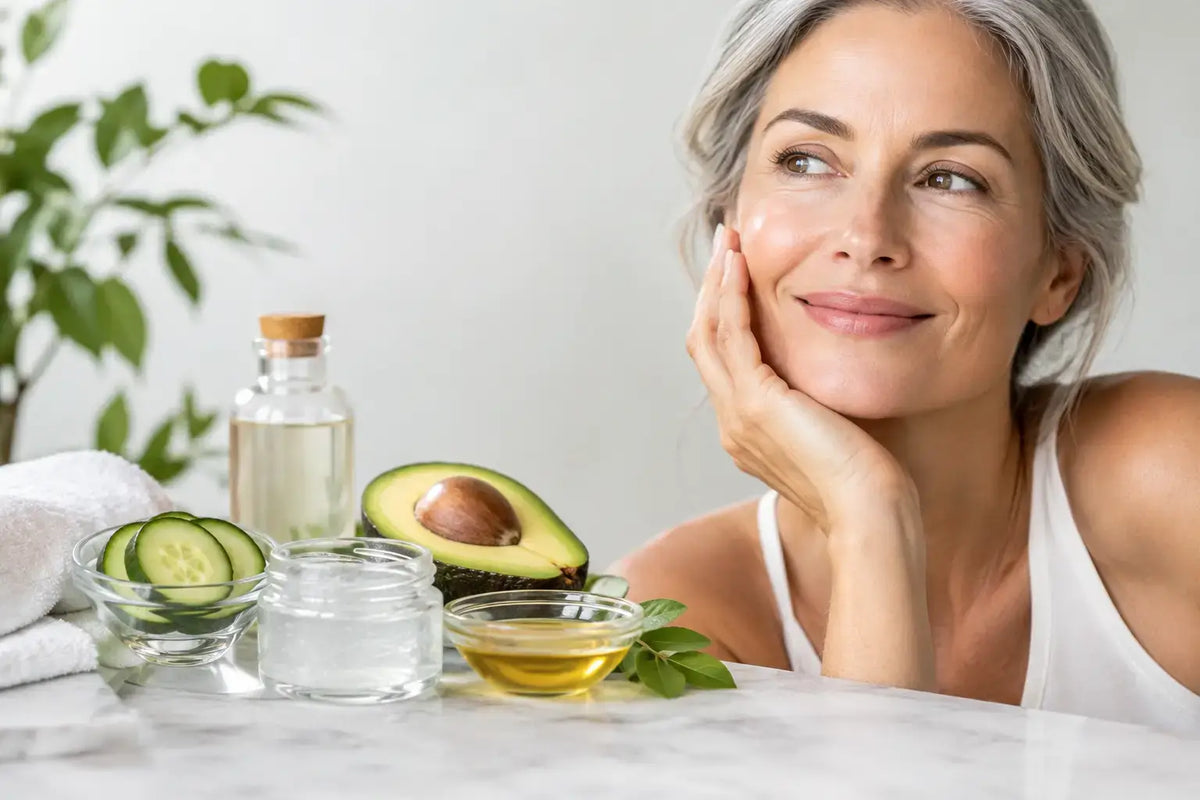
Skin can start to feel different long before it looks dramatically different. Perhaps foundation settles into fine lines, your cheeks feel tight after cleansing, or a product you once loved now stings. Hydrating ingredients for mature skin can help restore a more comfortable, supple feel, but the best routine is rarely about choosing the richest cream on the shelf.
As oestrogen shifts through perimenopause and menopause, skin may produce less oil and hold onto less water. Combined with years of sun exposure, changing weather, indoor heating and active skincare, this can leave the complexion feeling dry, reactive or less bouncy. The aim is not to chase an unrealistic version of youthful skin. It is to support a healthy skin barrier so your skin feels cared for, calm and well hydrated.
Why mature skin needs more than moisture
Hydration and moisturising are related, but they are not quite the same. Hydration refers to water in the upper layers of the skin. Moisturising ingredients help soften the skin and reduce water loss. Mature skin often benefits from both, especially when dryness comes with sensitivity.
A simple way to think about this is to look for humectants, emollients and occlusives. Humectants draw water into the outer skin layers. Emollients smooth roughness and support softness. Occlusives form a light protective layer to slow the evaporation of water. A well-made formulation may combine all three, so you do not need a crowded bathroom cabinet to care for your complexion.
How your skin feels matters as much as its appearance. Persistent tightness, flaking or stinging can be signs that your routine is too stripping, too active or simply not suited to your skin at this stage of life.
The best hydrating ingredients for mature skin
Hyaluronic acid
Hyaluronic acid is a humectant naturally found in the skin. In skincare, it attracts and holds water, which can create a temporary plumper, smoother appearance and ease that papery, dehydrated feeling.
It works best when applied to slightly damp skin, followed by a moisturiser. In dry air, using a hyaluronic acid serum alone may leave some people feeling tighter because there is not enough water available at the skin’s surface. Seal it in with a nourishing cream rather than expecting the serum to do all the work.
Glycerin
Glycerin is one of skincare’s quiet achievers. This reliable humectant supports hydration, is generally well tolerated and suits many people whose skin is easily unsettled. It may not sound as glamorous as newer ingredients, but it has a long history in effective, barrier-conscious skincare.
For mature skin, glycerin is especially useful in everyday lotions, creams and gentle cleansers. It brings hydration without necessarily feeling heavy, which is helpful if you experience both dry areas and congestion around the chin or nose.
Ceramides
Ceramides are lipids that occur naturally in the skin barrier. Think of them as part of the mortar between skin cells: when they are depleted, moisture can escape more easily and irritants may be more likely to cause discomfort.
A ceramide-rich moisturiser can be particularly comforting when skin is dry, sensitive or overworked by exfoliants and retinoids. Look for ceramides alongside fatty acids and cholesterol, as this combination is designed to mirror some of the components found in the skin’s protective barrier.
Squalane
Squalane is a lightweight emollient that helps soften skin and reduce moisture loss. It is a popular choice for mature skin because it can offer comfort without the dense, waxy feel some richer oils leave behind.
Squalane may suit a broad range of skin types, including skin that is dry yet prone to occasional breakouts. Apply it as part of a moisturiser, or press a few drops over your cream at night if your skin needs extra support. If you use a facial oil, it generally belongs after water-based serums and moisturiser, not before them.
Niacinamide
Niacinamide, also known as vitamin B3, is not a hydrator in the same way as glycerin or hyaluronic acid. However, it can support barrier function and may help skin retain moisture more effectively over time. It is also valued for helping the complexion look more even and for supporting a smoother texture.
More is not always better. High-strength niacinamide can cause warmth, flushing or irritation for some people. If your skin is sensitive, a lower concentration in a gentle moisturiser may be a wiser place to start than a powerful standalone serum.
Urea
Urea is a deeply useful ingredient for very dry, rough or flaky skin. At lower concentrations, it acts as a humectant and supports softness. At higher concentrations, it can also help loosen built-up dead skin cells.
That dual action means it deserves a little care. A mild urea cream can be lovely for dry facial skin, neck, hands and body. Stronger formulas are often better reserved for particularly rough areas such as heels, and may sting if the skin is cracked or inflamed.
Panthenol and colloidal oatmeal
When mature skin feels reactive as well as dry, panthenol and colloidal oatmeal are worth seeking out. Panthenol, a form of vitamin B5, is known for its comforting, moisture-supporting qualities. Colloidal oatmeal can help soothe the feeling of dry, itchy skin and is often used in gentle formulations.
These ingredients do not need to be saved for a skin emergency. They can be sensible daily choices if hormonal changes have made your complexion more temperamental than it once was.
How to build a hydrating routine without overdoing it
Start with a cleanser that leaves your skin comfortable, not squeaky-clean. Foaming cleansers are not automatically unsuitable, but a harsh cleanser can remove the lipids mature skin relies on for comfort. Cream, milk or low-foam formulas are often a good fit, particularly in cooler months.
After cleansing, apply a humectant serum or lotion to slightly damp skin. Follow with a moisturiser containing barrier-supportive ingredients such as ceramides, glycerin or squalane. In the morning, finish with broad-spectrum SPF 50+ sunscreen. Sun protection does not replace hydration, but it is one of the most meaningful ways to protect skin from further dryness, uneven tone and visible ageing.
At night, you may prefer a richer cream or a light facial oil over moisturiser. If you use retinol, exfoliating acids or other active ingredients, introduce them gradually and do not layer several strong products on the same evening. A routine that is gentle enough to use consistently will usually serve mature skin better than an ambitious routine that leaves it irritated.
Common mistakes that leave skin feeling drier
Hot showers, frequent exfoliation and fragranced products can all be problematic for some people, especially as the skin barrier becomes more delicate. Fragrance is not harmful for everyone, but if you have redness, stinging or eczema-prone skin, choosing fragrance-free products can make troubleshooting much simpler.
It is also easy to confuse dehydration with dryness. Oily or combination skin can still be dehydrated and may respond well to glycerin, hyaluronic acid and a light barrier cream. On the other hand, very dry skin may need a richer formula with oils, ceramides or petrolatum to prevent water loss. Let your skin’s behaviour, rather than a label on the bottle, guide you.
Patch test new products where practical, particularly if you are managing rosacea, eczema, allergies or prescription skin treatments. Seek advice from a dermatologist or qualified health professional if dryness is severe, sudden, painful or accompanied by a persistent rash.
Caring for mature skin is an act of restoration, not correction. Give your routine a few weeks, keep it gentle, and choose ingredients that help your skin feel comfortable enough to show up as itself each day.