
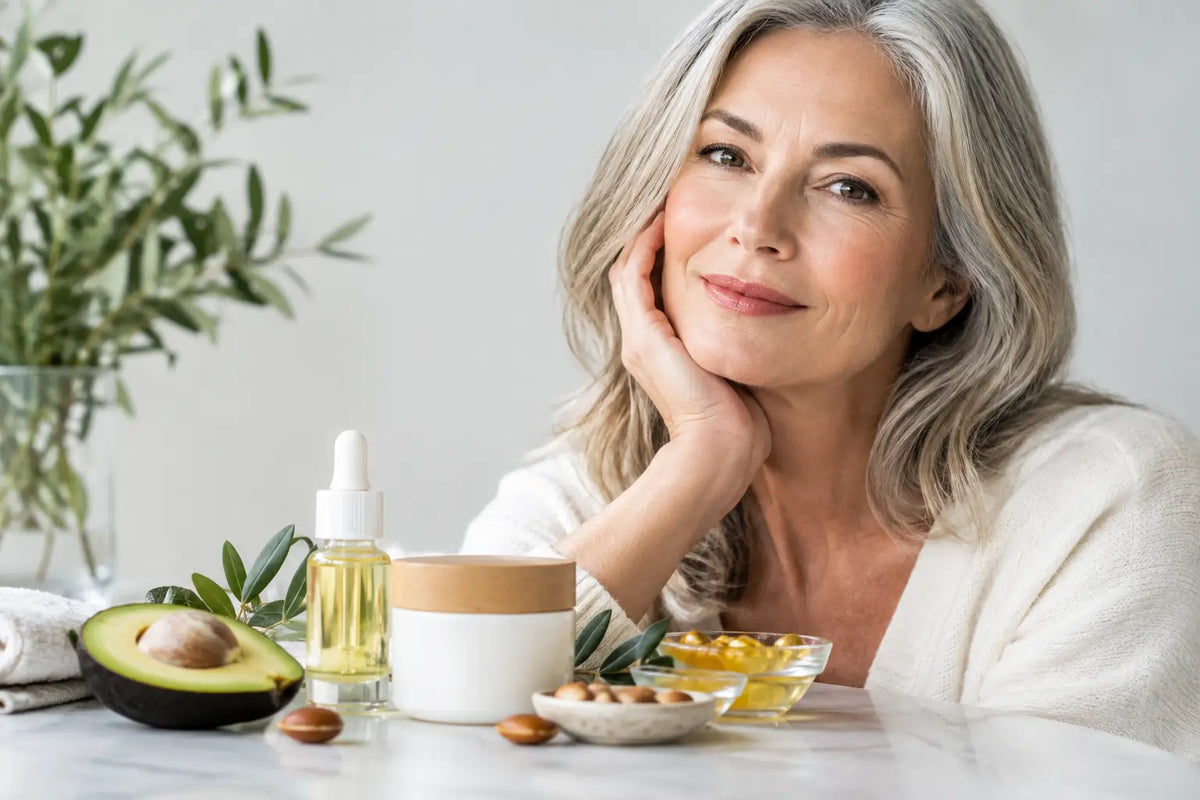
Skin can begin to feel unfamiliar during perimenopause and menopause. A cleanser that once felt refreshing may suddenly leave your face tight, while products you have used for years can sting or cause dryness. This mature skin ingredient guide helps you choose supportive ingredients with care, so your routine feels restorative rather than overwhelming.
Mature skin is not a skin type or a flaw to correct. It is skin responding to shifts in collagen, oil production, hydration, sun exposure and, for many women, changing oestrogen levels. The goal is not to chase a different face. It is to support comfort, resilience and a healthy-looking glow with ingredients your skin can tolerate consistently.
Why mature skin needs a different approach
As we age, the skin’s natural barrier can become less efficient at holding onto water. Reduced sebum can contribute to dryness, while slower cell turnover may leave the complexion looking dull or uneven. Fine lines can become more noticeable simply because dehydrated skin reflects less light and has less natural cushioning.
Hormonal transition can intensify these changes. Lower oestrogen levels may affect skin thickness, elasticity and moisture, and some women notice increased sensitivity alongside vaginal dryness and other menopause symptoms. This is a normal part of life, but it deserves gentle, practical care.
The most effective routines tend to prioritise barrier support before high-strength actives. A powerful serum is unlikely to deliver its best results if your skin is persistently irritated. Think of hydration, nourishment and daily sun protection as the foundation, then add targeted ingredients slowly.
Mature skin ingredient guide: the essentials
Humectants for lasting hydration
Humectants draw water into the upper layers of the skin. Hyaluronic acid is the best known, and can make skin feel plumper and more comfortable, particularly when applied to slightly damp skin. It works well across most skin types, although it should be followed by a moisturiser to help keep that hydration in place.
Glycerin is another excellent, often understated humectant. It supports soft, supple skin and is generally very well tolerated. Look for it in cleansers, serums and creams rather than viewing it as a lesser alternative to more fashionable ingredients.
Panthenol, also called provitamin B5, offers humectant benefits while helping soothe a compromised skin barrier. It can be especially welcome when your skin feels tight, reactive or rough.
Ceramides, squalane and nourishing lipids
If hydration is water, lipids are the seal that helps prevent it from evaporating. Ceramides are naturally present in the skin barrier and are particularly valuable for mature, dry or sensitised skin. A ceramide-rich moisturiser can help reduce that uncomfortable, papery feeling and improve the skin’s capacity to retain moisture over time.
Squalane is a lightweight emollient that softens without necessarily feeling heavy. It suits many women who find rich creams uncomfortable during the day but still need nourishment. Plant oils can also be beneficial, provided the formula is simple and your skin responds well. Rosehip, jojoba and evening primrose oil are popular choices, though an oil is best used as part of a moisturising routine rather than as the only source of hydration.
For very dry skin, richer textures can be helpful at night. Look for creams containing a blend of ceramides, fatty acids and cholesterol, which mirrors the components of a well-supported skin barrier.
Niacinamide for strength and evenness
Niacinamide, a form of vitamin B3, is one of the most versatile ingredients for mature skin. It can support barrier function, improve the appearance of uneven tone and help skin feel less dry. It also layers comfortably with many other actives.
More is not always better. Some people experience flushing or irritation with high-percentage niacinamide formulas, especially if their skin is sensitive. A modest concentration in a moisturiser or serum may be more comfortable and just as worthwhile when used consistently.
Retinoids for texture and visible ageing
Retinoids are vitamin A derivatives that can support cell renewal and improve the visible appearance of fine lines, texture and uneven pigmentation. Retinol is widely available in over-the-counter skincare, while stronger retinoids may be prescribed by a doctor or dermatologist.
They are effective, but they require patience. Start with a low strength two nights a week, then increase only if your skin remains calm. Use a nourishing moisturiser alongside it and avoid introducing exfoliating acids at the same time. Dryness, peeling and stinging are signs to reduce frequency, not push through.
Retinoids are not suitable during pregnancy or breastfeeding without advice from a qualified health professional. If you have rosacea, eczema, persistent sensitivity or are using prescription skin treatments, seek personalised guidance before beginning.
Vitamin C for brightness and antioxidant support
Vitamin C is an antioxidant that can help protect against environmental stressors and support a brighter, more even-looking complexion. It is often used in the morning beneath moisturiser and sunscreen.
The trade-off is that some forms of vitamin C, particularly pure L-ascorbic acid at higher concentrations, can be irritating on sensitive skin. If that sounds familiar, choose a gentler derivative or a lower-strength formula. A product you can use regularly is more valuable than one that sits unopened because it stings.
Peptides for a supportive routine
Peptides are short chains of amino acids used in skincare to support a firmer, smoother-looking appearance. They are generally gentle and can be a reassuring addition when your skin is no longer tolerating strong actives well.
Peptides are not a replacement for sunscreen, moisturiser or a retinoid if you tolerate one, but they can complement a simple routine. They are particularly useful for women who want a targeted product without the adjustment period associated with retinoids or acids.
Exfoliating acids, used with restraint
Gentle exfoliation can improve the appearance of dullness and help smooth rough texture. Lactic acid is often a more comfortable alpha hydroxy acid choice for mature skin because it also has humectant qualities. Polyhydroxy acids, such as gluconolactone, are another gentler option for sensitive complexions.
Avoid treating exfoliation as a daily requirement. Once a week may be enough, especially if you are using retinol or notice dryness around the nose, mouth or eyes. Scrubs with rough particles can create unnecessary irritation, so leave skin feeling polished rather than scrubbed raw.
The ingredient that matters every day: sunscreen
No mature skin routine is complete without broad-spectrum SPF 30 or higher. Ultraviolet exposure contributes to visible pigmentation, collagen breakdown and uneven texture, even on cloudy Australian days. Sunscreen is not only for summer or beach days. It is daily care for the face, neck, chest and hands when they are exposed.
Choose a texture you enjoy wearing, whether that is a moisturising cream, a lightweight fluid or a tinted formula. The best sunscreen is the one you will apply generously and reapply when spending extended time outdoors.
How to build a calm routine
A long routine is not automatically a better one. Start with a gentle cleanser, a hydrating or treatment serum, a moisturiser suited to your skin’s dryness level and daily sunscreen. At night, cleanse, apply one chosen active if desired, then moisturise generously.
Introduce only one new product at a time and give it two to three weeks before deciding whether it suits you. Patch test where practical, particularly if you have sensitive skin or a history of reactions. If burning, swelling, persistent redness or a rash occurs, stop using the product and speak with a pharmacist, GP or dermatologist.
It is also worth remembering that skin health is connected to whole-body wellbeing. Sleep, stress, nutrition, hydration and hormonal health can all influence how your skin looks and feels. For women navigating menopause, caring for dry facial skin and intimate comfort can be part of the same broader commitment to feeling well in your body. My Health Restore approaches this with the belief that informed, gentle care can help you feel more supported at every stage.
Your skin does not need punishment to look renewed. Choose a few well-formulated ingredients, use them with consistency, and let comfort be one of the clearest signs that your routine is working for you.