
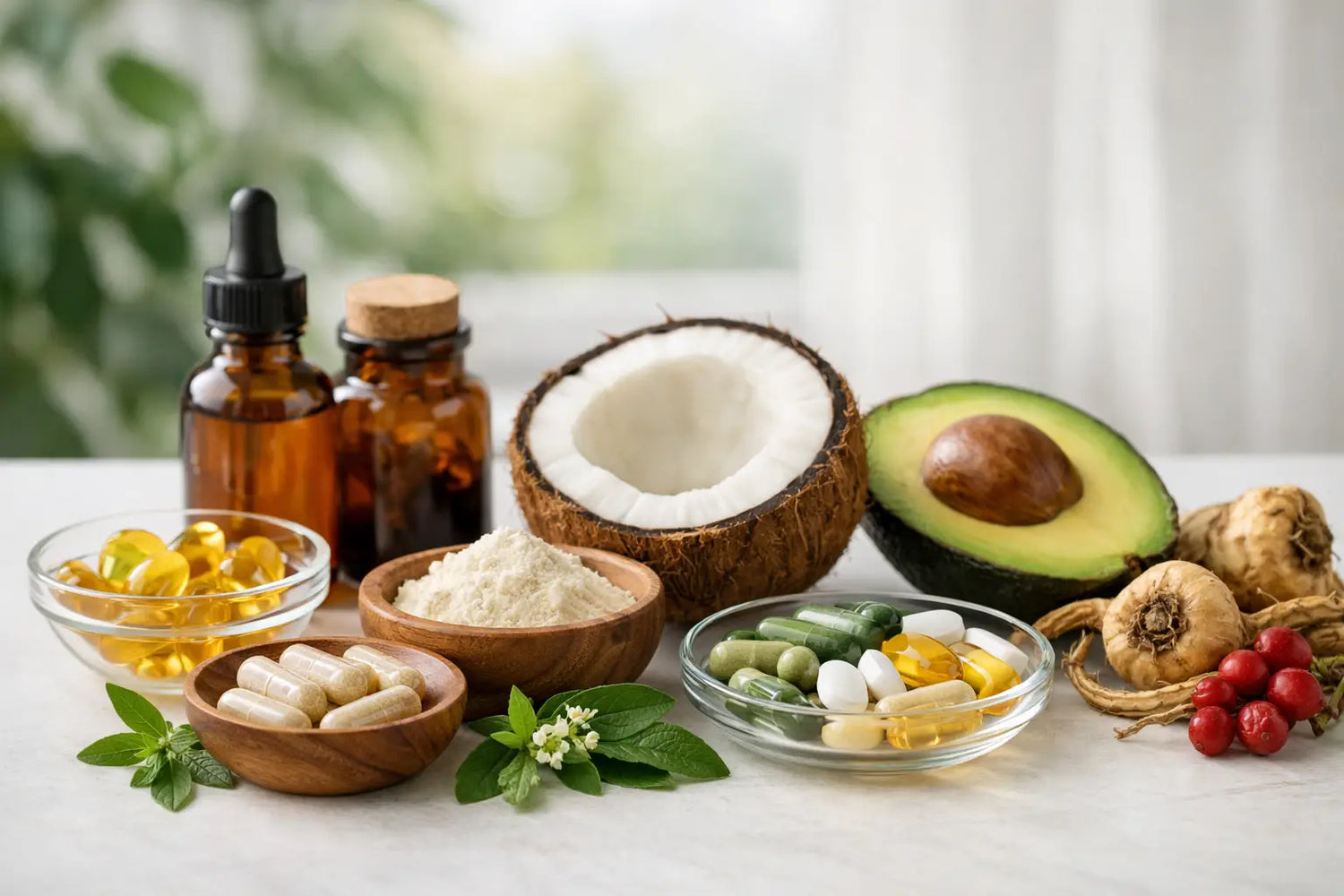
Hormonal changes rarely arrive with a neat label. More often, they show up as restless sleep, shifting moods, dry skin, heavier periods, low energy, stubborn breakouts, or a sense that your body is no longer responding the way it used to. That is why so many women start looking into natural supplements for hormonal balance - not as a quick fix, but as part of a gentler, more supportive approach to feeling like themselves again.
Hormones influence far more than your menstrual cycle. They affect metabolism, stress response, skin condition, vaginal comfort, libido, sleep, appetite and mental clarity. When one part of that system is under strain, the effects can ripple across daily life. Supplements can sometimes help, but the most useful question is not simply what should I take? It is what is driving the imbalance in the first place?
How natural supplements for hormonal balance may help
The word balance can be a little misleading because hormones are not static. They rise and fall throughout the month, across life stages, and in response to stress, diet, illness and sleep quality. What support looks like at 28 may be very different from what support looks like at 48.
Natural supplements can help in a few ways. Some provide nutrients needed for hormone production and detoxification. Others may support the nervous system, making the body more resilient to stress-related hormonal disruption. Some herbs are traditionally used to ease symptoms linked to PMS or perimenopause, while others are chosen for skin, inflammation or energy support.
That said, supplements work best when they match the pattern behind your symptoms. If your main issue is stress and poor sleep, one kind of support may make sense. If you are navigating perimenopause, heavy periods or low iron, the picture changes. Hormonal health is personal, and the right approach is often layered rather than based on one capsule.
Key nutrients and herbs worth knowing about
Magnesium is one of the most commonly recommended nutrients for women under stress, and for good reason. It supports the nervous system, muscle relaxation and sleep quality, and it may help with PMS symptoms such as irritability, headaches and cramping. Many women also fall short of magnesium through diet alone, especially during busy or demanding periods of life.
Vitamin B6 is often discussed alongside magnesium because it contributes to hormone activity and neurotransmitter function. In some women, it may be useful for premenstrual mood changes, breast tenderness and fatigue. More is not always better, though, and high doses over time are not appropriate without guidance.
Omega-3 fatty acids can support inflammatory balance, mood and skin health. They may be especially relevant for women dealing with cycle-related discomfort, dry skin or a generally inflamed picture. While not a direct hormone treatment, they can help create better conditions for overall wellbeing.
Zinc deserves attention too. It plays a role in reproductive health, skin repair and immune function, and is often considered when breakouts, wound healing or low dietary intake are concerns. For women with hormonal acne, zinc can be part of a broader plan, though it is rarely the whole answer.
Vitex, also known as chaste tree, is one of the better-known herbal options for menstrual hormone support. It is commonly used for PMS, cycle irregularity and some symptoms associated with low progesterone patterns. But it is not suitable for everyone, and it may not be the right fit during perimenopause or alongside certain medications.
Ashwagandha is often chosen when stress is clearly part of the picture. It is an adaptogenic herb, which means it may help the body adapt to ongoing stress load. For women experiencing frazzled energy, poor sleep and that wired-but-tired feeling, this can be useful. Still, thyroid conditions, pregnancy and medication use all need proper consideration.
Evening primrose oil is another familiar option, often used for breast tenderness, skin concerns and premenstrual symptoms. The evidence is mixed, but some women report benefit, particularly when symptoms involve inflammation or dryness. As with any supplement, results vary.
For women in midlife, phytoestrogen-rich herbs or foods may also come into the conversation. These plant compounds can have gentle oestrogen-like effects in the body. They are sometimes explored for hot flushes, skin dryness or vaginal discomfort, especially when a hormone-free approach is preferred. This area is nuanced, and personal medical history matters.
Natural supplements for hormonal balance in different life stages
In the reproductive years, hormonal support is often tied to PMS, acne, irregular cycles or stress. A woman in her thirties juggling work, family and poor sleep may not need a complicated protocol. She may need better iron status, magnesium, stable meals and support for stress chemistry more than a shelf full of supplements.
Perimenopause tends to bring a different set of challenges. Cycles may become unpredictable, sleep can worsen, anxiety may feel more intense, skin often changes, and vaginal dryness can start to affect comfort and confidence. At this stage, supportive nutrients and herbs can be helpful, but symptom-specific care matters too. If intimate dryness or tissue fragility is part of the picture, local, hormone-free support may be just as important as internal nutritional support.
Postmenopause shifts the focus again. Bone health, cardiovascular support, skin integrity, vaginal tissue comfort and inflammation all deserve attention. Supplements may still play a role, but they are only one part of a wider wellbeing plan that includes strength training, protein intake, sleep and regular health checks.
What supplements can and cannot do
There is real value in natural support, but it helps to stay grounded. Supplements may ease symptoms, support nutrient status and help the body cope with transitions more comfortably. They cannot diagnose the reason behind severe fatigue, sudden hair loss, very heavy bleeding, missed periods, pelvic pain or dramatic mood changes.
This matters because symptoms often described as hormonal can also be linked to thyroid dysfunction, iron deficiency, insulin resistance, low vitamin D, high stress load, perimenopause or other medical conditions. When symptoms are persistent or worsening, testing and clinical advice are worth it.
It is also common to expect fast results from supplements that actually need time. Nutrient repletion and herbal support can take several weeks, sometimes longer. If you are trying one approach, it helps to be consistent and realistic rather than switching products every few days.
How to choose wisely
Quality matters, especially in a crowded wellness market. Look for supplements with clearly listed ingredients, sensible dosing and a purpose that matches your symptoms. A product marketed for women’s balance may still be too broad to be useful if you need support for a very specific concern.
It is also wise to avoid stacking multiple hormone-focused formulas at once. Combining several herbs and nutrients can make it hard to tell what is helping, and it may increase the risk of side effects or interactions. More is not necessarily more supportive.
For women who value a natural, restorative approach, it often makes sense to think in categories. One supplement may support stress resilience, another may address nutrient gaps, and a separate product may help with intimate comfort or skin health. That tends to be more practical than searching for a single miracle solution.
At My Health Restore, this whole-person view is central to how women’s wellness is approached. Hormonal health is not only about numbers on a blood test. It is also about comfort, confidence, skin vitality, sleep, mood and feeling at home in your body.
Simple foundations that make supplements work better
Even the best supplement has limits if your body is constantly running on too little sleep, too much caffeine and meals that leave blood sugar all over the place. Stable energy and hormonal resilience are closely linked. Regular protein, healthy fats, fibre-rich foods and enough calories can make a meaningful difference, especially for women who have been under-eating without realising it.
Stress regulation matters too. Chronic stress can affect cortisol, which then influences sleep, appetite, cycle regularity and mood. Gentle exercise, sunlight, rest and nervous system support are not extras. They are part of the treatment picture.
And if intimate symptoms are part of your experience, please do not dismiss them as something you simply have to put up with. Vaginal dryness, irritation and tissue discomfort are common, particularly during hormonal transition, but common does not mean insignificant. Support can be both internal and local, and both can matter.
If you are considering natural supplements for hormonal balance, start with your symptoms, your life stage and your overall health picture rather than trends. The most supportive path is usually calm, consistent and tailored to what your body is asking for right now. A thoughtful choice, made with good information, can be the beginning of feeling steadier, more comfortable and more like yourself again.